First NZ school building and te reo Māori lesson book
A DigitalNZ Story by Zokoroa
NZ's first school which opened on 12 August 1816 at the Oihi Mission Station and first te reo Māori textbook
Schools, Teachers, Classrooms, Education, Mission stations, Missionaries, Oihi, Hohi, Northland, Thomas Kendall, Samuel Marsden, Textbooks, Te reo Māori
What is considered to be New Zealand's first school building opened on 12 August 1816 at the Oihi Mission Station in the Bay of Islands. The school's roll on opening day was 33 Māori and settler students aged between 7-20 and reached 70 students eight months later.
Lessons by schoolmaster Thomas Kendall and his assistant William Carlisle were in English and te reo Māori. Kendall had written New Zealand's first Māori lesson book in collaboration with Ngāpuhi Chief Hongi Hika and his nephews Tuai (Tohi) and Titere (Tetere) during 1815: "A korao [kōrero] no New Zealand or, the New Zealander's first book; being an attempt to compose some lessons for the instruction of the natives".
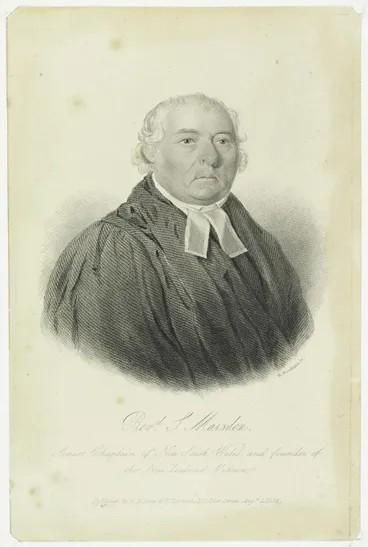
The school was eventually closed in November 1819 by Reverend Samuel Marsden due to inconsistent attendance, food supply issues, and the involvement of teachers in private trade rather than teaching. The building was subsequently used as a Mission store until the Mission closed when Te Puna Mission opened nearby in 1832.
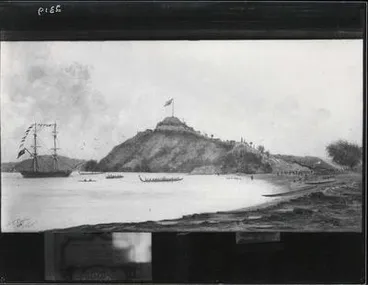
NZ's first school building opened on 12 Aug 1816 at the first Mission Station established in NZ at Oihi Bay in Dec 1814
Rev Samuel Marsden began lobbying CMS for mission station in NZ in 1806 & approval for it & a school was granted in 1909
Auckland War Memorial Museum Tāmaki Paenga Hira
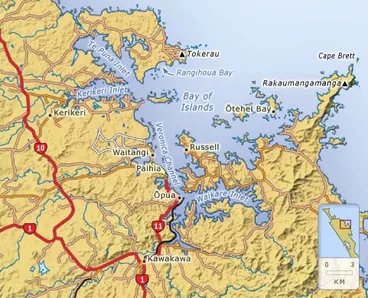
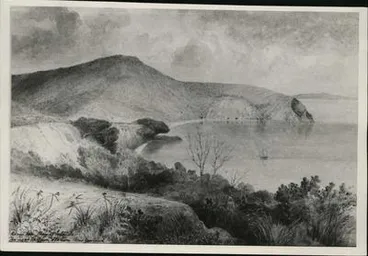
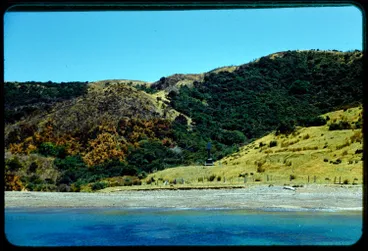
Oihi Bay is a small cove (now known as Hohi) in the north-east of Rangihoua Bay in the Bay of Islands
The missionaries lived in temporary whare where schoolmaster Thomas Kendall began teaching until houses & school built
Manatū Taonga, the Ministry for Culture and Heritage
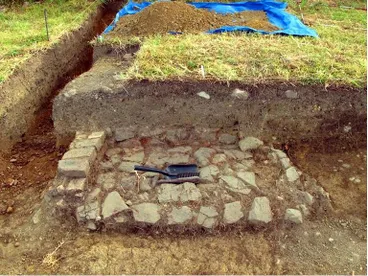
Excavations in Feb 2012 uncovered the school building's brick fireplace & artefacts including slate & slate pencils
The wooden school building was 10m x 6m & had a brick chimney for heating the room & cooking meals for the students
Manatū Taonga, the Ministry for Culture and Heritage
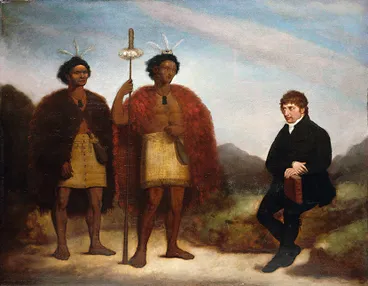
Schoolmaster Thomas Kendall was aided by assistant teacher William Carlisle; & opening roll was 33 & later peaked at 70
However, the roll fluctuated when food supplies for the students delayed from CMS to supplement local trade
Manatū Taonga, the Ministry for Culture and Heritage
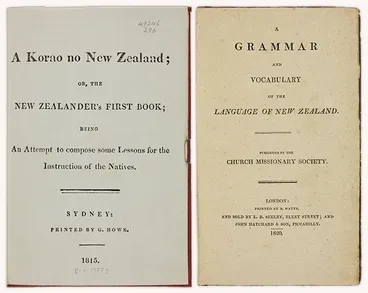
Used 1st lesson book in te reo Māori written by Kendall aided by Chief Hongi Hika & nephews Tuai & Titere (1815)
Content: Word lists, numbers, phrases & religious instruction. (See image of title on left: 'A korao no New Zealand')
Manatū Taonga, the Ministry for Culture and Heritage
![Image: Artist unknown :Rangihoa [sic], New Zealand / London, W. E. & F. Newton [Between 1852 and 1857]](https://images.digitalnz.org/PeAdfrWKdTHFrsyrJ9bDttqGjb4=/368x0/https%3A%2F%2Fndhadeliver.natlib.govt.nz%2FNLNZStreamGate%2Fget%3Fdps_pid%3DIE321504 "Artist unknown :Rangihoa [sic], New Zealand / London, W. E. & F. Newton [Between 1852 and 1857]")
In Nov 1819, the school closed due to neglect by teachers' involvement in private trade; low roll & food supply issues
The school was used as a store until Oihi Mission closed in 1832 when Te Puna Mission opened 1 km away on flatter land
Alexander Turnbull Library
1. NZ Mission & School established by Church Missionary Society (CMS)
The 'Society for Missions to Africa and the East' was formed in April 1799 by members of the Eclectic Society which had been founded in London by a group of Anglican clergy and laymen in 1783. The founders wished to abolish the slave trade, achieve social reform in England, and embark on world evangelisation. The first secretary, Thomas Scott, was replaced in 1802 by Reverend Josiah Pratt who held that position until 1824. The Society for Missions was renamed 'The Church Missionary Society [CMS] for Africa and the East' in 1812. (Source: University of Otago: Marsden Online Archive: https://marsdenarchive.otago.ac.nz/ )
Missionary settlement in NZ lobbied by Rev Samuel Marsden, 1806-1809
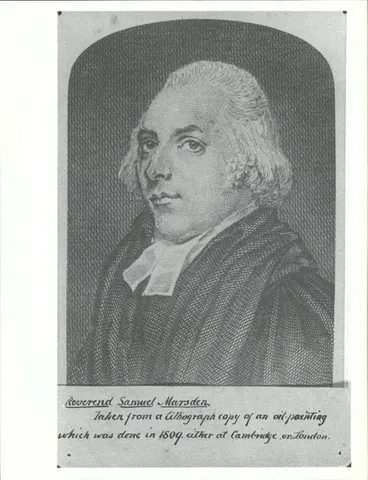
Samuel Marsden (Chaplain of NSW since 1800) became the Pacific agent for London's Society for Missions in 1804
Marsden resided at Parramatta in Sydney, NSW & also owned several acres of land which he farmed with crops and animals
Hocken Collections - Uare Taoka o Hākena, University of Otago
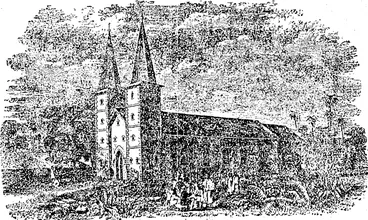
Marsden befriended Māori sailors & visitors, & several stayed on his farm at Parramata & attended his church
He provided accommodation, arranged teaching of agricultural practices & trade skills to use in NZ, & taught English
National Library of New Zealand
![Image: Harris, George Prideaux Robert, 1775-1840 :Tippahee a New Zealand chief / eng[rave]d by W Archibald from an original drawing by G P Harris. [London, 1827].](https://images.digitalnz.org/plCfOZzOaKgUviZwpULT4h_ugAo=/368x0/https%3A%2F%2Fndhadeliver.natlib.govt.nz%2FNLNZStreamGate%2Fget%3Fdps_pid%3DIE25191095 "Harris, George Prideaux Robert, 1775-1840 :Tippahee a New Zealand chief / eng[rave]d by W Archibald from an original drawing by G P Harris. [London, 1827].")
Marsden met Chief Te Pahi from Te Puna, Bay of Islands who was visiting NSW Governor Philip King in Nov 1805-March 1806
Impressed with Te Pahu's regular church attendance & religious discussions, Marsden decided to request a NZ mission
Alexander Turnbull Library
During 1806 - 1809, Marsden lobbied the Society for Missions for a mission under Te Pahi's protection in Te Puna
Manatū Taonga, the Ministry for Culture and Heritage
Rev Marsden also requested 3 laymen missionaries: carpenter, smith & twine-spinner
During the first few decades after forming, the Church Missionary Society had difficulty in attracting ordained Anglican clergy and appointed German Lutheran clergy, of which two began working in West Africa in 1804. The CMS also began appointing Christians who were 'laymen' skilled in trades, such as carpentry, to set up mission stations. These laymen became known as 'mechanic missionaries' and 'laymen missionaries'. (Source: University of Otago: Marsden Online Archive: https://marsdenarchive.otago.ac.nz/ )
Marsden also requested 3 laymen missionaries - a carpenter, a smith & a twine spinner - to teach European practices
He saw the building of relationships through teaching trade skills as forerunner to opening the way to teach the Gospel
University of Otago
In 1909, the Society agreed to a Mission and advocated a school also be opened
In 1809, the Society agreed to the Mission and advocated that a school also be opened as the Society had started building schools. The Society saw the reading of the Bible as an essential skill to open the Word of God to individuals. Hence, schooling was seen as the means to teach people to read the Bible for themselves. Furthermore, the teaching of Western education would help to convert them to becoming Christians. With mission stations having a school, this would also draw the local people to interact with the missionaries and to participate in the mission's activities. This led to the first mission station in NZ being sited at the base of Ngāpuhi Chief Ruatara's Rangihoua Pā at Oihi (now known as Hohi).
During 1809, the Society agreed to a Mission and decreed that a school also be opened
The Society advised Marsden that it had begun b develop schools at missionary settlements
Auckland War Memorial Museum Tāmaki Paenga Hira
Society agreed to 3 laymen missionaries: carpenter, twine-maker & schoolmaster
In 1809, the Society initially chose 2 of the 3 laymen: carpenter (William Hall) & twine-maker (shoemaker John King)
Society arranged for King to learn flax-dressing, twine & rope-making; & Hall was sent to Hull to learn ship-building
University of Otago
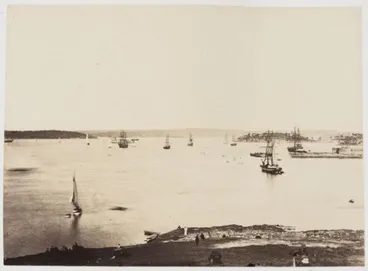
In Aug 1809, Marsden, who was visiting London, left with Hall & his wife Dinah, & King for NSW
They sailed aboard the 'Ann' & arrived at Port Jackson in Feb 1810
Victoria and Albert Museum
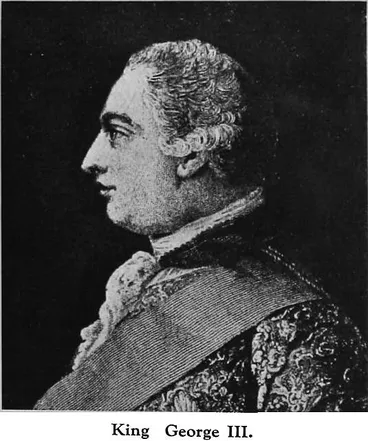
On board was 22 yr old Ngāpuhi chief, Ruatara, who'd left Te Puna in 1805 hoping to see King George III
His wife Miki had stayed behind. She was the daughter of Chief Waraki of Ngāti Rāhiri who owned land at Waitangi.
Victoria University of Wellington
Ruatara worked on whaling ships & was unwell after being mistreated by crew. Marsden invited him to recover at his farm.
Ruatara had learnt English whilst working on the whaling ships
Victoria University of Wellington
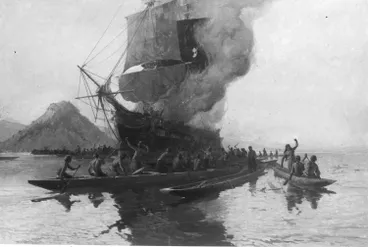
After arriving back home Marsden received news of the 'Boyd Massacre' which had taken place at Whangaroa in Dec 1809
'Boyd' crew was attacked & cannabalised by Māori as young Chief Te Tara had been mistreated on its voyage from Sydney
Auckland Libraries
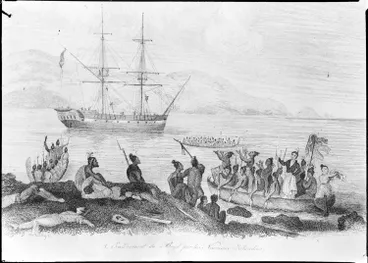
Chief Te Pahi had been mistakenly blamed by whalers for the massacre & after being attacked died in April 1810
Te Pahi's Te Puna Pā was ransacked on 26 March 1810 and he died a few weeks later of his injuries
Auckland Libraries
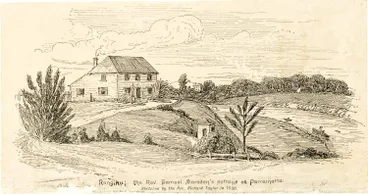
As Marsden had difficulties chartering a ship prepared to sail to NZ, Hall & King worked on his farm & attended church
Whilst in NSW awaiting to travel to NZ, Hall and his wife had a son, & King married and had a son
Auckland Libraries
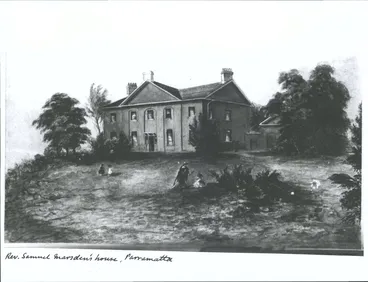
Ruatara with Marsden & learnt wheat farming, carpentry & other skills
Hocken Collections - Uare Taoka o Hākena, University of Otago
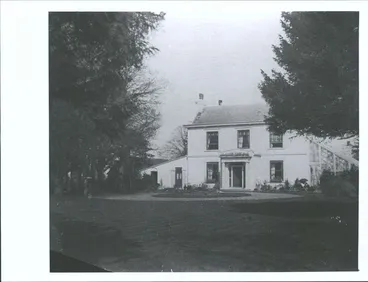
In late 1811, 2 Māori friends from Te Puna visited Ruatara with a waiata from his wife which led him to return home
The waiata composed by Miki, which Marsden referred to as "Mike’s [Miki’s] song", was sung by one of the men to Ruatara
Hocken Collections - Uare Taoka o Hākena, University of Otago
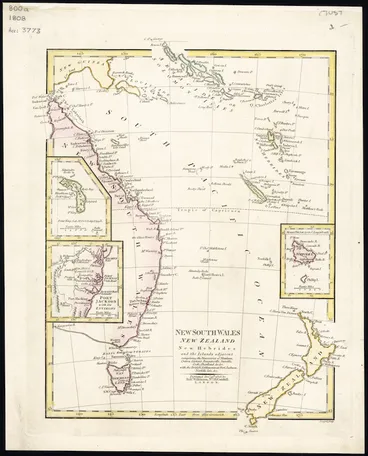
In Oct 1811, Ruatara & friends sailed to NZ; were abandoned at Norfolk Is; then rescued & taken to Marsden in Aug 1812
They'd left Port Jackson on whaling ship 'Frederick' & were rescued from Norfolk Is. by another whaling ship, the 'Ann'
National Library of New Zealand
In early 1813, Ruatara arrived home from Port Jackson & succeeded Te Pahi as Chief of Te Puna & Rangihoua
The voyage on 'Ann' took 5 months. Ruatara distributed seeds Marsden had given him & NZ's first wheat crop was grown.
National Library of New Zealand
2. Society appointed Thomas Kendall as the schoolmaster in 1813
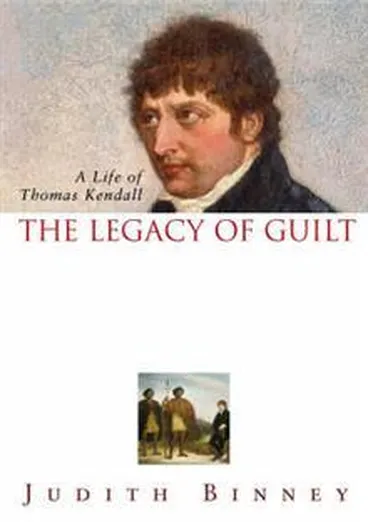
In 1813, the Society chose Thomas Kendall (1778-1882) to be the Mission's schoolteacher (and third 'layman')
(The Society for Missions was renamed the Church Missionary Society (CMS) in 1812)
Auckland War Memorial Museum Tāmaki Paenga Hira
Thomas Kendall had applied to Reverend Josiah Pratt to be a missionary in 1808
He lived in Lincolnshire & became an assistant teacher at 18, & a draper & grocer after marrying Jane in 1803
University of Otago
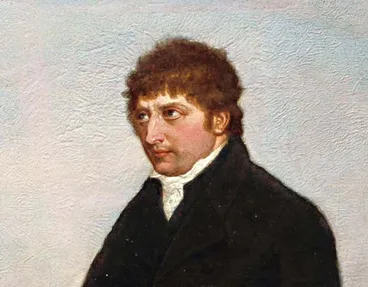
When visiting London in 1805, Kendall had heard Basil Woodd & William Mann preach at the Bentinck Chapel, Marylebone
Inspired, he moved to London, joined the congregation & became a schoolmaster
Manatū Taonga, the Ministry for Culture and Heritage
On 6 March 1813, Kendall wrote to Rev Pratt regarding his teacher's salary & provisions for sailing to NSW in May 1813
University of Otago
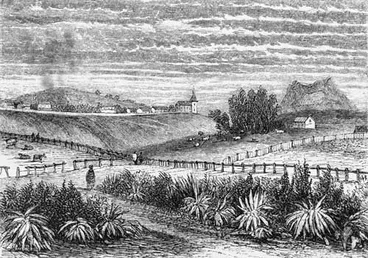
In Oct 1813, Kendall, his wife Jane & their five children arrived in NSW to join Marsden & the two laymen, Hall & King
Kendall visited schools; taught students; & wrote to Rev Pratt on 11 March 1814 to send a supply of spelling books
Manatū Taonga, the Ministry for Culture and Heritage
Kendall began learning to speak & write te reo Māori when at NSW
![Image: Silhouette portrait of "Thomas Tooi" [Tuai]](https://images.digitalnz.org/ghI2NBx0-gSlmowccOXhZDOyBYs=/368x0/https%3A%2F%2Fmedia.tepapa.govt.nz%2Fcollection%2F254576%2Fpreview "Silhouette portrait of \"Thomas Tooi\" [Tuai]")
In Feb 1814, Kendall began learning Māori from Tohi (Tuai) who'd begun staying with Kendall's family for past month
Tuai of Ngare Raumati in the south-eastern Bay of Islands was the nephew of Ngāpuhi Chief Hongi Hika
Museum of New Zealand Te Papa Tongarewa
![Image: Church Missionary Quarterly Papers :Tooi, a late chief of New Zealand / G Peek sc. 1826. [London, Church Missionary Society, 1849].](https://images.digitalnz.org/wjHY6q48jlQEPdyGuiZaSmHtiMA=/368x0/https%3A%2F%2Fndhadeliver.natlib.govt.nz%2FNLNZStreamGate%2Fget%3Fdps_pid%3DIE202085 "Church Missionary Quarterly Papers :Tooi, a late chief of New Zealand / G Peek sc. 1826. [London, Church Missionary Society, 1849].")
Tuai was visiting Australia, met Marsden & had been staying on Marsden's farm since 1813
He'd chosen to stay to learn agriculture, attend church & to learn to read & write English before returning home to NZ
Alexander Turnbull Library
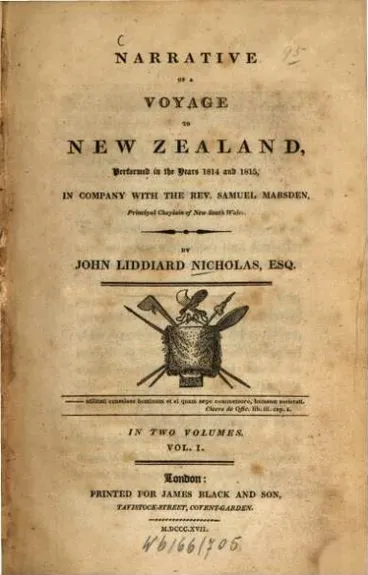
A vocabulary compiled by Kendall when in NSW is included in a book published by NSW settler John Nicholas in 1817
Nicholas published his book after accompanying Marsden to NZ in Dec 1814 - Feb 1815 to set up the Oihi Mission
Deutsche Digitale Bibliothek
3. Site for Mission Station & School chosen at Oihi
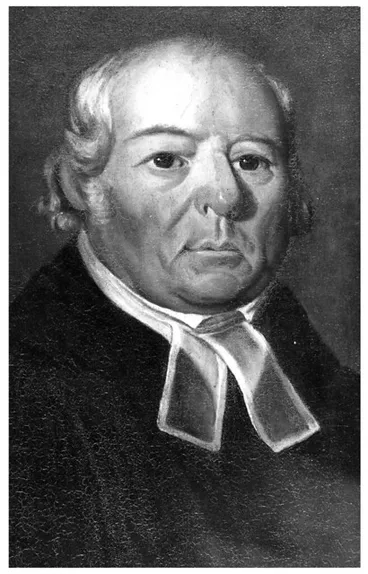
After Boyd massacre, as Marsden unable to book a ship for less than £600, he bought the 'Active' for £1400 in March 1814
Archives New Zealand Te Rua Mahara o te Kāwanatanga
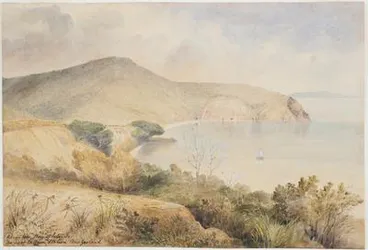
NSW Gov Macquarie wouldn't allow Marsden to join the first exploratory trip to Bay of Islands for safety reasons
If Marsden's ship 'Active' returned safely to Sydney, then the Governor would let Marsden join the next voyage
Auckland Art Gallery Toi o Tāmaki
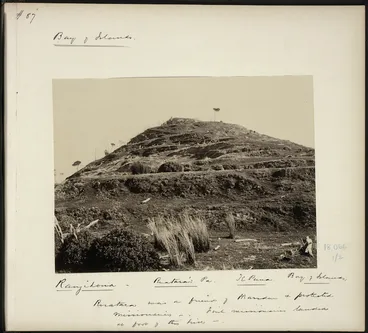
Marsden arranged for Kendall, Hall & Tuai to sail to NZ (9 March - 22 Aug 1814) to visit Ruatara & give him a letter
Marsden also gave them gifts for Ruatara which included a flour mill to use with wheat from seeds Ruatara had sown
Alexander Turnbull Library
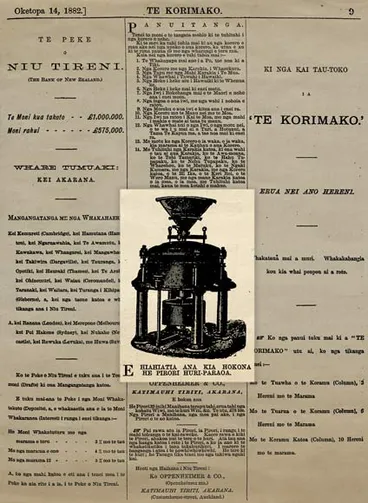
Marsden's letter to Ruatara asked him to sail back on the 'Active' & to bring 3-4 Chiefs to meet with Marsden
Manatū Taonga, the Ministry for Culture and Heritage
![Image: [LeJeune, Jules Louis] :Tuai. Shonguy. [Lohse sc]. - [Leipzig ; Baumgartner, 1837]](https://images.digitalnz.org/vgpkBlLPnsHjsETP6H1103pDMVc=/368x0/https%3A%2F%2Fndhadeliver.natlib.govt.nz%2FNLNZStreamGate%2Fget%3Fdps_pid%3DIE26520283 "[LeJeune, Jules Louis] :Tuai. Shonguy. [Lohse sc]. - [Leipzig ; Baumgartner, 1837]")
Ruatara & his uncle Chief Hongi Hika (Shonguy) agreed to meet with Marsden. Tuai's brother Korokoro also came.
Also joining them was Hongi Hika's oldest son Hāre who was 8 years old. (Image: Tuai on left & Hongi Hika on right)
Alexander Turnbull Library
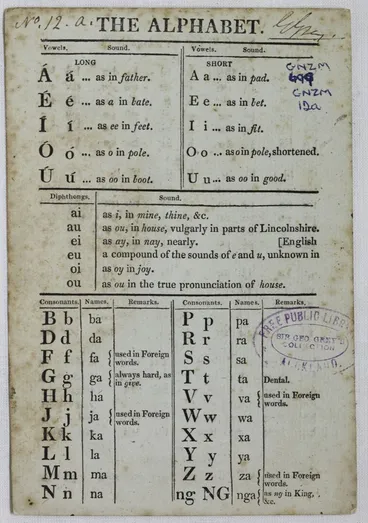
During the return trip to NSW, Kendall began teaching Chiefs Hongi Hika & Korokoro the English alphabet
Kendall used 30 cards of letters and monosyllables, and gave a fish hook for every page learnt correctly
Auckland Libraries
Kendall was conscious of his inability to transcribe words correctly as Māori did not have a written language
On 25 March 1814, Kendall wrote to Rev Pratt that Māori "instructed in their own Tongue...will take some years..."
University of Otago
Kendall wrote words according to the sound heard (eg"haere mai" as 'Iremi")
He listed words & their translation in a letter to Rev Pratt (15 June 1814) commenting he was aware of his shortcomings
University of Otago
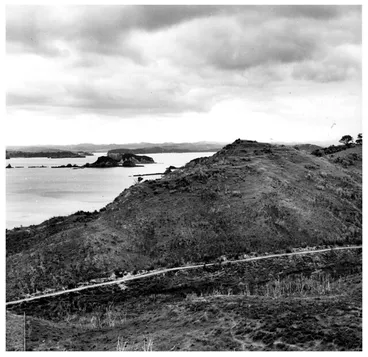
Marsden met with Ruatara in Sept 1814 & accepted his offer to locate the mission station at base of his Rangihoua Pā
Ruatara said he would give the missionary settlement his protection & help with establishing friendly relations
Archives New Zealand Te Rua Mahara o te Kāwanatanga
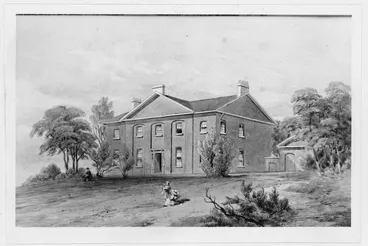
Ruatara, Hongi Hika & Korokoro stayed on for five months with Marsden & also met Governor of NSW, Lachlan Macquarie
Ruatara studied agriculture & they received gifts (eg mare, cow, other farm animals, poultry, military uniforms & seeds)
Alexander Turnbull Library
Kendall wrote to Rev Pratt (6 Sept 1814) about the voyage & teaching the Chiefs the English alphabet on the return trip
He also described the meeting with local Māori in the Bay of Islands
University of Otago
NSW Governor gave Marsden four months leave to set up the mission, Nov 1814
The Governor of New South Wales, Lachlan Macquarie, gave permission for the foundation of the mission in November 1814. Macquarie, who had been appointed as the fifth Governor in 1809, commenced his role on 1 January 1810 and was based at the Government House in Sydney Cove. He gave Marsden leave of absence for four months to travel to New Zealand to become acquainted with the area and set up the mission station.
In Nov 1814, NSW Governor Macquarie gave permission for the mission & four months of leave for Marsden to establish it
University of Otago
Macquarie also extended his own powers over New Zealand, appointing Kendall as the Justice of the Peace and Magistrate. Macquarie issued a proclamation on 9 November that "Natives are not to be carried off from New Zealand or the Bay of Islands by masters of vessels, or seamen or other persons without permission of chiefs, made in writing under hand of Revd Thomas Kendall, resident magistrate". (Source: Colonial Secretary Index, 1788-1825): New Zealand Bay of Islands)
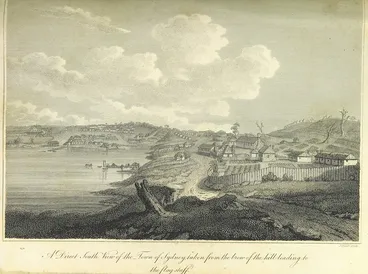
Macquarie extended his own powers over NZ & appointed Kendall as Justice of the Peace & Magistrate
As JP, Kendall was to appoint & discharge 'natives' as sailors; & as Magistrate check vessels & crew who visit NZ
The British Library
4. Preparations for Oihi Mission School, 1814
In preparation for their arrival in NZ, Marsden advised Rev Pratt (30 Sept 1814) of the roles to be carried out by carpenter Hall, schoolmaster Kendall and twine-maker Hil, stating "I wish them all clearly to understand their respective duties, and to interfere with one another as little as possible; as they will have no Head present, to settle any little differences that might arise among them".
Marsden also stated he intended to purchase the land on which the Mission would be sited: "The Place where they settle upon I shall purchase from one of the Chiefs; and also a Piece of Land for the Purposes of feeding Stock or Cultivation."
Source: University of Otago LIbrary: Letter: Reverend Samuel Marsden to Reverend Josiah Pratt, 30 September 1814
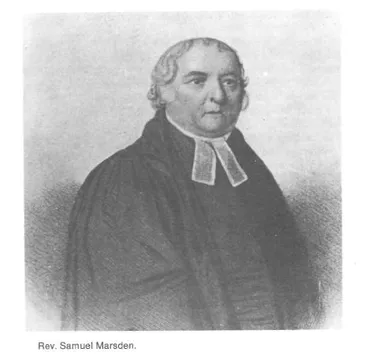
Marsden wrote to Rev Pratt (30 Sept 1814) to define Hall, Kendall & King's roles & state he'd purchase land from a Chief
Marsden intended to purchase the Mission's site, plus land for feeding stock & cultivation; & prepared Land Deeds
Victoria University of Wellington
Mission to be built by Hall; Kendall to focus on native language & teaching; & King to do flax-dressing & shoe-making
Hall to be aided by two sawyers & to also help with agriculture & loading timber aboard the ship to send to NSW
University of Otago
5. Arrival at Oihi in Bay of Islands, 22 Dec 1814
Marsden, the Chiefs, Kendall, Hall, King, 2 sawyers & a smith set sail on the 'Active' for Bay of Islands in Nov 1814
On board were 35 people, including other settlers, & farm animals. Marsden wrote to Rev Pratt to keep him informed.
Victoria University of Wellington
NSW settler John Nicholas asked Marsden if he could accompany him on the trip to NZ & back to Australia
Nicholas published his account of the journey in "Narrative of a Voyage to New Zealand... " in 1817
HathiTrust
In ship's hold were a horse & 2 mares, a bull & 2 cows (gifted by Gov Macquarie), a few sheep, poultry, & seedlings
(Marsden kept a journal on each of his voyages which he sent to the Church Missionary Society to publish)
Victoria University of Wellington
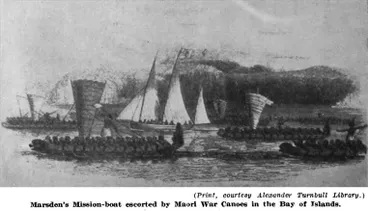
On 22 Dec 1814, Marsden's party arrived at Oihi (now known as Hohi) in the north-east of Rangihoua Bay
They were met in the harbour by local Māori in their waka
Victoria University of Wellington
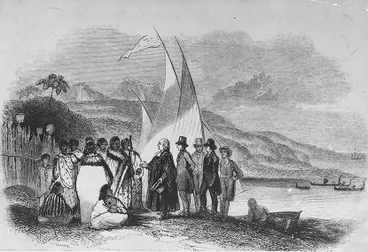
Going ashore, they met with Chief Ruatara & his family
Some stayed overnight in the village whilst others returned to the ship for the evenings
Manatū Taonga, the Ministry for Culture and Heritage
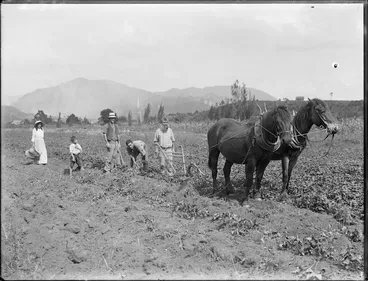
Also offloaded were the animals in the ship's hold (horses, cattle, sheep & poultry) & wheat seed & plant seedlings
The horses - a stallion & 2 mares - are thought to be the first to arrive in NZ. See DigitalNZ Story: First horses in NZ
DigitalNZ
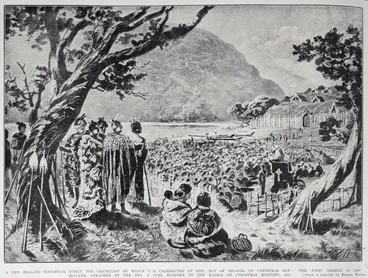
A sermon held on Christmas morning in 1814 by Rev Marsden marked the beginnings of the Mission Station
(See DigitalNZ story.) The sermon was translated into Māori by Chief Ruatara for large crowd of local Māori present.
DigitalNZ
6. Building the Mission Station begins 26 Dec 1814
![Image: Ranghe Hue, [i.e. Rangihoua] a New Zealand fortified village, the residence of Warri-Pork [i.e. Wharepoaka] [picture] /](https://images.digitalnz.org/4h3DP6eKrr9op1cFb02NJsVkCB8=/368x0/http%3A%2F%2Fnla.gov.au%2Fnla.pic-an2838566-t "Ranghe Hue, [i.e. Rangihoua] a New Zealand fortified village, the residence of Warri-Pork [i.e. Wharepoaka] [picture] /")
The day after the Christmas sermon, Marsden sent his ship across the harbour for timber to start building the mission
The trees were 20 miles away & had to be felled, transported & sawn. Ground was also prepared for wheat & vegetables.
National Library of Australia
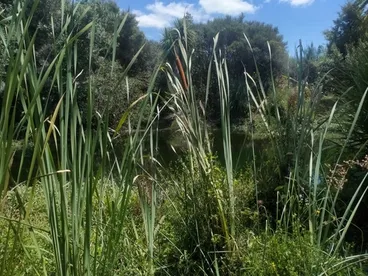
The missionary settlers lived in temporary homes (raupō whare) built by local Māori whilst awaiting timber houses
The whare were without flooring, a chimney or windows; & weren't wind-proof or rain-proof, which settlers found trying
iNaturalist NZ — Mātaki Taiao
In a letter dated 15 Feb 1815, King said, "We expect to have a good house before long, but I fear not before winter"
On 21 Feb, Hannah King gave birth to a boy & Dinah Hall gave birth to a girl in May - 1st known European births in NZ
University of Otago
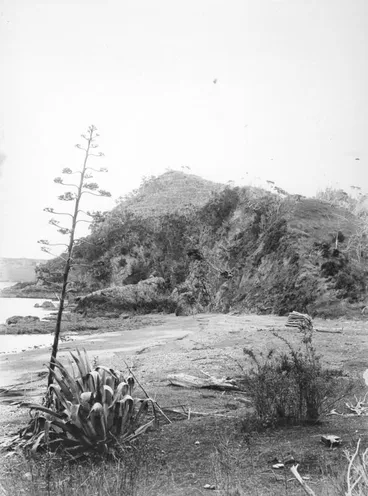
On 24 Feb 1815, Marsden bought c.200 acres for 12 axes & Deed was signed by Chief Ruatara & Kendall & Nicholas for CMS
Two parchment deeds for CMS prepared by Marsden stipulated land between the sea, the stream and other features
Hawke's Bay Museum
![Image: [Lewin, John William] 1770-1819 :[A Hoodee o Gunna, chief of Ranghee Hoo. Between 1815 and 1819].](https://images.digitalnz.org/28QacbmieZ66boQcsUiOv-Tj_QE=/368x0/https%3A%2F%2Fndhadeliver.natlib.govt.nz%2FNLNZStreamGate%2Fget%3Fdps_pid%3DIE32849257 "[Lewin, John William] 1770-1819 :[A Hoodee o Gunna, chief of Ranghee Hoo. Between 1815 and 1819].")
As part of the land lay north of the Oihi Stream, it was owned by Chiefs Te Uri o Kanae (see image) & Waremōkaikai
Kanae was the brother-in-law of Chief Ruatara who'd married his sister, Rahu
Alexander Turnbull Library
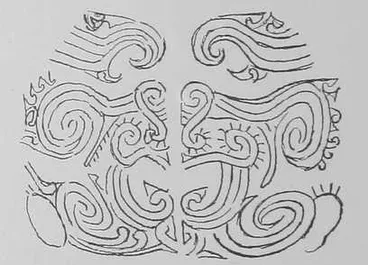
Chief Hongi Hika signed the Deed with a drawing of Kanae's moko, & Waremōkaikai's moko was added as a witness
(Chief Kanae was also known as Turi o Kana, Turi-a-Kuna, Tor A Hoodee O Gunna)
Victoria University of Wellington
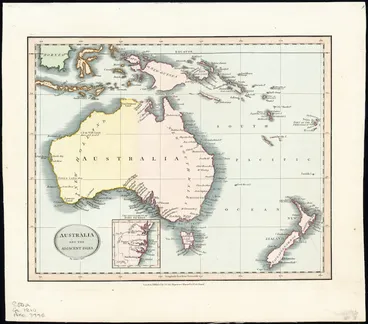
Before Marsden left for NSW on 26 Feb 1815, he appointed carpenter William King as the Mission's Superintendent
National Library of New Zealand
7. Lessons began in schoolmaster Kendall's raupō whare
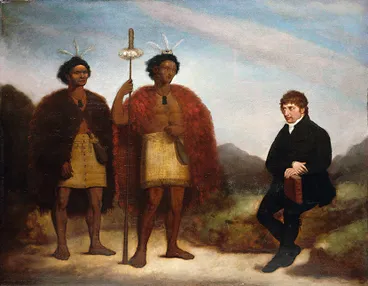
Schoolmaster Thomas Kendall was encouraged by Marsden to begin lessons at his temporary whare raupō
Image: Kendall (on the right) with Chiefs Waikato (left) & Hongi Hika
Manatū Taonga, the Ministry for Culture and Heritage
On 13 Feb 1815, Kendall wrote to Rev Pratt there were several children but he only has room to teach six at a time
He said, "I doubt not but I can have a School full of them as soon as a room is built" & will need to feed & clothe them
University of Otago
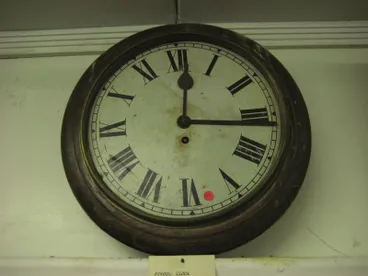
By 8 July 1815, lessons were being held daily in three sessions
Lessons were given to the Māori children in the morning & evening, & to the settler children in the middle of the day
Raglan and District Museum
8. Building delays after Chief Ruatara died in March 1815
Settlers consider relocating to Paihia (May-June 1815) & Waitangi (May 1815-Jan 1816)
Chief Ruatara became unwell and following a month-long "raging fever" died on 3 March 1815
Wikipedia
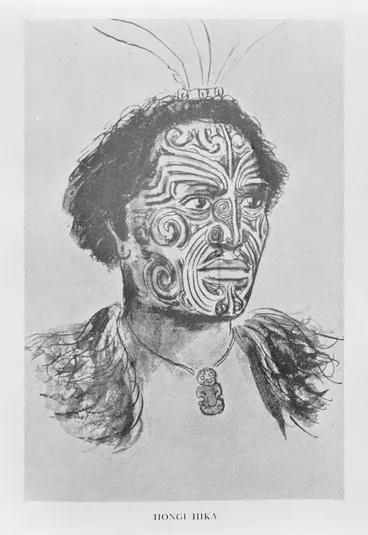
The Mission Station came under the protection of Ruatara's uncle, Chief Hongi Hika
Auckland Libraries
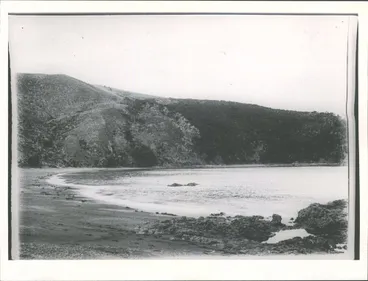
The Settlers found the Mission's land unviable due to the steepness of the slopes & shallowness of the soil
They'd endeavoured to cultivate the land to plant wheat, corn & vegetables for food for themselves & the farm animals
Hocken Collections - Uare Taoka o Hākena, University of Otago
The Settlers bought flatter land with trees nearby at Paihia. Sawyer Conroy went ahead but was attacked on 24 June 1815.
The shack Conroy had built was attacked & plundered by Māori. He & his wife & child returned to the safety of Oihi.
Howick Historical Village
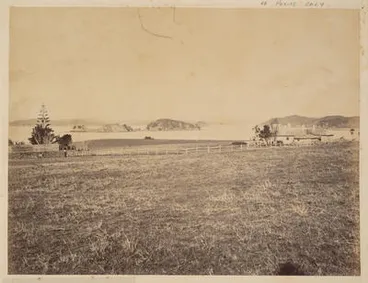
On 14 May 1815, Kendall & Hall bought 50 acres for 5 axes at Waitangi from Chief Waraki (Chief Ruatara's father-in-law)
(The parcel of land later became known as the Waitangi National Trust Estate, where the Treaty of Waitangi was signed)
Auckland War Memorial Museum Tāmaki Paenga Hira
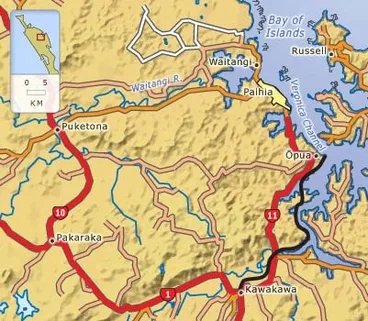
Hall & sawyers Conroy & Campbell decided to move there. The sawyers went ahead; & Hall & his wife followed in Sept 1815.
The sawyers had gone ahead to erect a sawpit, start cutting down trees; saw timber & build the houses
Manatū Taonga, the Ministry for Culture and Heritage
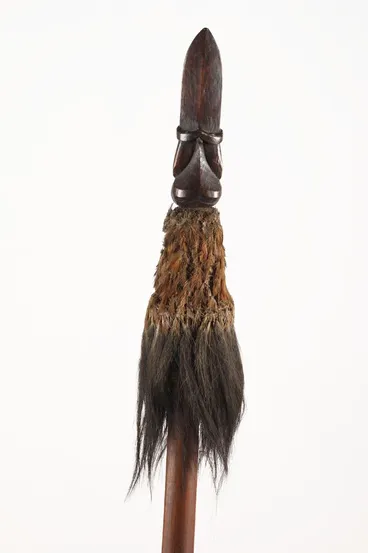
All returned to Oihi by Jan 1816 as raids had begun by Ngāpuhi to claim Waitangi after Chief Waraki died during 1815
The sawyers left first & Hall & his wife stayed until Jan when they were attacked & rescued by frtends
Museum of New Zealand Te Papa Tongarewa
9. First lesson book in te reo Māori written by Kendall during 1815
On 16 Aug 1815, Rev Pratt wrote to Kendall with the expectation he was making progress in learning the Māori language
CMS wanted Kendall to start translating the scriptures in readiness for when a Clergyman is appointed to give help
University of Otago
![Image: Silhouette portrait of "Teeterree" [Titere]](https://images.digitalnz.org/MfEZwlX2zqOcBoDYbzrDyQHE1aM=/368x0/https%3A%2F%2Fmedia.tepapa.govt.nz%2Fcollection%2F254575%2Fpreview "Silhouette portrait of \"Teeterree\" [Titere]")
In 1815, Kendall began writing a lesson book in te reo Māori with Chief Hongi Hika & his nephews Tuai & Titere
Kendall drew on his knowledge of te reo Māori learnt with Tuai (Tohi) when living in NSW during 1814. (Image: Titere)
Museum of New Zealand Te Papa Tongarewa
"A korao no New Zealand; or, the New Zealander's first book" was sent to Samuel Marsden for publication
The book included word lists, numbers, phrases, & religious instruction
Hocken Collections - Uare Taoka o Hākena, University of Otago
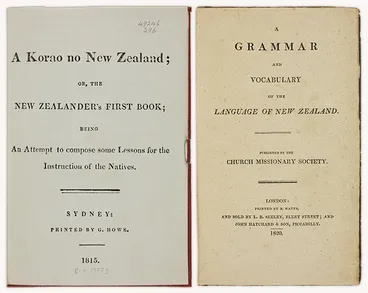
Marsden sent the manuscript to Sydney for printing by George Howe, the Government Printer
200 copies of the 54--paged book were printed & shipped on the 'Active' to Oihi in Dec 1815 (Image: Book on left)
Manatū Taonga, the Ministry for Culture and Heritage
It was the first book published in te reo Māori & is listed in the bibliography "Books in Māori, 1815-1900" (2004)
The bibliography by Phil Parkinson & Penny Griffith was published by Alexander Turnbulll Library & digitised in 2015
National Library of New Zealand
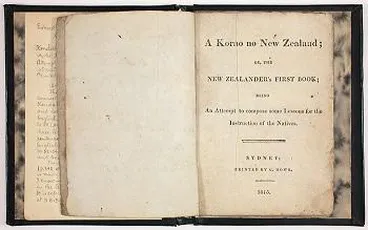
The only known surviving copy of 'A korao' is held at the Auckland Museum since Feb 1894
It was offered for sale to Institute Council by Mrs C.M. Becke in Nov 1893 who received £1-15-0 from the Museum Director
Auckland War Memorial Museum Tāmaki Paenga Hira
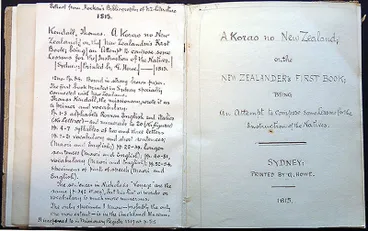
Hocken Library holds the hand-written transcription by John Kenderdine (1860-1932) presented by his wife
Kenderdine (Auckland chemist & book collector) had transcribed Auckland Museum's copy
University of Otago
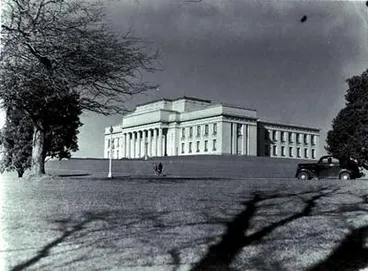
In 1957, Auckland Museum arranged for 100 numbered facsimile copies to be printed by Unity Press
Facsimile copy no. 44 is held by the Hocken Library, & the Alexander Turnbull Library holds copies no. 19 & no. 75
Auckland War Memorial Museum Tāmaki Paenga Hira
In 2014, Kendall's book was added to the UNESCO Memory of the World Register
Register was launched in 1992 to identify & provide access to documentary heritage items of worldwide significance
National Library of New Zealand
10. Kendall planned to build school after house finished in 1816
Estimated roll of 40 students & a need for a second schoolmaster, Oct 1815
Kendall wrote (19 Oct 1815) school to be built when house finished; & wanted extra staff for c.40 roll & a Blacksmith
He advised he'd asked Rev Woodd for another schoolmaster; a person to assist in wriitng down the language; & Blacksmith
University of Otago
School materials, & food & clothing to encourage attendance requested by Kendall
Kendall would write to Reverend Pratt to request that CMS send classroom materials, and clothing and food for the students to encourage attendance. In one letter he wrote, "I should be happy if I could collect a number of Scholars without the Society being at the expence of feeding them, but I am certain that I cannot." See: University of Otago Library: Letter: Reverend Thomas Kendall to Reverend Josiah Pratt, 6 March 1816
In Jan 1816, school supplies included "Printing and Binding New Zealand Spelling Books" & "10 quires of paper in pack"
The items were included on Marsden's accounts summary to CMS (7 March 1816) of items delivered by the 'Active'
University of Otago
Kendall sent letters to Rev Pratt requesting clothing & food for students & items to barter for fish, meat & potatoes
On 6 March 1816, he asked for 2 tons of rice & other food in case local potato supplies ran short after school opens
University of Otago
Kendall planned to create a library for all the Settlers
On 20 Jan 1816, Kendall advised Rev Pratt that he intended to turn a room into a library for all the Settlers to access
He asked for a small printing press & prints to display; & if a Missionary to be sent soon to be instructed in printing
University of Otago
11. Assistant teacher William Carlisle appointed, Feb 1816
In Febrary 1816, William Carlisle was appointed as Kendall's assistant teacher. Carlisle had emigrated from London as a free settler on board the 'Experiment' and arrived at Sydney on 24 June 1804. He was allocated 100 acres to farm at Richmond Hill by Governor King. On 11 September 1811, he married 18 year old Mary Ann Gordon who had emigrated with her parents on the same ship as Carlisle and were farming next door. Their daughter Amelia was born on 29 January 1813, after which an unwell Mary Ann passed away two weeks later. At that time Carlisle had become a coach builder/painter; and then he applied to become a missionary. After marrying Elizabeth Blackman on 7 January 1816, Carlisle journeyed the following month to the Bay of Islands as the assistant to Kendall. Elizabeth remained behind with Amelia who also became known as Emily.
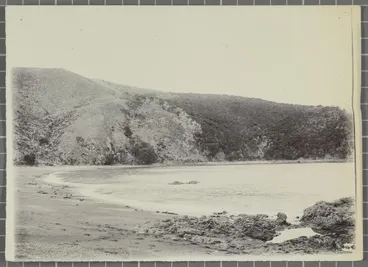
William Carlisle was appointed as Kendall's assistant teacher & arrived at the Mission Station during Feb 1816
He'd emigrated from London to Sydney as a free settler in June 1804; & applied to be a missionary in 1813
Hocken Collections - Uare Taoka o Hākena, University of Otago
12. School building opened on 12 Aug 1816
The school building was opened on 12 August 1816.
The simple building measured about 10m x 6m and included an area for Māori students to sleep and a cordoned-off platform for teachers and Pākehā students. It was constructed of kahikatea boards pit-sawn by mission workers. A fireplace with a brick chimney enabled heating and cooking.
Source: 'New Zealand’s first mission school opens', URL: https://nzhistory.govt.nz/page/new-zealands-first-school-opens, (Ministry for Culture and Heritage), updated 8-Jul-2020
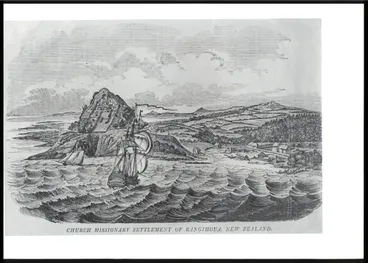
The wooden school building was 10m x 6m & had a brick chimney for heating the room & cooking meals for the students
Far North District Libraries
Opening roll of 33 students peaked at 70 eight months later
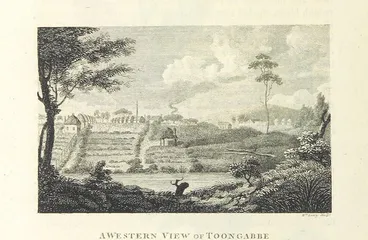
The Mission's school began with 33 Māori & settler students aged between 7-20, & the roll reached 70 eight months later
A monthly register of attendance and meals served was kept and forwarded to Rev Pratt on 24 Feb 1816
The British Library
Attendance varied with food availability & lessons disrupted by visitors & farm chores
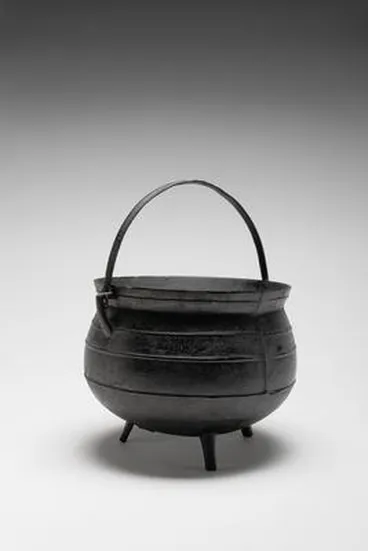
The roll fluctuated when rice & other food ordered from CMS delayed to supplement food traded for locally
Roll dropped during Nov-Dec 1815 when food consisted only of potatoes & some fish to eat at the school
Auckland War Memorial Museum Tāmaki Paenga Hira
![Image: A tabood store-house at Range-hue [i.e. Rangihoua] Bay of Islands, New Zealand [picture] /](https://images.digitalnz.org/mobG2DcwYdQrND65qJdMCIDKJ8Q=/368x0/http%3A%2F%2Fnla.gov.au%2Fnla.pic-an2820808-t "A tabood store-house at Range-hue [i.e. Rangihoua] Bay of Islands, New Zealand [picture] /")
Lessons were also disrupted by iwi visitors to the Pā wanting to see the school & locals trying to sell potatoes
When this occurred, lessons had to be repeated
National Library of Australia
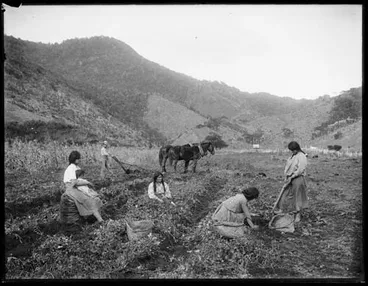
Some of the students were also absent when assisting with sweet potato / kumara gathering
Girls would also be away while having a moko kauae. (Image: Kumara harvesting, Northland)
Manatū Taonga, the Ministry for Culture and Heritage
13. Activities held at the school
A summary of activities held at the school between August 1816 - July 1817 was given by Kendall in a letter to Reverend Mann. See: University of Otago Library: Letter: Reverend Thomas Kendall to Reverend Joshua Mann, 14 July 1817
Classroom & Public Worship, Aug - Dec 1816
" I commenced teaching School in August 1816. My little wild pupils were all noise and play during the first four months. We could scarcely hear them read for their incessant shouting, singing and dancing. The first month they attempted to repeat their lessons in the School house very well, but we soon had to follow them to a short distance into the bushes. I had no command over them, having at that time neither provisions nor rewards to give them. Since I received these, my authority and influence have been greatly augmented amongst them. I can now command their attention. They will learn to read and write, work at their raiment, make fences and fetch water and firewood very chearfully [sic]. The Settlers join in Public Worship twice on every Lords Day, the Prayers of the Church of England are read alternately by myself & Messrs Hall and King. We also meet on the Wednesday evening for the purpose of reading the Holy Scriptures and Prayer. Many Natives attend on the Sunday. The Service is performed in the School House."
Kendall wrote to Rev Pratt about classroom activities & public religious services held since Aug 1816 - July 1817
After spending the first 4 months wanting to play, sing & dance, students had gradually settled into reading & writing
University of Otago
Lessons in English & te reo Māori
Lessons were taught to students in te reo Māori and English. The Māori students were instructed in te reo Māori first and then English was introduced. tKendall was aided by his book, "A korao no New Zealand or, the New Zealander's first book; being an attempt to compose some lessons for the instruction of the natives." which had been shipped from the Government Printer in Sydney in December 1815.
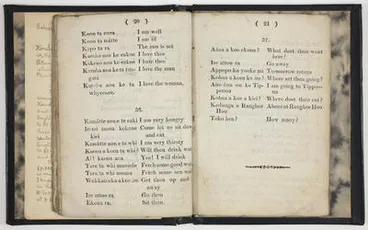
Students were taught in te reo Māori & English using Kendall's "A korao" shipped from Sydney in Dec 1815
The Māori students were taught in te reo Māori first & then English. (Image on left: "A korao no New Zealand")
Manatū Taonga, the Ministry for Culture and Heritage
Teaching was based around learning the alphabet, syllables and catechisms
The students would recite the alphabet and syllables to learn how to read and write
Auckland War Memorial Museum Tāmaki Paenga Hira
Kendall regarded his role as to 'superintend' the School, Oct 1816
In a letter to Rev Woodd sent on 16 October 1816, Kendall described his role as to 'superintend' the school; and that he was assisted in teaching the students by William Carlisle.
"By the Divine care and goodness I and my family have been preserved in peace and safety nearly two years at New Zealand, and altho' my time has hitherto been very much occupied in mechanical pursuits yet I bless God I have with the assistance of Mr Carlisle been enabled to attend to my main object "the Instruction of the children"... I know you will feel warmly interested in every thing that relates to the Society's School which I have the honor and happiness to superintend."
Source: University of Otago Library: Letter: Reverend Thomas Kendall to Reverend Basil Woodd, 16 October 1816
School supplies requested from CMS, Oct & Nov 1816
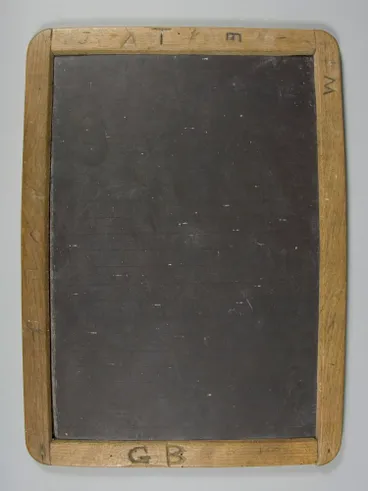
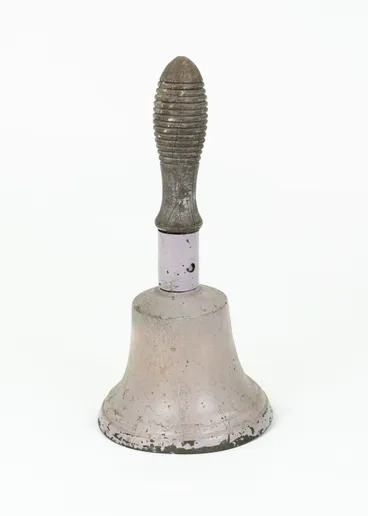
During Oct & Nov 1816, Kendall sent Rev Pratt a list of school supplies required including slate & slate pencils
Items included: school bell, paper, copy books, ciphering books, quills, ink, ink stand, knives, forks, spoons & combs
Museum of New Zealand Te Papa Tongarewa
Teaching assistant Carlisle applied to be accepted as a lay settler, Nov 1816
On 5 November 1816, Carlisle wrote a letter to Reverend Josiah Pratt in which he stated that he wished to be accepted as a lay settler by the Church Missionary Society: "Should the Hon[oura]ble Committee accept of my services as a Catechist or Lay settler I should think myself honored in being employed under them in publishing the glad news of the Saviours dying love to a perishing world. Mr Marsden and Mr Kendall will make mention of me by this conveyance. When you return an answer to them I should also esteem a Letter from you a particular favor." Source: University of Otago Library: Letter: William Carlisle to Reverend Josiah Pratt
Carlisle went to Sydney in Dec 1816 to bring his family out; leaving Kendall as sole teacher until April 1817
In December 1816, William Carlisle returned to Sydney ito collect his wife Elizabeth, daughter Amelia, and former brother-in-law Charles Gordon to live in NZ. Gordon was to be employed at the Oihi Mission Station teaching agriculture. Whilst in Sydney, Carlisle informed the newspaper that the school was attended daily by nearly 60 children "many of whom begin to read and spell and are all very attentive to some Gospel passages which have been printed in their own language". He also shared a drawing of the Bay of Islands settlement "which boasted several houses erected for the accommodation of the missionaries." They departed from Sydney to Oihi in Marsden's ship 'Active' in April 1817.
On 5 Nov 1816, Carlisle applied to become a lay settler; went to Sydney in Dec & brought his family to NZ in April 1817
He arrived back with his wife Elizabeth, daugher Amelia, & former brother-in-law Charles Gordon to teach agriculture
Auckland War Memorial Museum Tāmaki Paenga Hira
Classroom, leisure & religious activities, Jan 1817
In his report to Rev Woodd on 31 January 1817, Kendall sent the school roll of 60 for that month and described the pattern of activities that take place in the school and during the students' leisure time. See: University of Otago Library: Letter: Reverend Thomas Kendall to Reverend Basil Woodd, 31 January 1817
"During this month the whole of the children have contrary to my expectation repeated their Lessons in the School House. The Girls have been employed in making their raiment in their leisure hours according to their own plan. I have distributed some portions of flax amongst them for the above purpose. The Scholars commence their Morning lessons about Sun a rise and finish them at an early hour. The Children belonging to myself and Colleagues are attended to in the middle of the Day. In the afternoon the Native Children say their Lessons again they generally receive a handful of Potatoes each, twice a day which they cook for themselves as they please. The prayers of the Church and a Suitable Sermon are read by the Settlers alternately on every Lord's Day in the School House. Several children & natives attend."
In Jan 1817, roll was 60 & Kendall's report described study routine, & leisure & religious activities
Morning lessons start at sunrise; & students attend in middle of the day; & Māori students repeat in the afternoon
Tauranga City Libraries
Leisure activities & tasks, Jan 1817
In his report sent to Rev Pratt on 1 February 1817, Kendall described some of the additional activities involving the students. See: University of Otago Library: Letter: Reverend Thomas Kendall to Reverend Josiah Pratt, 01 February 1817:
"The female Scholars small and great have each finished An upper Garment and some have finished two. Two or three of the Boys are assisting my Colleague Mr King in dressing and spinning flax. The rest are busy in making and flying their kites except when they are in [sic] making fences and procuring fire wood. We have no regular employment for them all."
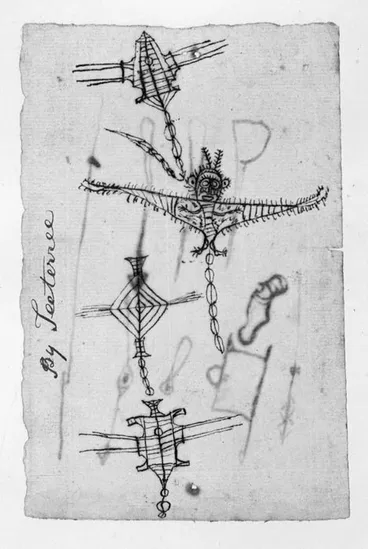
Male students were involved with making & flying kites, dressing & spinning flax, fence-making & collecting firewood
Female students were involved in upper garment-making with all finishing one & some finishing two garments
Manatū Taonga, the Ministry for Culture and Heritage
Classroom daily routine with Kendall & Carlisle by July 1817
The students' current daily routine was also described by Kendall in his letter to Reverend Mann. See: University of Otago Library: Letter: Reverend Thomas Kendall to Reverend Joshua Mann, 14 July 1817
They rise at daylight according to the custom of the natives in general, and repeat their lessons to me. After breakfast several of the boys write a copy. The girls are employed in making their raiment the whole of the Day. After Dinner the Native children repeat their lessons to my colleague Mr Carlisle. The Boys learn to write on every day of the week except Sundays. The children of the settlers are also instructed by myself and Mr Carlisle."
14. Further te reo Māori resources underway during 1818
Samuel Lee at Cambridge University aided by Kendall's book & Tuai & Titere
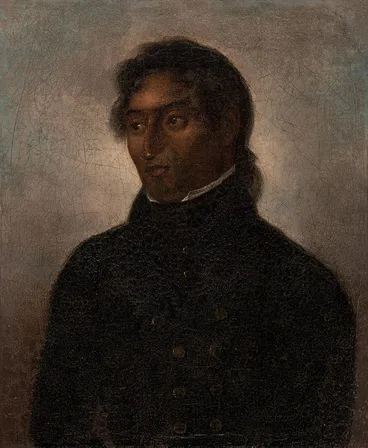
On 9 April 1817, Tuai & Titere left NSW for England on the 'Kangaroo' to aid CMS to compile a Māori grammar & dictionary
They'd been staying with Marsden since end of 1815 & wanted to visit England, so Marsden sponsored them to also aid CMS
Manatū Taonga, the Ministry for Culture and Heritage
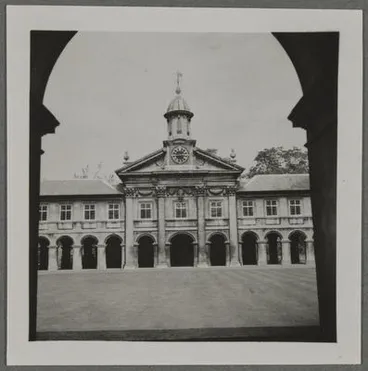
CMS had funded Samuel Lee to study at Cambridge Univ since 1813 to aid CMS with linguistic translations for Missionaries
School teacher Lee (b.1783) had been giving private lessons in Persian and Hindustani which came to the notice of CMS
Auckland War Memorial Museum Tāmaki Paenga Hira
After arriving in London in Feb 1818, Tuai & Titere collaborated with Lee on Māori grammar, pronunciation & vocabulary
Lee was aided by Kendall's "A Korao no New Zealand". (CMS sent a letter to notify Kendall, 12 March 1818)
University of Otago
![Image: [Barry, James] :Teeterree, a New Zealand chief. Painted and presented by James Barry Esq[ui]re](https://images.digitalnz.org/x3uC77m_NxIxLB_apv9u2vjAUlw=/368x0/https%3A%2F%2Fndhadeliver.natlib.govt.nz%2FNLNZStreamGate%2Fget%3Fdps_pid%3DIE34165910 "[Barry, James] :Teeterree, a New Zealand chief. Painted and presented by James Barry Esq[ui]re")
However, meetings with Lee were disrupted as Tuai & Titere became unwell with bronchial infections
In July 1818, Lee graduated with B.A. & later in 1819 received an M.A. & became Cambridge Univ's Professor of Arabic
Alexander Turnbull Library
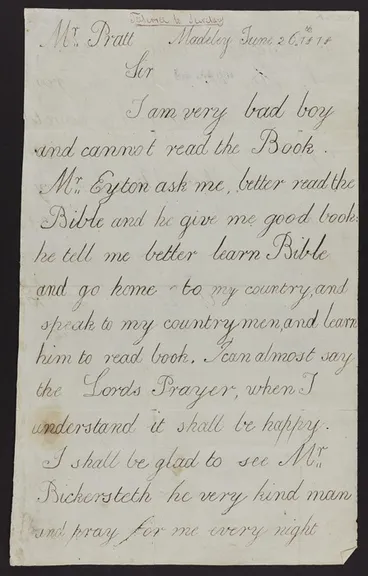
CMS expected Tuai & Tītere to study scriptural reading & writing to assist Māori back home, but they weren't keen
Tuai wrote a letter to Rev Pratt about his Bible readings, 26 June 1818
Alexander Turnbull Library
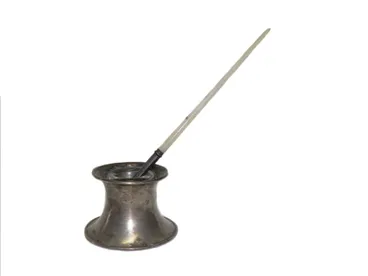
Tuai & Titere met teacher Francis Hall who'd applied to be a lay missionary in NZ & taught them to read & write
They dictated their letters to Hall who wrote down on slate, & they copied onto paper with a quill pen & ink
Mangawhai Museum
As a break from study, they joined Hall in attending church, visiting schools & homes, working on farms & sightseeing
Tuai shared their varied experiences in Shropshire in a letter to Rev Pratt, 20 Aug 1818
Manatū Taonga, the Ministry for Culture and Heritage
When back in London, Titere wrote to Rev Marsden (12 Oct 1818) of their countryside experiences & health issues
He added, "I got a Bible and Prayer Book...I can say the Lords Prayer all through, and begin learn the Commandments"
University of Otago
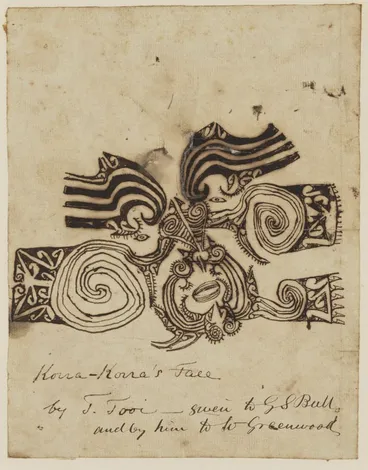
As well as writing letters, of which 19 were sent home, Tuai & Titere also drew 5 ink sketches of moko, waka & kites
Copies of their letters are held by ATL & Hocken Library. The ink sketches are held at Auckland Library.
Auckland Libraries
![Image: Silhouette portraits of Tooi [Tuai] Teeterree [Tītere] and Francis Hall](https://images.digitalnz.org/RdUmSOrTHYRw16asbpQSMosJjb4=/368x0/https%3A%2F%2Fmedia.tepapa.govt.nz%2Fcollection%2F705020%2Fpreview "Silhouette portraits of Tooi [Tuai] Teeterree [Tītere] and Francis Hall")
CMS commissioned lay member James Barry to paint silhouettes & formal portraits of Tuai, Tītere & Hall
The silhouettes & portraits are now in the Alexander Turnbull Library
Museum of New Zealand Te Papa Tongarewa
Kendall compiled Spelling book (March 1818) & "Preparatory Catechism" (Dec 1818)
On 6 March 1818, Kendall sent his new manuscripts "The New Zealanders' Spelling Book" Pt 1 & 2 to Marsden for approval
Marsden sent the manuscripts to CMS who decided to forward to Samuel Lee at Cambridge University for comment
University of Otago
On 14 Dec 1818, Kendall sent his newly compiled "Preparatory Catechism" in Māori & English to Rev Pratt for approval
The Catechism, intended to introduce basic Biblical concepts to Māori students & adults, was sent by CMS to Samuel Lee
University of Otago
15. Ongoing food supply issues led to private trade occurring, 1818-1819
Kendall requested the Mission provide £100 per annum for the School, 10 Dec 1818
On 10 December 1818, Kendall wrote to Rev Pratt to advise that he had not been able to feed the students for more than five or six months over the past year. Unless the 50-60 students were fed twice a day with a handful of potatoes or a little rice, the school would be almost deserted. Kendall recommended to solve the issue, the Mission provide 100 pounds per annum. See: University of Otago Library: Letter: Reverend Thomas Kendall to Reverend Basil Woodd, 10 December 1818
On 10 Dec 1818, Kendall wrote to Rev Pratt to ask for £100 per annum to help feed 50-60 students twice a day
He'd only been able to feed the students for 5 or 6 months over the past year which led to absences
University of Otago
Private trading by settlers already occurring by Dec 1818
On 14 December 1818, Kendall wrote to Rev Pratt that Rev Marsden had yet to provfde a plan to adopt to support the school. The ongoing issue of insufficient food being sent by CMS had led to an increase in private trading by settlers instead of through the Mission for supplies. However, food shortages continued to cause a drop in attendance. See: University of Otago Library: Letter: Reverend Thomas Kendall to Reverend Josiah Pratt, 14 December 1818s
Carlisle suggested an allowance for school to engage in private trade, 19 Dec 1818
On 19 December 1818, William Carlisle wrote to Rev Pratt to suggest an allowance for the school to engage in private trade to support the school. He suggested the settlers be permitted to engage in private trade in order that they may improve their lot. Source: University of Otago Library: Letter: Reverend Thomas Kendall to Reverend Josiah Pratt, 14 December 1818
Agreement for private trade signed without gaining CMS approval, 30 March 1819
On 30 March 1819, taking matters into their own hands, Kendall, Carlisle, King & Gordon signed a private trade agreement
The Agreement was not signed by carpenter William Hall
University of Otago
On 21 April 1819, a copy of the private trade agreement was sent to Marsden who did not receive it until 26 Sept 1819
In his accompanying letter, Kendall disclosed to Marsden that there was friction with Hall
University of Otago
Meanwhile, on 20 July 1819, Rev Pratt advised Kendall that the settlers were not to engage in any form of armed trade
Implements of war were not to be "employed by the Settlers in this traffic, or supplied to them in any other way".
University of Otago
16. Five extra 'laymen' missionaries including 2 more teaching staff
On 14 December 1818, Reverend Pratt and Reverend Edward Bickersteth wrote to Kendall to advise that they'd received Kendall's letters in London after lengthy delays of up to more than a year. Hence, the delays in their responses to Kendall's requests, including extra staff. CMS stated they had appointed four 'laymen' missionaries - Clergyman (Rev John Clare Butler), Schoolmasters (Butler's son Samuel and Francis Hall), and Smith/Catechist (James Kemp). See: University of Otago Library: Letter: Reverend Edward Bickersteth and Reverend Josiah Pratt to William Kendall, 14 Decmber 1818
Soon afterwards, CMS appointed the fifth 'layperson' - carpenter/boatbuilder (William Puckey).
Before departing from London, Rev Butler was also appointed as the Superintendent designate of the Church Missionary Society (CMS) mission in New Zealand, subordinate to Rev Marsden.
By Dec 1818, CMS had appointed a smith; a carpenter/boatbuilder; clergyman & 2 schoolmasters
CMS notifed Kendall of 4 appointments in letter dated 14 Dec 1818 & made 5th appointment (2d teacher) soon after
University of Otago
Laymen missionaries departed London & arrived at NSW (26 June 1819)
On 15 December 1818, the five laymen and their families departed London on the convict ship 'Baring' for NSW to meet Rev Marsden. After stopping at Sheerness to collect more convicts, the ship ran aground at the North Foreland headland on the Kent coast and returned to Sheerness for repairs. The voyage then resumed on 27 January 1819. See: Free Settler or Felon: Convict Ship Baring (2): To Australia in 1819: https://www.freesettlerorfelon.com/convict ship baring 1819.htm
On 15 Dec 1818, the five 'laymen' & their families departed London on the 'Baring' to join Rev Marsden in NSW
Accounts of the voyage on the convict ship were provided by Rev John Butler to Rev Pratt. (See letter, 19 Dec 1818)
University of Otago
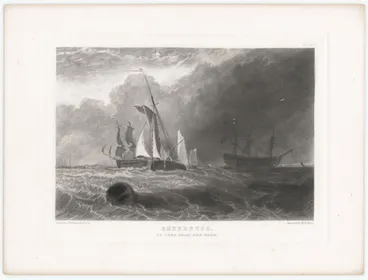
The journey was then delayed until 27 Jan 1819 after 'Baring' ran aground near North Foreland headland on the Kent coast
The 'Baring' had stopped at Sheerness to collect more convicts before running aground; then returned there for repairs
Museum of New Zealand Te Papa Tongarewa
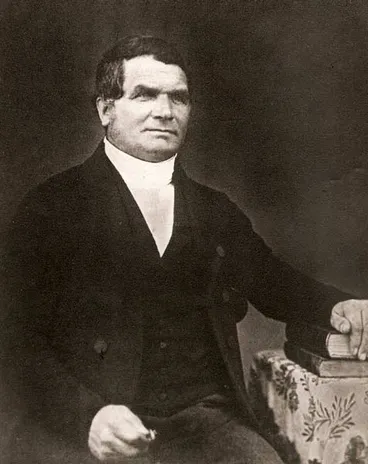
On board were James Kemp (a smith & Catechist) & William Puckey (a carpenter & boatbuilder)
Kemp was accompanied by wife Charlotte; & Puckey by wife Margery, son William (14 yrs) & daughter Elizabeth (8 yrs)
Manatū Taonga, the Ministry for Culture and Heritage
Clergyman was Rev John Gare Butler whom CMS also appointed as Superintendent designate in NZ, subordinate to Marsden
Rev Butler was accompanied by his wife Hannah, son Samuel & daughter Hannah
University of Otago
The two schoolmasters were Rev Butler's son Samuel & Francis Hall who was accompanied to NSW by Tuai & Titere
(As stated in his letter to Rev Pratt (27 Dec 1817), Hall had begun applying in 1814 to become a lay missionary in NZ)
University of Otago
Tuai & Tītere were returning after staying in London since Feb 1818, sponsored by Marsden & CMS
Titere wrote to Rev Bickersteth (8 Jan 1819) of their activities at Brompton in Kent whilst the 'Baring' was repaired
University of Otago
On 26 June 1819, the laymen arrived at NSW & they stayed with Rev Marsden whilst he organised a ship to Oihi
Their voyage & arrival at NSW was reported by Rev Butler in a letter sent to Rev Pratt on 5 July 1819
University of Otago
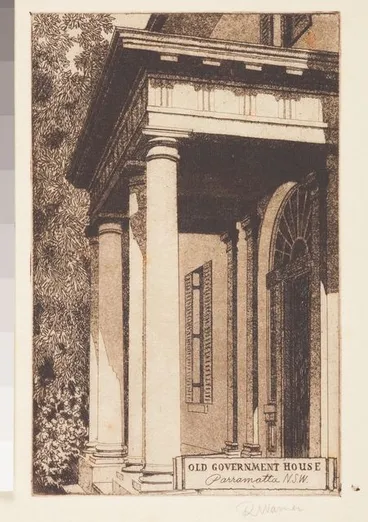
On 24 July 1819, at Marsden's request, NSW Governor Macquarie appointed Rev Butler as Justice of the Peace (JP)
Marsden argued legal power was needed for the missionaries to deal with unruly sailors, deserters & criminal activities
Museum of New Zealand Te Papa Tongarewa
Rev Marsden & 5 'laymen' missionaries arrived at Oihi, 12 Aug 1819
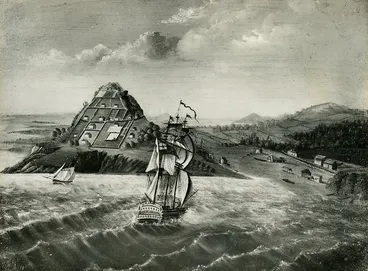
On 12 Aug 1819, Marsden arrived at Oihi with the five London-appointed 'laymen' missionaries & their families
They'd departed from Port Jackson on 29 July 1819 after Marsden chartered the American brig 'General Gates'
Archives New Zealand Te Rua Mahara o te Kāwanatanga
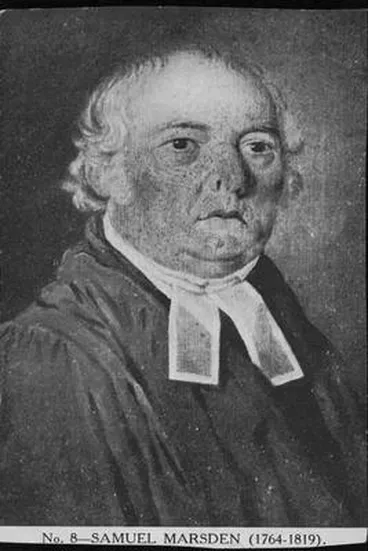
On 5 Sept 1819, NZ's first celebration of the Holy Communion was held by Rev Marsden aided by Rev Butler
The service was held at the Oihi Mission Station
Auckland War Memorial Museum Tāmaki Paenga Hira
17. Oihi Mission School eventually closed in Nov 1819
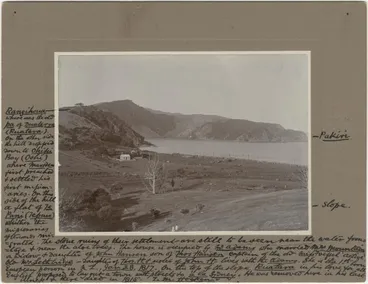
During his 3 month stay, Marsden found the school & agriculture being neglected & the roll had dropped
The neglect was due to the increasing involvement of the Miission's staff in trade agreements
Hocken Collections - Uare Taoka o Hākena, University of Otago
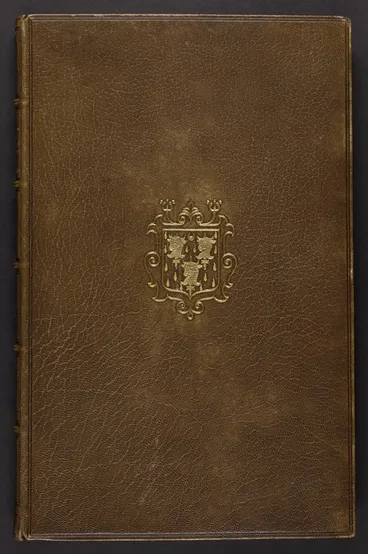
In Nov 1819, Marsden dismissed Kendall & Carlisle for neglecting teaching duties; & closed the Mission School
He also dismissed Gordon for neglecting agricultural duties & suspended King for refusing to make or mend shoes
Alexander Turnbull Library
![Image: Woore, Thomas, 1804-1878: Hippa or native fortress, Runghahoa [sic] Bay of Islands N.Z., 10th March, 1834. 1932](https://images.digitalnz.org/_fQGz87mEvRc_dKFVECcT_qq1w4=/368x0/https%3A%2F%2Fndhadeliver.natlib.govt.nz%2FNLNZStreamGate%2Fget%3Fdps_pid%3DIE180874 "Woore, Thomas, 1804-1878: Hippa or native fortress, Runghahoa [sic] Bay of Islands N.Z., 10th March, 1834. 1932")
The school building was used as a store by the Oihi Mission Station
Alexander Turnbull Library
18. A second Mission Station & School planned at Kerikeri, 1819
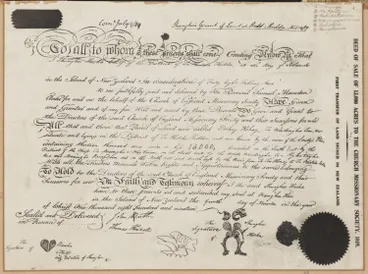
On 4 July 1819, CMS purchased land at Kerikeri following Hongi Hika's suggestion to build a mission & school there
The Deed of Sale for 13,000 acres for 48 axes was signed by Kendall and Butler for CMS
Auckland Libraries
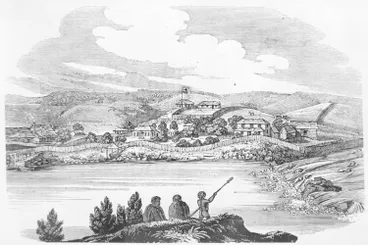
Rev. Butler, who'd been appointed Superintendent designate by CMS, chose Kerikeri as his headquarters
He was the first ordained clergyman to reside in NZ and came under Marsden's supervision
Auckland Libraries
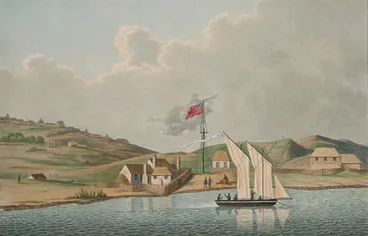
In Nov 1819, Marsden arranged for Butler, smith Kemp, & carpenters Puckey & William Hall to set up the Kerikeri Mission
Auckland Art Gallery Toi o Tāmaki
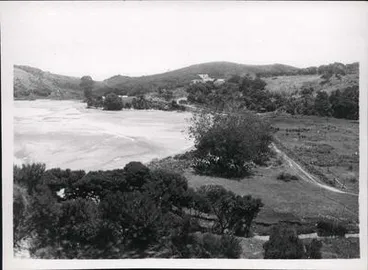
Twine-maker/shoemaker King & Kendall stayed near the Oihi Mission. Then Kendall moved to the Matauwhi village.
Kendall built a home at Matauwhi which lay in a cove.on the south side of Oihi. Chief over Matauwhi was Pōmare.
Auckland War Memorial Museum Tāmaki Paenga Hira
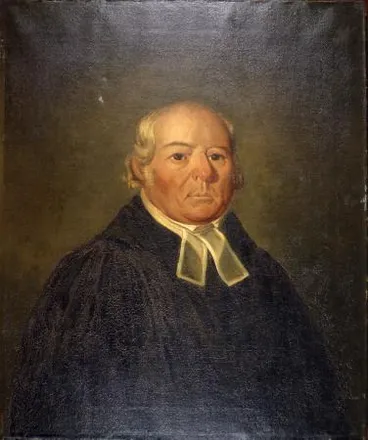
On 9 Nov 1819, Marsden returned to NSW accompanied by teacher Carlisle & agriculturalist Charles Gordon & families
Manatū Taonga, the Ministry for Culture and Heritage
>>>>>>>>>>>>>>>>>>>>>>>>>>>>>
19. Postscript: What happened to Kendall & the Oihi Mission Station?
19a. What happened to Thomas Kendall?
Kendall visited England to publish a spelling book, March 1820 - July 1821
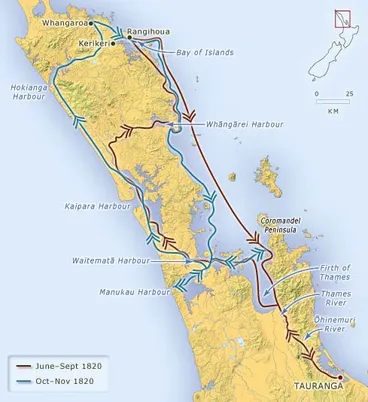
On 27 Feb 1820, Marsden arrived at Oihi; then explored Northland coast & overland as far as Tauranga until 5 Dec 1820
Accompanied by Māori guides, he visited the Waihou River, Firth of Thames, Tauranga, Auckland Isthmus & Hokianga
Manatū Taonga, the Ministry for Culture and Heritage
![Image: Taylor, Richard, 1805-1873 :Queen's College, Cambridge [ca 1822]](https://images.digitalnz.org/g8wrmBgK16OErFh48fgPGPv29mk=/368x0/https%3A%2F%2Fndhadeliver.natlib.govt.nz%2FNLNZStreamGate%2Fget%3Fdps_pid%3DIE109874 "Taylor, Richard, 1805-1873 :Queen's College, Cambridge [ca 1822]")
Marsden found Kendall was planning to meet with Prof Lee at Cambridge Univ's Queen's College & directed him not to go
Pratt had written to Kendall (20 July 1819) that Lee had raised queries about Kendall's Spelling book & Catechism
Alexander Turnbull Library
![Image: Goodwin, Arnold Frederick, 1890-1978 :Hongi, chief of a small northern tribe, who visited England in 1820, an event which was to change the whole history of the North Island of New Zealand. [Edinburgh? ca 1930]](https://images.digitalnz.org/NNXdZ-lsjrMtpnNTRFoOdIAKWow=/368x0/https%3A%2F%2Fndhadeliver.natlib.govt.nz%2FNLNZStreamGate%2Fget%3Fdps_pid%3DIE32849250 "Goodwin, Arnold Frederick, 1890-1978 :Hongi, chief of a small northern tribe, who visited England in 1820, an event which was to change the whole history of the North Island of New Zealand. [Edinburgh? ca 1930]")
However, on 2 March 1820, Kendall departed with Hongi Hika & Hohaia Parata Waikato of Rangihoua for England
They sailed aboard the 'New Zealander' & after 17 weeks reached England on 3 July 1830 where they stayed for 5 months
Alexander Turnbull Library
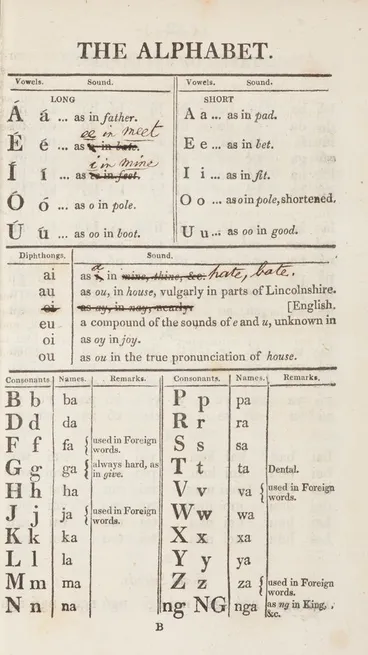
They spent almost 2 months at Cambridge Univ with Prof Lee who wrote down sounds from the dictation of Hongi & Waikato
Kendall translated the sounds from material he'd collected, including his "The New Zealanders' Spelling Book" Pt 1 & 2
Museum of New Zealand Te Papa Tongarewa
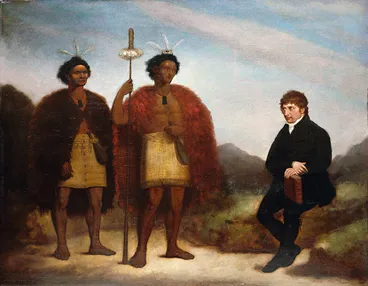
Both Chiefs were introduced to King George IV (crowned 29 Jan 1820) & Hongi was introduced as "King of New Zealand"
Their portrait was also painted by James Barry: Chief Hohaia Parata Waikato (left), Chief Hongi Hika, & Thomas Kendall
Manatū Taonga, the Ministry for Culture and Heritage
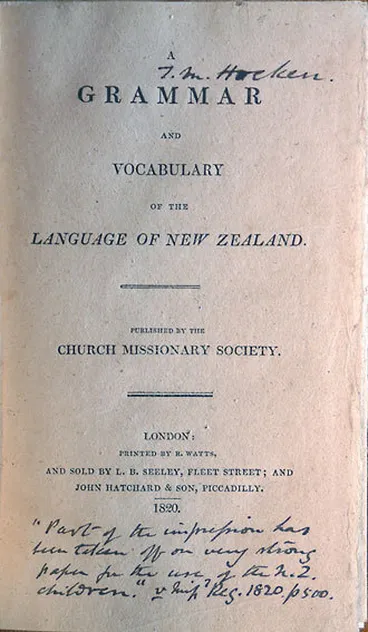
At the end of 1820, 'A grammar and vocabulary of the language of New Zealand' (30 pages) published by CMS (500 copies)
In the Preface, Prof Lee backgrounded the involvement of "Mr Kendall" & "two Native Chiefs" & book's purpose & layout
University of Otago
By developing written conventions for an oral language, the CMS was able to make scriptures available in te reo Māori
Reading the Bible would assist conversion of Maori to Christianity. However, missionaries needed to learn Māori.
HathiTrust
On 12 Nov 1820, Kendall was ordained a priest by the Bishop of Ely James Woodford to preach only in NZ
He was restricted to preaching in NZ as he spoke neither Latin nor Greek
University of Otago
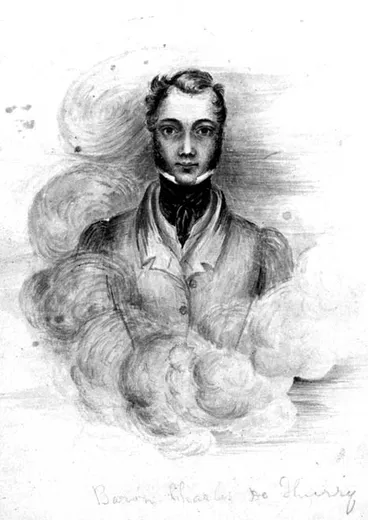
During his visit in England, Kendall met Charles H. P. de Thierry and agreed to buy land for him in Bay of Islands
De Thierry's plan was to establish an independent settlement & declare himself the "sovereign chief" of NZ
Manatū Taonga, the Ministry for Culture and Heritage
Kendall returned to NZ, arriving in July 1821
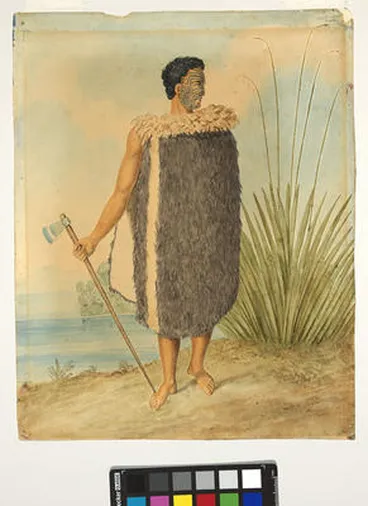
In July 1821, Kendall arrived back at NZ & bought 40,000 acres for de Thierry at Hokianga for 36 axes in 1822
The land was bought from local Māori chiefs, including Muriwai, Patuone & Waka Nene
Auckland War Memorial Museum Tāmaki Paenga Hira
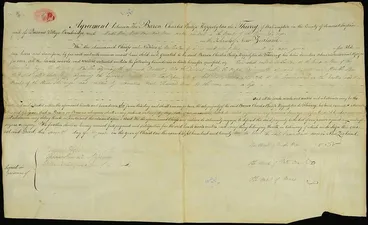
The land purchase was later disputed by Patuone & Nene when De Thierry arrived in Nov 1837 & he agreed to 800 acres
However, de Thierry's plans for a French colony were ended by the signing of the Treaty of Waitangi in 1840
Archives New Zealand Te Rua Mahara o te Kāwanatanga
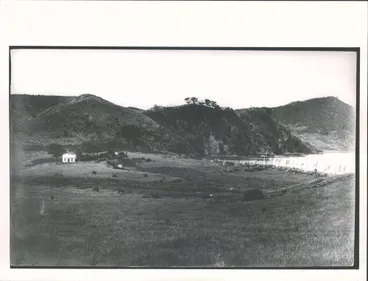
In late 1821 - April 1822, Kendall had an affair with Tūngaroa (17 yr old servant; ex-pupil & tohunga Rākau's daughter)
Rākau (c.1740–c.1825) was a revered tohunga at Rangihoua Pā
Hocken Collections - Uare Taoka o Hākena, University of Otago
In 1822, Kendall began writing to CMS on his knowledge of Māori cosmological thought, language & symbolism of carvings
He later said to a sailor his affair was "to obtain accurate information as to their religious opinions and tenets"
Manatū Taonga, the Ministry for Culture and Heritage
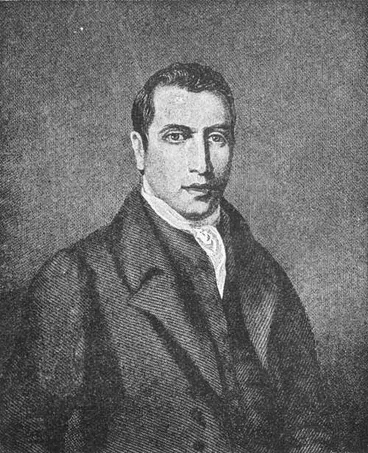
On 22 Jan 1822, Wesleyan missionary Rev Samuel Leigh & his wife arrived unannounced which led to conflict with Kendall
Leigh stayed with Hall & aided Hall & King to hold religious meetings which Kendall found clashed with his services
Manatū Taonga, the Ministry for Culture and Heritage
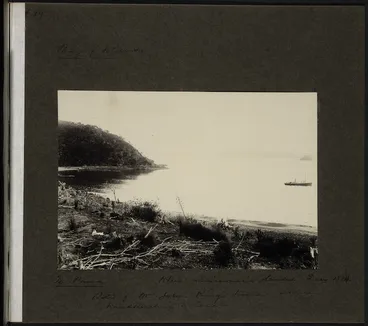
When Kendall & Tūngaroa's relationship met disapproval locally, they moved to nearby village Kaihiki on Te Puna inlet
Disapproving were Rev Butler;; Tūngaroa's brother-in-law; & local Māori who didn't accept a missionary having 2 wives
Alexander Turnbull Library
On 4 April 1822, Kendall wrote to Marsden asking for the Wesleyans to remove Leigh who'd arrived without his prior leave
Kendall commented the separate meetings by Hall & King were at "the time of Divine Service upon the Lords Day"
University of Otago
On 4 April 1822, Leigh wrote to Marsden & mentioned Kendall's "New Zealand girl". Kendall ended the affair during April.
Kendall returned to his wife who accepted him. (She'd also had an affair with servant & ex-convict Richard Stockwell.)
University of Otago
Kendall suspended (Sept 1822); then dismissed from CMS (Aug 1823) for defending gun trade
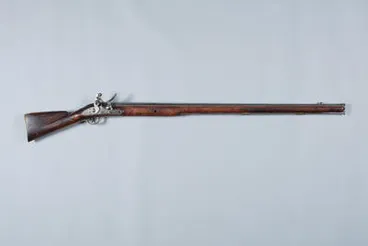
On 27 Sept 1821, Kendall had written a letter defending the gun trade which all the missionaries signed
He said we can't dicate items paid to Māori: "They dictate to us!" & their ambition and self-interest aid "our security"
Auckland War Memorial Museum Tāmaki Paenga Hira
On 26 Feb 1822, Kendall responded to Marsden on the Christian view of no guns stating guns aided protection from enemies
He stated trade was allowed with hatchets which could be used to kill; but a musket ball would be a more merciful death
University of Otago
On 7 Sept 1822, Marsden wrote to Rev Pratt he'd suspended Kendall over the gun trade & was awaiting CMS's final verdict
The CMS Committee held its meeting on 22 April 1823 & advised Marsden that Kendall was to be dismissed
University of Otago
On 9 Aug 1823, Marsden wrote to Kendall to officlally dismiss him for defending gun trade & selling guns to Hongi Hika
After being dismissed from CMS, Kendall & his family continued to stay at their home at Matauwhi
University of Otago
Kendall asked to leave NZ by Marsden, Aug 1823
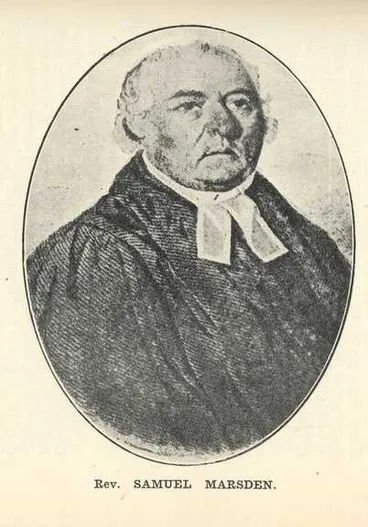
On 3 Aug 1823, Marsden arrived at Oihi to ask Kendall to leave NZ due to adulterous conduct, which Kendall agreed to do
Victoria University of Wellington
In letters to Marsden during Aug 1823, Kendall retracted his improper sentiments or impressions to colleagues
He added he wished "to shew my readiness to forgive, as I wish to be forgiven" (See letter dated 30 Aug)
University of Otago
On 7 Sept 1823, Kendall & family left with Marsden but the ship was wrecked in harbour & he saw this as a sign to stay
Afterwards, on 20 Sept, Marsden wrote to Pratt that a gale had arisen & driven the ship 'Brampton' onto rocks
Victoria University of Wellington
Kendall stayed on in NZ & sent carvings, letters & a sketch on Māori cosmology to CMS, 1823 - 1824
Whilst remainng in NZ, Kendall continued to increase his understanding of Māori cosmological thought gained from conversations with Tungaroa and others. He sent to CMS three shipments of 18 Māori wood carvings / whakairo rākau; explanatory letters; and a sketch of one carving depicting Nukutawhiti at the entrance to a carved storehouse.
Whereas CMS received Kendall's letters and sketch, the carvings did not arrive. One of the shipments of carvings was lost at sea; the second went missing in Australia; and the whereabouts of the third was unknown until recently. Seven carvings have been located in museums in Switzerland, Germany, United States, and New Zealand.
For more details, see:
Binney, Judith: The heritage of Isaiah: Thomas Kendall and Maori religion. New Zealand Journal of History, 1, No 2 (1967), pp. 124 - 127
Brown: Diedre (Dec 2024), A rediscovered taurapa from Thomas Kendall’s 1823 Marianna consignment of whakairo rākau (Māori wood carvings); Journal of the Polynesian Society (v. 33, no 4), pp. 455-464
University of Auckland: "Missing Māori wood carvings found after 200 years: (22 February 2024)
![Image: Kendall, Thomas, 1778-1832 :Nuku Tawiti, a deity in the first state [1824]](https://images.digitalnz.org/UMSS3Qp3HsE1IsT8yGoH3FpTdJQ=/368x0/https%3A%2F%2Fndhadeliver.natlib.govt.nz%2FNLNZStreamGate%2Fget%3Fdps_pid%3DIE56983171 "Kendall, Thomas, 1778-1832 :Nuku Tawiti, a deity in the first state [1824]")
During 1823-24, Kendall sent to CMS 3 shiploads of 18 carvings, which did not arrive, & explanatory letters & a sketch
Of the 18 carvings that went missing, 7 have been found recently in museums overseas & NZ
Alexander Turnbull Library
Kendall left NZ for Peru (Feb 1825); then lived in NSW where he died (1827-Aug 1832)
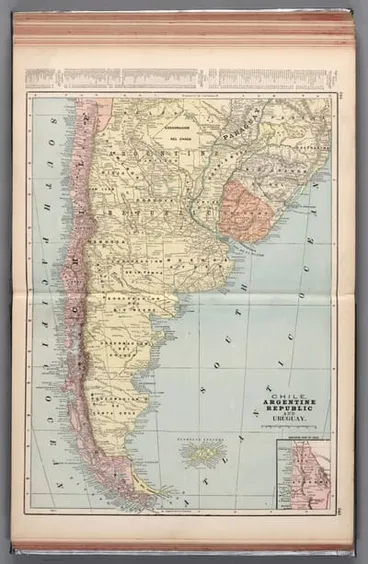
In Feb 1825, Kendall & family went to Chile where he became a clergyman attached to the British Consulate at Valparaiso
Earlier on 25 July 1824, Kendall wrote to CMS & confessed his past "errors"
Digital Public Library of America
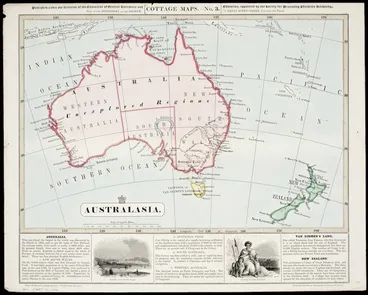
In 1827, they relocated to Ulladulla, NSW where Kendall was granted 1280 acres; began dairying & cutting stands of cedar
Son Thomas bought the farm next door. They took cheese & timber by Kendall's cutter 'Brisbane' to Sydney markets.
National Library of New Zealand
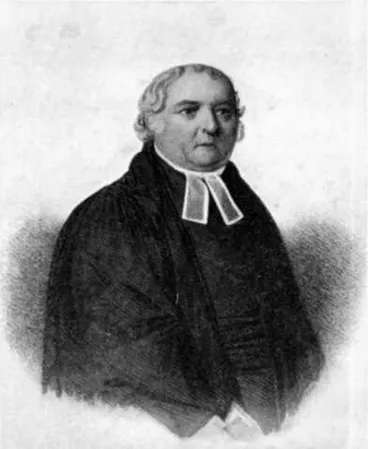
Kendall also worked on an improved Māori grammar, but Marsden twice refused to publish it
Kendall also tried to publish it privately by subscription, raising funds by March 1832, but was unsuccessful
Victoria University of Wellington
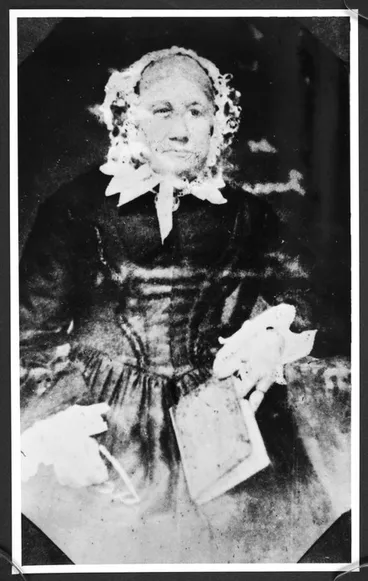
On 8 Aug 1832, his boat capsized in a storm in Jervois Bay, & Kendall (at age 53) & his crew drowned
Kendall & his wife Jane had ten children of which 8 survived him. Jane passed away in 1866 at age 82.
Alexander Turnbull Library
19b. What happened to the Oihi Mission Station?
Oihi Mission Station closed when Te Puna Mission Station opened in 1832
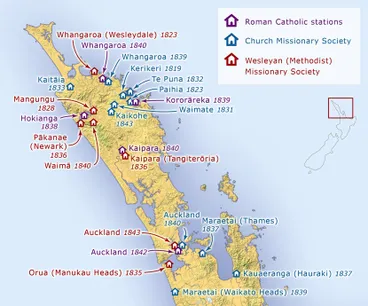
By 1832, Oihi was one of five Anglican & Wesleyan Methodist mission stations in the Bay of Islands & Hokianga area
Anglican: Kerikeri (1819), Waimate North (1820: James Shepherd), Paihia (Aug 1823: Rev Williams) & Wesleyan: Kaeo (1823)
Manatū Taonga, the Ministry for Culture and Heritage
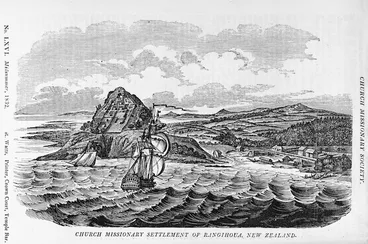
In 1832, the Oihi Mission Station closed
Alexander Turnbull Library
![Image: Tepoanah [i.e. Te Puna] Bay of Islands, New Zealand, a church missionary establishment [picture] /](https://images.digitalnz.org/zSmBMCIVVqN9hoU7I-569QnDpLs=/368x0/http%3A%2F%2Fnla.gov.au%2Fnla.pic-an2838550-t "Tepoanah [i.e. Te Puna] Bay of Islands, New Zealand, a church missionary establishment [picture] /")
The Oihi Mission Station was replaced by the Te Puna Mission Station which lay 1 km to the west
National Library of Australia
![Image: Taylor, Richard, 1805-1873 :Mission house, Tepuna. [1839 or 1841?]](https://images.digitalnz.org/KzmuvRH8ksbhlZo9aYM6_mtn1wA=/368x0/https%3A%2F%2Fndhadeliver.natlib.govt.nz%2FNLNZStreamGate%2Fget%3Fdps_pid%3DIE126516 "Taylor, Richard, 1805-1873 :Mission house, Tepuna. [1839 or 1841?]")
The land near Te Puna was considered a more suitable flat level for agriculture & crops were grown for mission stations
Alexander Turnbull Library
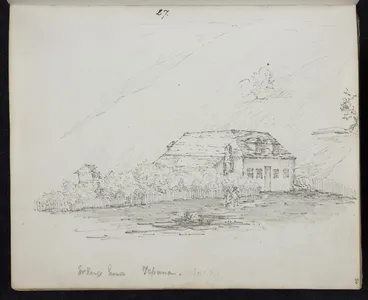
John King & James Shepherd & their families moved to Te Puna
Shepherd had been stationed wiith Ngāpuhi Chief Te Morenga of Tai-a-mai at Te Waimate Mission since 1820 by Marsden
Alexander Turnbull Library
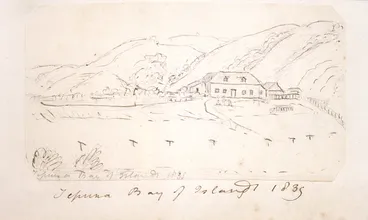
King & James taught & held weekly church services
(Image: Mission building set in front of the hill, garden at the front, & outbuildings to the right, 1839)
Alexander Turnbull Library
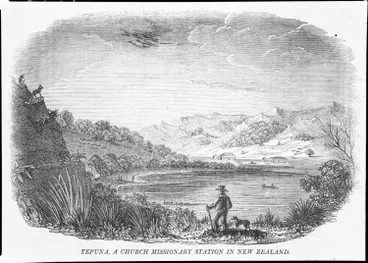
KIng's wife, Hannah, & their daughters held school lessons & taught domestic skills to Māori women & children
Auckland Libraries
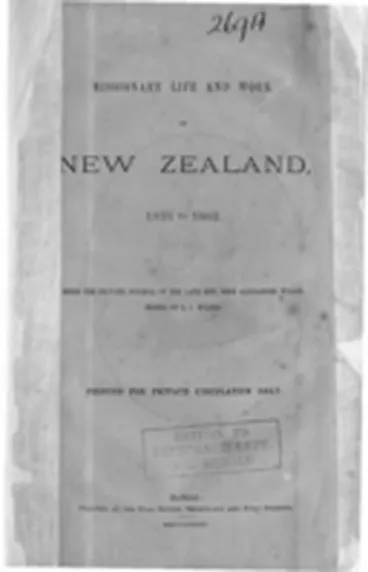
During 1833-34, King & James were assisted by lay preacher John Wilson who'd arrived with his family on 11 April 1833
Ex-Royal Navy, Wilson had been appointed lay preacher by CMS in 1832. He later helped set up & worked at other Missions.
The University of Auckland Library
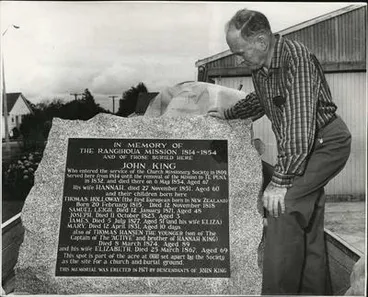
By June 1834, there were 200 Māori involved with the Te Puna Mission Station & by 1842 over 100 Māori had been baptized
(Image: Memorial to Rev John King who died at Te Puna on 6 May 1854 aged 64)
Auckland War Memorial Museum Tāmaki Paenga Hira
Oihi Mission Station commemorative events held
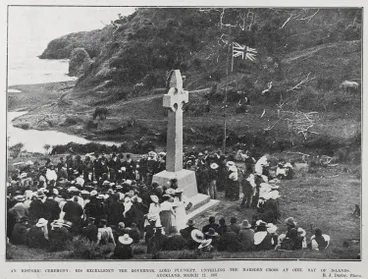
The Marsden Cross was unveiled at Oihi on 12 March 1907 by the Governor Lord Plunket
Auckland Libraries
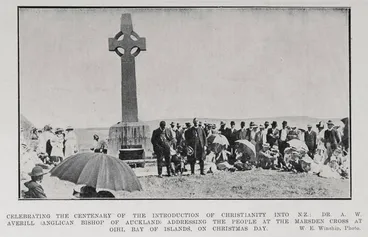
Centenary celebrations of the first Christian service in New Zealand were held on Christmas Day 1914
Auckland Libraries
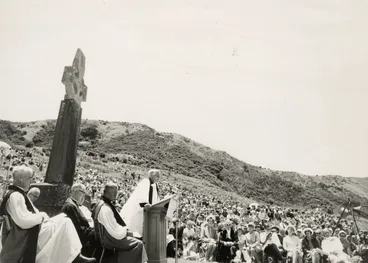
150th celebrations held on Christmas Day 1964
Whangarei Libraries
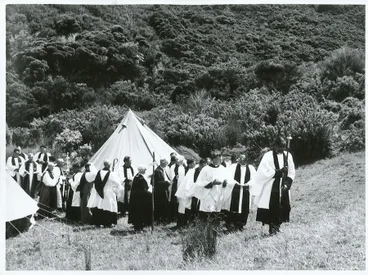
Rev. R.E. Marsden (Great-great-grandson of Samuel Marsden) conducted the service in 1964
Archives New Zealand Te Rua Mahara o te Kāwanatanga
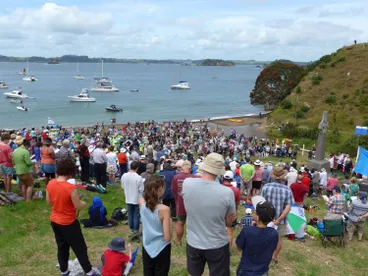
Bicentenary celebrations held on Christmas Day 2014
Auckland Libraries
Archaeological exploration of the Oihi Mission Station, 2012-2013
An archaeological investigation began in Feb 2012 by archaeologists at the University of Otago
University of Otago
The excavations uncovered the school's brick fireplace used to heat the room & cook food for the students
Artefacts were also found including slate and slate pencils
National Library of New Zealand
Rangihoua Heritage Park opened on 21 Dec 2014
On 21 December 2014, the Rangihoua Heritage Park was opened at Oihi Bay. (See website which has an interactive tour with an audio guide). The Park was established by the Marsden Cross Trust Board together with its partners Ngāti Torehina, the Rangihoua Native Reserve Board and the Department of Conservation. Architect Pip Cheshire of Auckland designed an interpretative centre and a larger building called the Gathering Place built on a ridge near the road overlooking the Bay.
Rangihoua Heritage Park was opened on 21 Dec 2014 during the bicentenary celebrations of Marsden's first sermon
Radio New Zealand
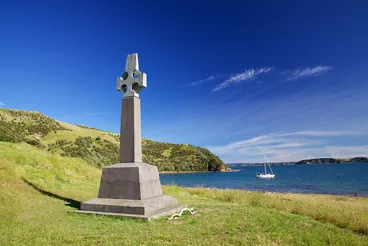
Marsden cross memorial reserve
Manatū Taonga, the Ministry for Culture and Heritage
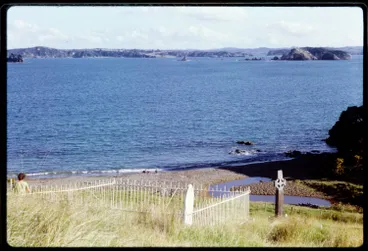
Marsden Cross and gravestones
Auckland Libraries
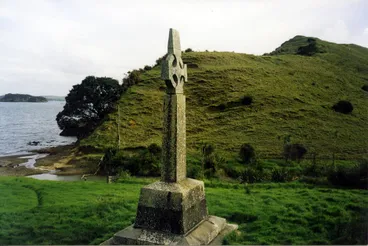
Rangihoua Pā and Oihi (Hohi) Mission Station
Manatū Taonga, the Ministry for Culture and Heritage
Marsden Cross
Auckland Libraries
20. Find out more
Angela Ballara, 'Ruatara', Dictionary of New Zealand Biography, first published in 1990. Te Ara - the Encyclopedia of New Zealand. URL: https://teara.govt.nz/en/biographies/128351/related-biographies
Angela Ballara, 'Te Pahi', Dictionary of New Zealand Biography, first published in 1990. Te Ara - the Encyclopedia of New Zealand. URL: https://teara.govt.nz/en/biographies/1t53/te-pahi
Archaeopedia New Zealand: Te Puna Mission Station
Early New Zealand Books: Elder, J. (Ed.) "The Letters and Journals of Samuel Marsden, 1932". URL: http://www.enzb.auckland.ac.nz/document/?wid=1060&page=1&action=null
Early New Zealand Books: 1808 - 1863: The Missionary Register. URL: http://www.enzb.auckland.ac.nz/epubs
G. S. Parsonson. 'Marsden, Samuel', Dictionary of New Zealand Biography, first published in 1990, updated May, 2013. Te Ara - the Encyclopedia of New Zealand, https://teara.govt.nz/en/biographies/1m16/marsden-samuel
Judith Binney, 'Kendall, Thomas', Dictionary of New Zealand Biography, first published in 1990. Te Ara - the Encyclopedia of New Zealand. URL: https://teara.govt.nz/en/biographies/1k9/kendall-thomas
Peter J. Lineham, 'Missions and missionaries - First missionaries', published 23 March 2011. Te Ara - the Encyclopedia of New Zealand. URL: https://teara.govt.nz/en/missions-and-missionaries
Rangihoua Heritage Park. URL: https://rangihouaheritage.co.nz/
Stock, Eugene (1913), The story of the New Zealand Mission (London Church Missionary Society & Nelson New Zealand C.M. Association Dept). URL: https://anglicanhistory.org/nz/stock1913/
University of Otago: Marsden Online Archive: https://marsdenarchive.otago.ac.nz/
This DigitalNZ story was updated in July 2026