Image
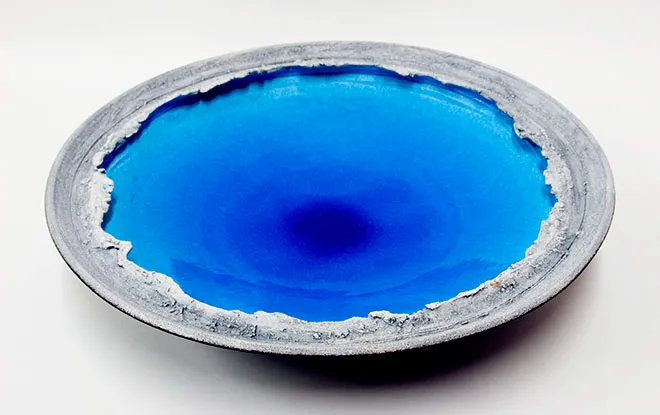
Len Castle, 'Alkaline spring', 2000
About this item
- Title
- Len Castle, 'Alkaline spring', 2000
- Content partner
- Manatū Taonga, the Ministry for Culture and Heritage
- Collection
- Te Ara - The Encyclopedia of New Zealand
- Description
Len Castle trained as a science teacher and took up pottery in 1947, aged 23. He left teaching to become a full-time potter in 1963. That year he helped to found the New Zealand Society of Potters. Castle travelled overseas a number of times, including to Japan, Korea and China to learn new pottery techniques and aesthetics, which he brought back to New Zealand. His work was heavily influenced by the natural world and his pottery reflected his interest in geology. 'Alkaline spring', a glazed ...
- Format
- Image
- Date created
- 16 May 2014
- Creator
- Len Castle
- Contributing partner
- Dowse Art Museum
- URL
- https://teara.govt.nz/en/object/45301/len-castle-alkaline-spring-2000
What can I do with this item?
Check copyright status and what you can do with this item
Check informationReport this item
If you believe this item breaches our terms of use please report this item
Report this itemDigitalNZ brings together more than 30 million items from institutions so that they are easy to find and use. This information is the best information we could find on this item. This item was added on 21 January 2015, and updated 28 November 2025.
Learn more about how we work.
Share
What is the copyright status of this item?

Share, Modify
See below for specifics about how you may use this item.

More Information
Manatū Taonga, the Ministry for Culture and Heritage has this to say about the rights status of this item:
http://www.teara.govt.nz/copyright, Crown Copyright administered through the New Zealand Ministry for Culture and Heritage Te Manatu Taonga. All text licensed under the Creative Commons Attribution-NonCommercial 3.0 New Zealand Licence unless otherwise stated. Commercial re-use may be allowed on request. All non-text content is subject to specific conditions. Dowse Art Museum by Len Castle This item has been provided for private study purposes (such as school projects, family and local history research) and any published reproduction (print or electronic) may infringe copyright law. It is the responsibility of the user of any material to obtain clearance from the copyright holder.
What can I do with this item?
You must always check with Manatū Taonga, the Ministry for Culture and Heritage to confirm the specific terms of use, but this is our understanding:

Non-infringing use
NZ Copyright law does not prevent every use of a copyright work. You should consider what you can and cannot do with a copyright work.

Share it
This item is suitable for copying and sharing with others, without further permission.

Modify it
This item is suitable for modifying, remixing and building upon, without further permission.

No commercial use
You may not use this item commercially.
What can I do with this item?
Check copyright status and what you can do with this item
Check informationReport this item
If you believe this item breaches our terms of use please report this item
Report this itemDigitalNZ brings together more than 30 million items from institutions so that they are easy to find and use. This information is the best information we could find on this item. This item was added on 21 January 2015, and updated 28 November 2025.
Learn more about how we work.
Share
Related items
Loading...