Raranga - to weave
A DigitalNZ Story by National Library Services to Schools
This story introduces raranga (weaving) by looking at the plants and techniques used, the types of items made and some of the prestigious people and organisations that have supported and revived the practice in Aotearoa New Zealand.
Hutia te rito o te harakeke, kei whaea te komako o ko?
Ki mai ki ahau; he aha te mea nui o te Ao?
Maku e ki atu, he tangata, he tangata, he tangata!
If the heart of harakeke was removed, where will the bellbird sing?
If I was asked, what was the most important thing in the world?
I would be compelled to reply, it is people, it is people, it is people!
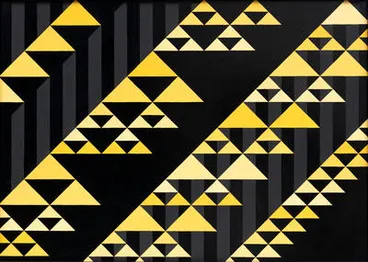
Tāniko
Auckland Art Gallery Toi o Tāmaki
INTRODUCTION
When the ancestors of modern Māori migrated to New Zealand from other Polynesian islands, they arrived in a land with a much cooler climate, and were forced to develop a number of cultural innovations. Warm clothing was needed, but the aute (paper mulberry), the plant used to make tapa-cloth garments elsewhere in the South Pacific, did not thrive in their new home.
In place of aute, early Māori developed a method of producing fine thread from muka (fibre), from which they wove garments and other items of extraordinary beauty.
Source: Te raranga me te whatu - The art of te whare pora, Te Ara - the Encyclopedia of New Zealand
Taonga such as kākahu (cloaks or garments) connect to the spiritual world through the whakapapa of the natural materials from which they are woven, the values and ancestral knowledge and practices.'
Source: Māori clothing and adornment – kākahu Māori - Weaving traditions and technique, Te Ara - the Encyclopedia of New Zealand
CONTENTS
- Te Whare Pora - the house of weaving
- Plants used for raranga
- Tools & technology
- Tukanga
- Examples of raranga and their applications
- Some tohunga raranga (expert weavers)
- Te Rōpū Wahine Toko i Te Ora | The Māori Women's Welfare League
- Te Rito - The National Weaving School
- Contemporary raranga
- Raranga and nga toi
- Glossary
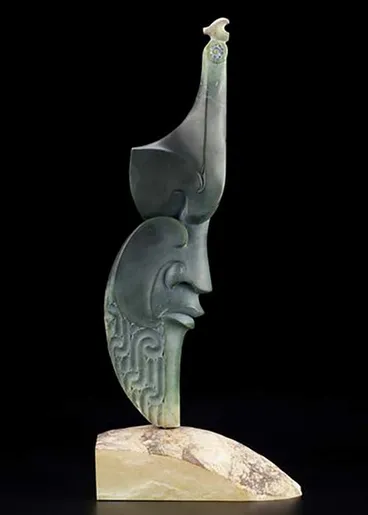
Hineteiwaiwa
Manatū Taonga, the Ministry for Culture and Heritage
TE WHARE PORA - THE HOUSE OF WEAVING
Traditionally, a novice weaver was taught in a special building called te whare pora (the house of weaving). This instruction was given under strict conditions and with a great deal of ceremony. The novice was first made ready to receive knowledge of the arts of weaving through karakia (prayers) and initiation ceremonies. The karakia endowed the student with a receptive mind and retentive memory. Initiated weavers became dedicated to the pursuit of a complete knowledge of weaving, including the spiritual concepts. The practice was discouraged by 19th-century missionaries, and very few weavers in the present day experience this initiation ceremony.
Weaving was mainly, although not exclusively, practised by women. The principal goddess of te whare pora is Hineteiwaiwa, who represents the arts pursued by women and is also the goddess of childbirth.
Source: Te raranga me te whatu - The art of te whare pora, Te Ara - the Encyclopedia of New Zealand
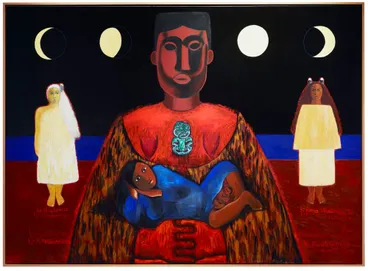
Ko hine te iwaiwa, ko hine korako, ko rona whakamau tai
Museum of New Zealand Te Papa Tongarewa
PLANTS USED FOR RARANGA
Harakeke (Phormium spp., New Zealand flax, although in fact of the lily family and not botanically related to the European flax plant) was the main substitute for aute. It assumed enormous importance for its abundance and suitability for plaiting, weaving and other fibre techniques. Other plants used for weaving include kiekie, pīngao, kākaho (toetoe stems) and many more.
Source: Te raranga me te whatu - The art of te whare pora, Te Ara - the Encyclopedia of New Zealand
Harakeke
iNaturalist NZ — Mātaki Taiao
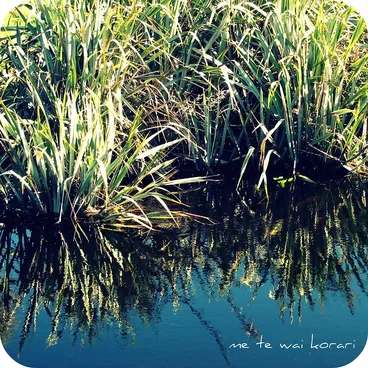
As sweet as the honey of the flax
Manatū Taonga, the Ministry for Culture and Heritage
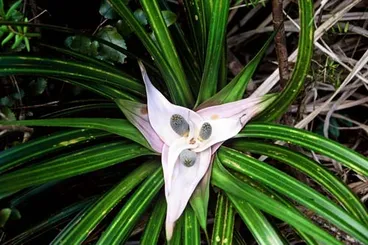
Kiekie flower
Manatū Taonga, the Ministry for Culture and Heritage
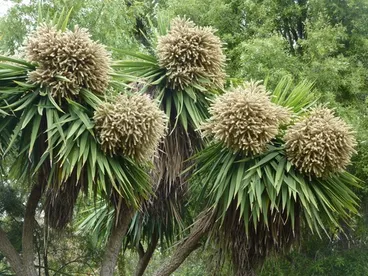
Cabbage Tree
iNaturalist NZ — Mātaki Taiao
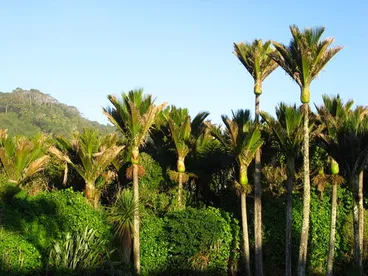
Nikau
iNaturalist NZ — Mātaki Taiao
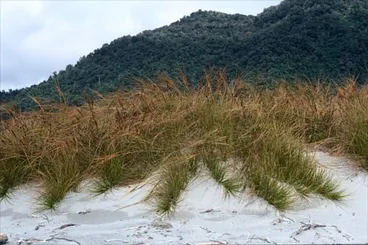
Plants of the sand dunes
Manatū Taonga, the Ministry for Culture and Heritage
TOOLS AND TECHNOLOGY
Māori cloaks were woven by hand, without the use of a loom. Whatu, the finger weft twining technique used for making fish nets and traps, was adapted to construct garments. Closely packed wefts create a firm textile, while more widely spaced wefts give a more pliant product. Decorative tāniko borders use a similar method and are a uniquely Māori invention.
Source: Māori clothing and adornment – kākahu Māori - Weaving traditions and technique, Te Ara - the Encyclopedia of New Zealand
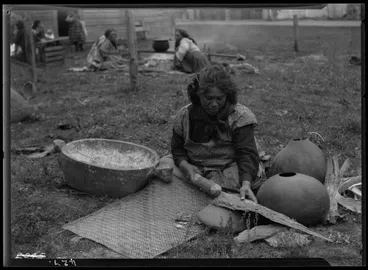
Preparing the Hinau Bark
Museum of New Zealand Te Papa Tongarewa
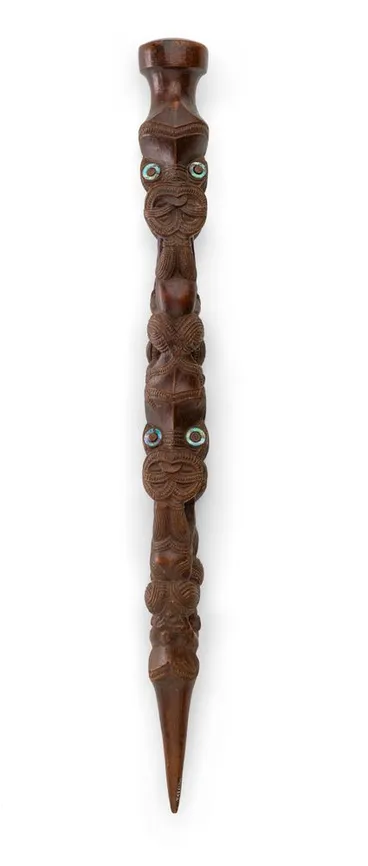
Turuturu (Weaving Peg)
Museum of New Zealand Te Papa Tongarewa
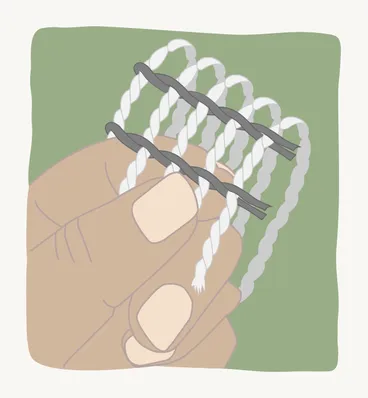
The whatu weaving technique
Manatū Taonga, the Ministry for Culture and Heritage
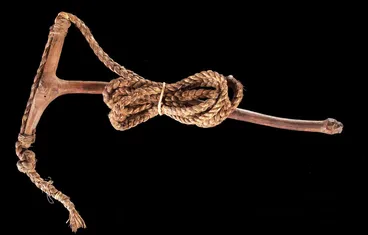
Mutu kākā (bird snare)
Museum of New Zealand Te Papa Tongarewa
TUKANGA | METHODS
Leaves (rau) for weaving were carefully cut from the flax bushes to ensure that te rito (the centre shoot) was not harmed. Several Māori proverbs liken the flax bush to a human family, which survives by protecting its weakest members.
Source: Te raranga me te whatu - The art of te whare pora, Te Ara - the Encyclopedia of New Zealand
Karakia for harvesting harakeke
Tenei matou i inoi atu ka koe e Tane Mahuta
Nau enei rawa kua poipoia
Nau enei hua kua whakatipu
Tenei au he piapono whare tohungatanga raranga
Homai ngā rau o tenei taonga te harakeke
We are praying to you Tane Mahuta
For these things that you have nurtured
And for these fruits you have grown
We are dedicated students
From the place of the old weavers
Give me some leaves of this treasure the harakeke.
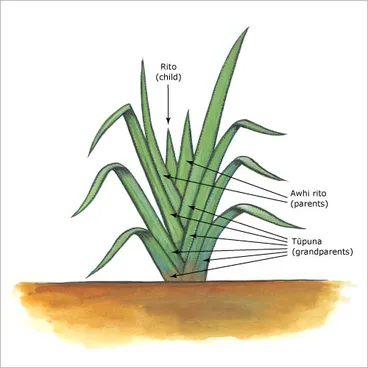
Harakeke plant
Manatū Taonga, the Ministry for Culture and Heritage
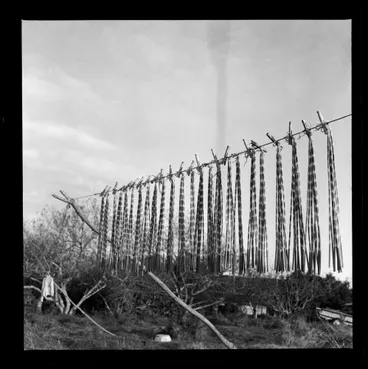
Strands of fibre pegged on a line
Museum of New Zealand Te Papa Tongarewa
EXAMPLES OF RARANGA & ITS APPLICATIONS
As well as clothing and decorative panels, Māori made a large range of practical objects such as floor mats, kete (baskets), fishing nets and eel traps, using both weaving and knotting techniques.
Many of these objects were produced by a plaiting technique called whāriki. Unlike weaving, in which the warp and weft threads cross at right angles, in whāriki and related techniques the strands cross diagonally.
Source: Te raranga me te whatu - Whāriki, raranga and whiri, Te Ara - the Encyclopedia of New Zealand
![Image: [Artist unknown] :Drawing of rare canoe sail in the British Museum.](https://images.digitalnz.org/Y9hZQ05hOVfYgpWM3hB4C2OB5uc=/368x0/https%3A%2F%2Fndhadeliver.natlib.govt.nz%2FNLNZStreamGate%2Fget%3Fdps_pid%3DIE62566774 "[Artist unknown] :Drawing of rare canoe sail in the British Museum.")
[Artist unknown] :Drawing of rare canoe sail in the British Museum.
Alexander Turnbull Library
The term ‘whāriki’ refers both to the plaiting technique and the mats made from it. Floor mats were of great importance before European arrival, when even the largest and most distinguished carved houses had dirt floors.
Source: Te raranga me te whatu - Whāriki, raranga and whiri, Te Ara - the Encyclopedia of New Zealand
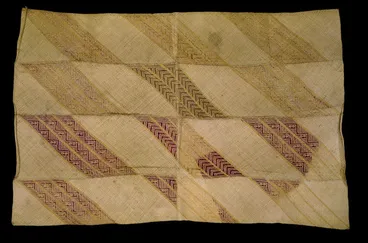
Whariki (mat)
Museum of New Zealand Te Papa Tongarewa
Raranga is a related weaving style used to make rourou (food baskets), kete (bags) and other small objects once vital to traditional Māori society. Rourou were often the first production of a novice weaver. They were made of untreated flax and were used only once and then discarded, for reasons of hygiene.
Source: Te raranga me te whatu - Whāriki, raranga and whiri, Te Ara - the Encyclopedia of New Zealand
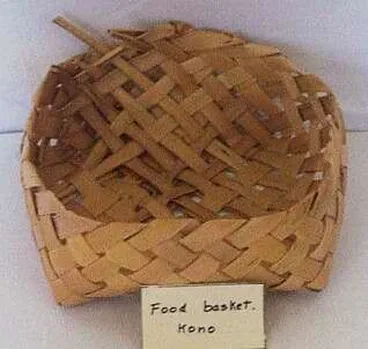
Food basket
Kete Horowhenua
Whiri refers to the technique of braiding used to make strips of material such as waist girdles, headbands and tātua (belts). This method could produce very long and tough straps of undressed flax, once used by Māori in place of ropes, to carry food and firewood.
Source: Te raranga me te whatu - Whāriki, raranga and whiri, Te Ara - the Encyclopedia of New Zealand
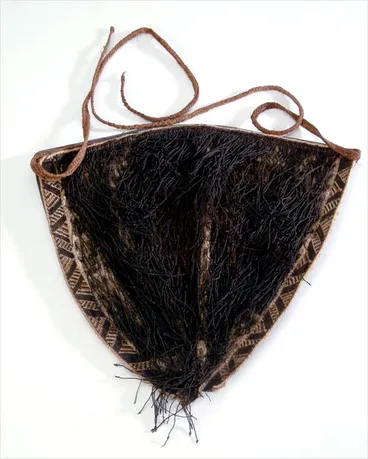
Maro – waist girdle
Manatū Taonga, the Ministry for Culture and Heritage
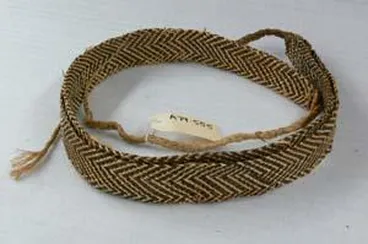
Tatua
Puke Ariki
A related craft was the making of kupenga (fishing nets) and other fishing gear. Men as well as women worked together to make large nets. An entire village might join forces to make a giant net known as a kaharoa, up to 2 kilometres long.
Source: Te raranga me te whatu - Whāriki, raranga and whiri, Te Ara - the Encyclopedia of New Zealand
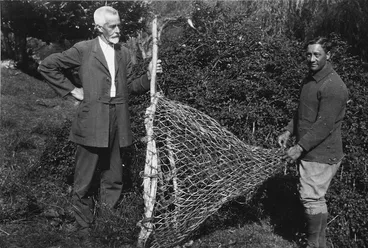
Elsdon Best and Teko Chadwick holding a fishing net
Alexander Turnbull Library
Crayfish pots were made from a frame of supplejack and a lattice of thin mānuka rods tied with green flax. Hīnaki were eel traps, which could be used to keep eels alive underwater until they were needed for eating.
Source: Te raranga me te whatu - Whāriki, raranga and whiri, Te Ara - the Encyclopedia of New Zealand
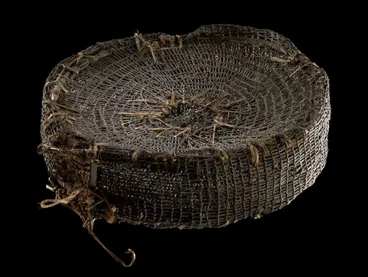
Hīnaki
Museum of New Zealand Te Papa Tongarewa
Tāniko weaving produces a relatively stiff and unyielding fabric, so it was traditionally used as a decorative border on fine cloaks of the kaitaka and paepaeroa types. Often several different strips of tāniko appeared on up to three sides of a cloak.
Source: Te raranga me te whatu - Whāriki, raranga and whiri, Te Ara - the Encyclopedia of New Zealand
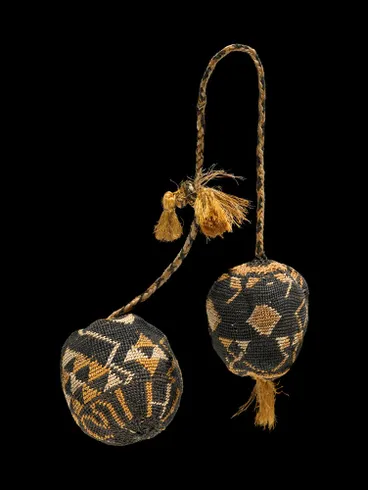
Poi taniko (percussive device)
Museum of New Zealand Te Papa Tongarewa
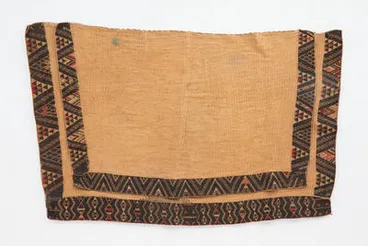
Kaitaka huaki
Auckland War Memorial Museum Tāmaki Paenga Hira
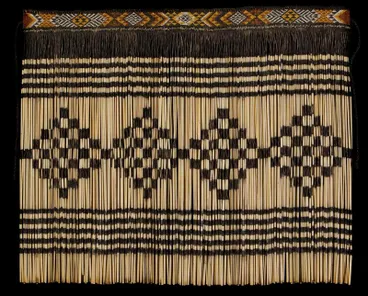
Piupiu / flax skirt
Waikato Museum Te Whare Taonga o Waikato
Tukutuku or arapaki is a type of ornamental weaving using reed latticework rather than threads. It is used mainly to adorn the inside walls of wharenui (meeting house's). The tukutuku panels are placed between the carved wall slabs of the wharenui, and, like the carvings, convey a complex language of visual symbols.
Source: Te raranga me te whatu - Whāriki, raranga and whiri, Te Ara - the Encyclopedia of New Zealand
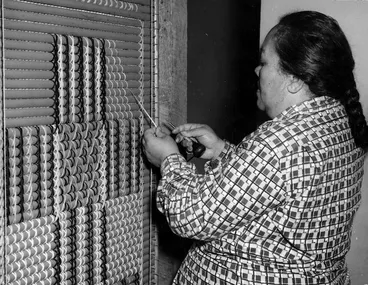
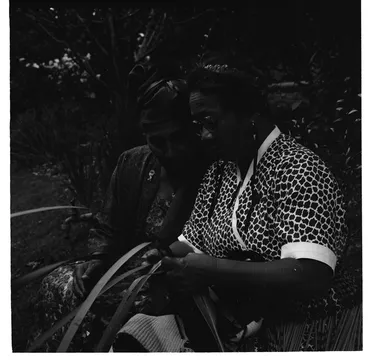
Mrs H Owen working on a tukutuku panel
Alexander Turnbull Library
Among the most prestigious of kākahu (garments) were the kahu kurī, or dog-skin and dog-hair cloaks. These could be worn with the hair side inwards to keep the wearer warm, but were more often worn with the hair side outwards, so that their flamboyance and style displayed their owner’s chiefly status.
The full-feather cloak appears to have flourished from the second half of the 19th century, and has become the most prestigious cloak. An early example thought to be more than 300 years old was observed at a burial cave on Mary Island, Lake Hauroko, Fiordland.
The kaitaka was a type of cloak also seen by explorer James Cook and his officers in their voyages in the late 18th century. Kaitaka are generally very large, and were worn to drape around a person several times.
Source: Māori clothing and adornment – kākahu Māori, Te Ara - the Encyclopedia of New Zealand
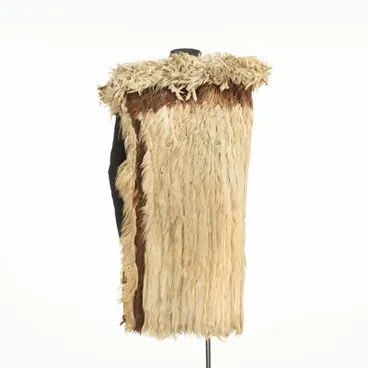
Tōpuni
Auckland War Memorial Museum Tāmaki Paenga Hira
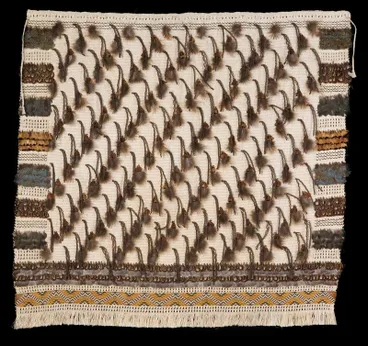
Korowai / cloak
Waikato Museum Te Whare Taonga o Waikato
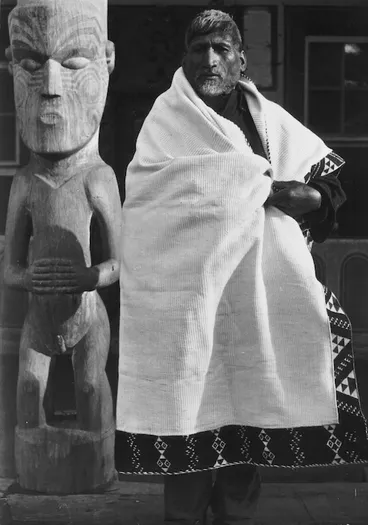
Poutauma modeling a kaitaka fine flax cloak decorated with taniko, at Koriniti
Alexander Turnbull Library
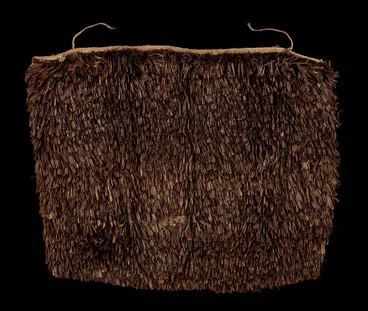
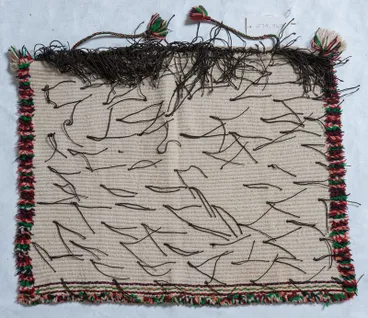
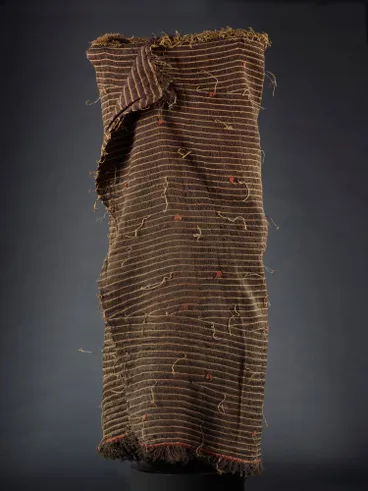
Māori constructed and wore practical, protective garments in hardy materials to keep warm and dry. These included rain capes and cloaks made from a variety of materials.
Another type of cloak, the korowai, evolved from the rain cape. These cloaks are decorated with hukahuka, or long cords of rolled muka fibre, or pokinikini, cylindrical, dried harakeke strands with intervals of black-dyed muka.
Source: Māori clothing and adornment – kākahu Māori, Te Ara - the Encyclopedia of New Zealand
Pākē (rain cape)
Museum of New Zealand Te Papa Tongarewa
Korowai
Puke Ariki
Korowai ngore (cloak)
Museum of New Zealand Te Papa Tongarewa
SOME TOHUNGA RARANGA (EXPERT WEAVERS)
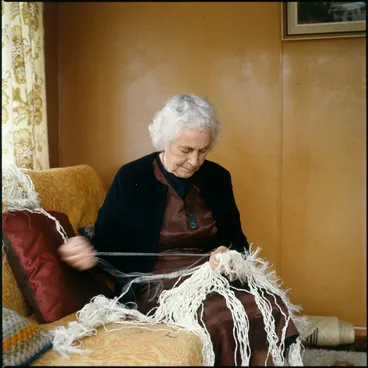
A number of dedicated women sustained the weaving arts and passed them on to younger female relatives. Perhaps the most significant was Diggeress Te Kanawa (of Ngāti Maniapoto and Ngāti Kinohaku), the daughter of another renowned weaver, Dame Rangimarie Hetet.
Source: Te raranga me te whatu - Revival of Māori fibre work, Te Ara - the Encyclopedia of New Zealand
Rangimarie Hetet
Museum of New Zealand Te Papa Tongarewa
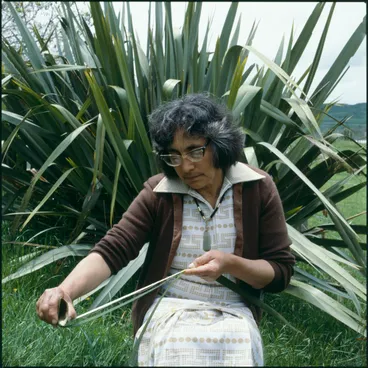
Diggeress Rangituatahi Te Kanawa
Museum of New Zealand Te Papa Tongarewa
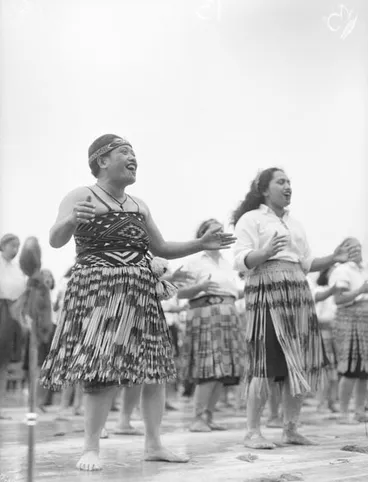
Ngoi Pēwhairangi and Tuini Ngāwai
Manatū Taonga, the Ministry for Culture and Heritage
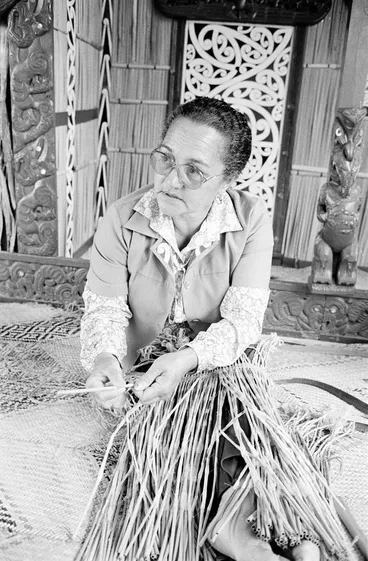
Craft New Zealand - Emily Schuster and Donna Waiariki
Museum of New Zealand Te Papa Tongarewa
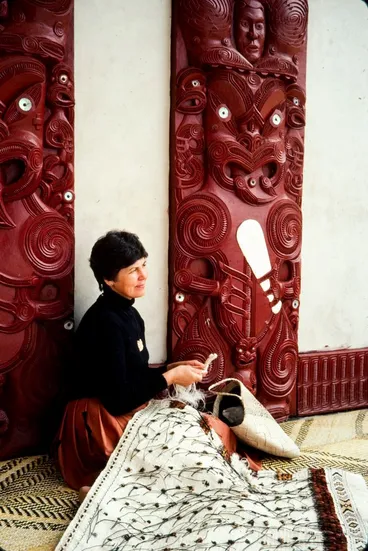
Kahurangi: Erenora Hetet. Portrait
Museum of New Zealand Te Papa Tongarewa
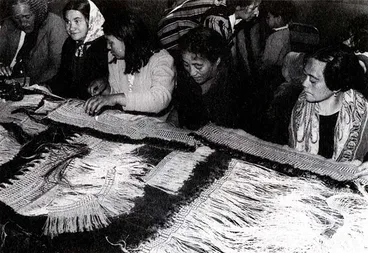
Early weavers' hui, 1953
Manatū Taonga, the Ministry for Culture and Heritage
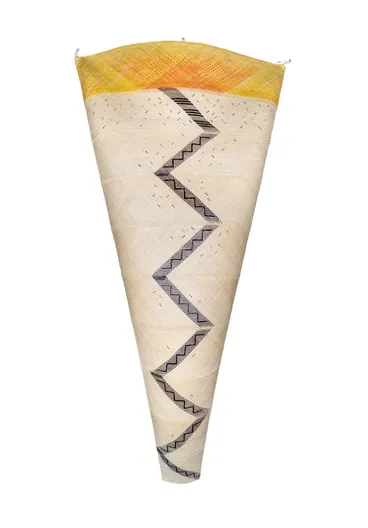
Ra / Mamaru (Sail)
Museum of New Zealand Te Papa Tongarewa
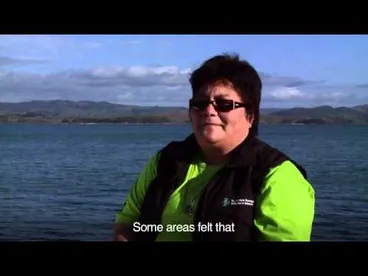
Edna Pahewa talks about the revival of weaving
Museum of New Zealand Te Papa Tongarewa
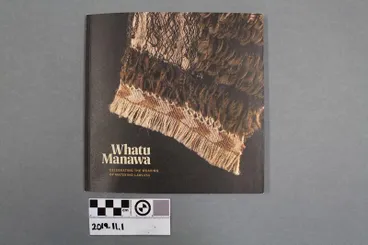
Whatu Manawa - Celebrating The Weaving of Matekino Lawless
Te Awamutu Museum

Toi Te Rito Maihi -- the meaning of cloaks
Museum of New Zealand Te Papa Tongarewa
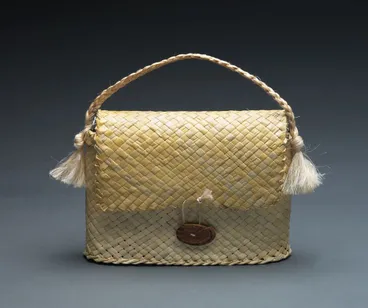
Kete (bag)
Museum of New Zealand Te Papa Tongarewa
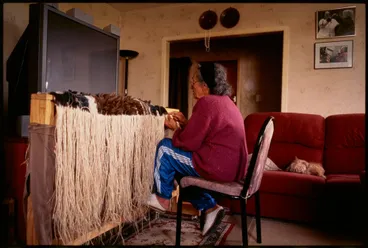
Te Aue Davis weaving a feather cloak, Mangere, Auckland
Museum of New Zealand Te Papa Tongarewa
TE RŌPŪ WĀHINE TOKO I TE ORA | THE MĀORI WOMEN'S WELFARE LEAGUE
Traditionally, weaving was taught within families, usually by a mother, aunt or grandmother. Strict protocols and restrictions were part of the discipline of maintaining the integrity of this knowledge. This art was in serious decline until the 1950s, when moves were made through education programmes and national bodies such as the Māori Women’s Welfare League to preserve and maintain weaving and highlight the need to protect the natural resources vital for weaving.
Source: Māori clothing and adornment – kākahu Māori - Weaving traditions and technique, Te Ara - the Encyclopedia of New Zealand
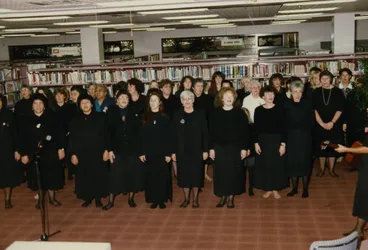
Group of women singing a waiata at Tauranga Library Tukutuku Panels Blessing 1993
Tauranga City Libraries
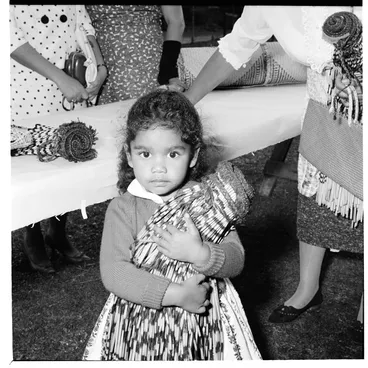
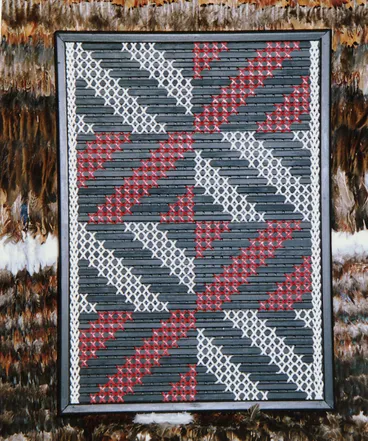
Tukutuku Panel - Pātikitiki 1993
Tauranga City Libraries
TE RITO - THE NATIONAL WEAVING SCHOOL
A sustained revival of weaving traditions began in 1969, when a national weaving school, Te Rito, was established at Rotorua, alongside the existing national carving school. The first head of Te Rito was Emily Schuster. Te Rito trains students in the art and skills of traditional weaving either through a full-time three-year course, or in part-time community-based courses. Students are taught the skills of the art form, the traditions and tikanga (protocols) and the stories and designs unique to each iwi.
Source: Te raranga me te whatu - Revival of Māori fibre work, Te Ara - the Encyclopedia of New Zealand
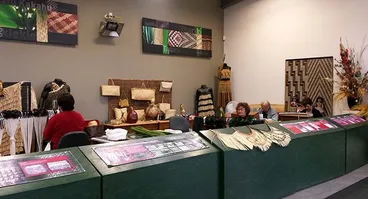
Te Rito
Manatū Taonga, the Ministry for Culture and Heritage
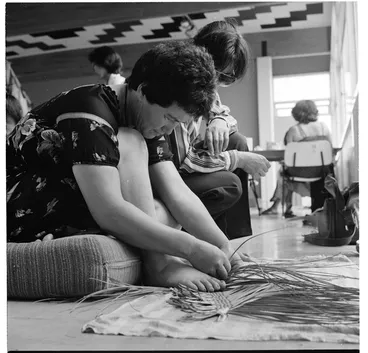
Scenes at Te Pākira Marae, Whakarewarewa
Alexander Turnbull Library
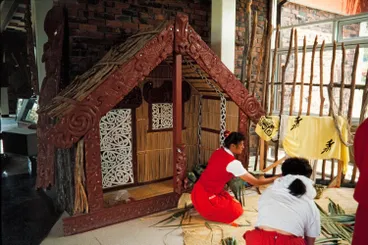
Flax weaving, Whakarewarewa
Auckland Libraries
CONTEMPORARY RARANGA
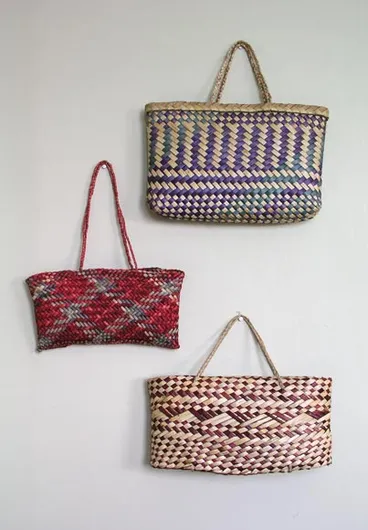
Flax kete
Manatū Taonga, the Ministry for Culture and Heritage
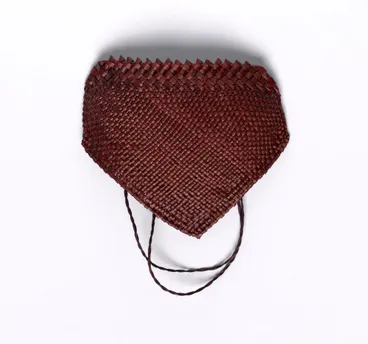
Raranga Face Mask
Museum of New Zealand Te Papa Tongarewa
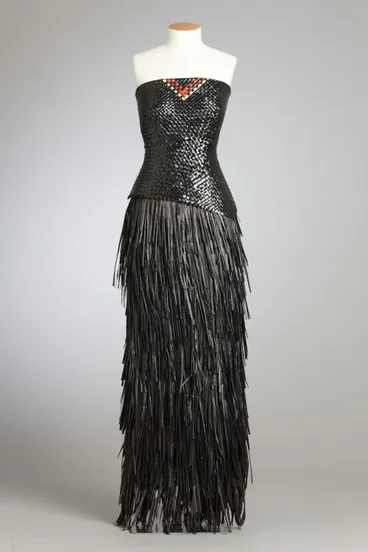
Tino Glam
New Zealand Fashion Museum
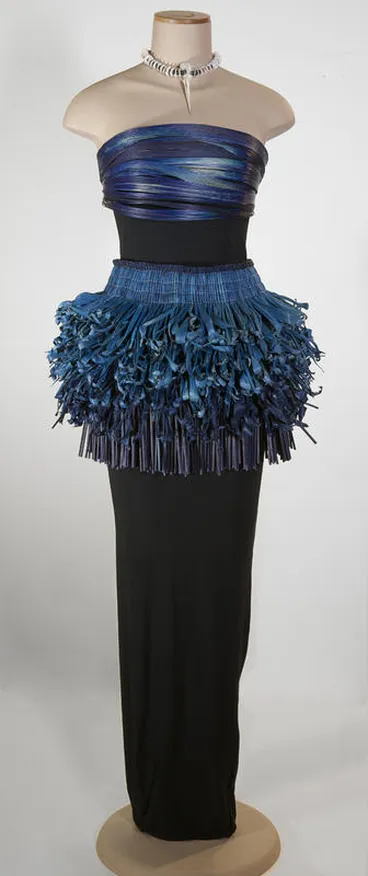
Hine Moana / Kakahu
Puke Ariki
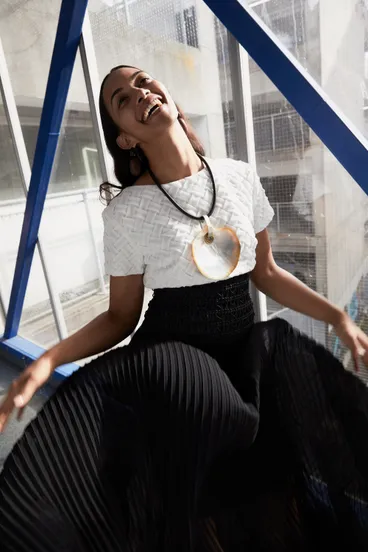
Woven texture top pleated skirt
New Zealand Fashion Museum
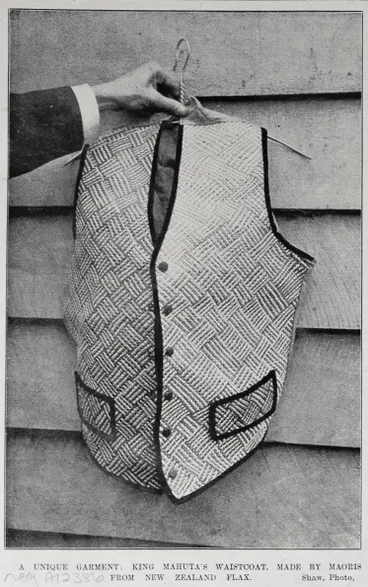
A unique garment: King Mahutu's waistcoat made by Maori from flax
Auckland Libraries
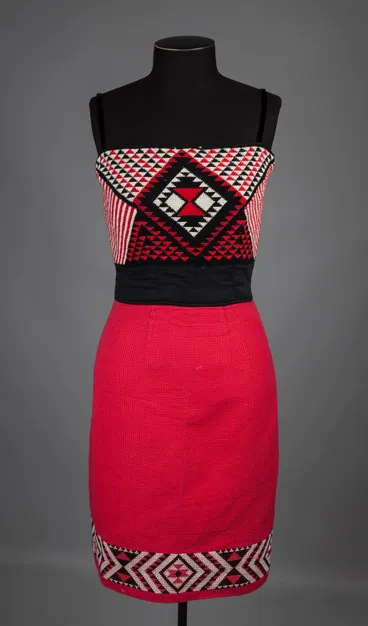
Bodice underskirt with tāniko design
New Zealand Fashion Museum
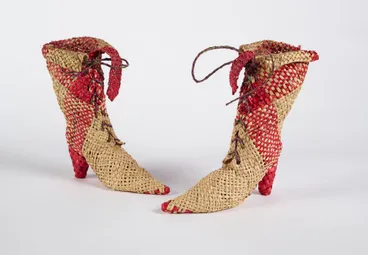
Woven women's boots
Museum of New Zealand Te Papa Tongarewa
RARANGA & NGA TOI
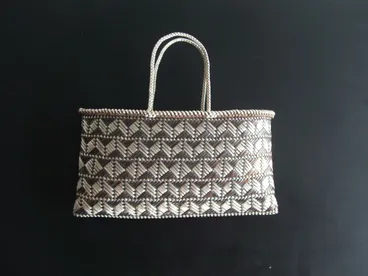
Kete whakairo (patterned basket) named Koekoeā
Museum of New Zealand Te Papa Tongarewa
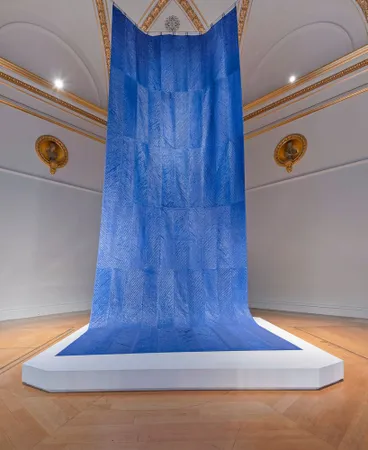
Kiko Moana
Museum of New Zealand Te Papa Tongarewa
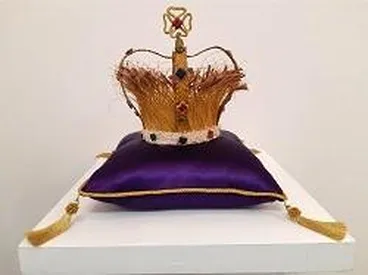
Tawhiao's Crown (Re-imagined)
Waikato Museum Te Whare Taonga o Waikato
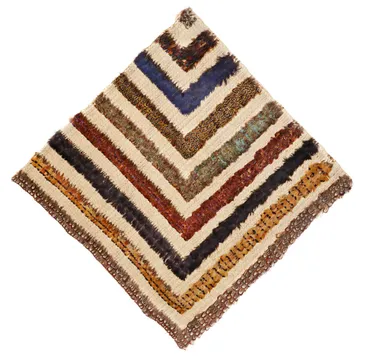
Wall hanging "Kōkiri"
Museum of New Zealand Te Papa Tongarewa
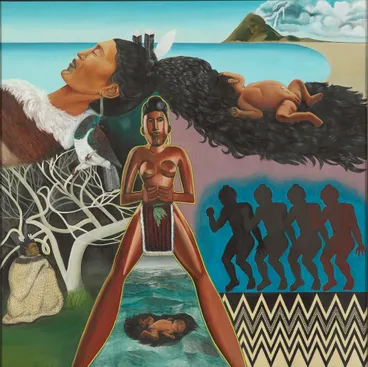
Taranga
Museum of New Zealand Te Papa Tongarewa
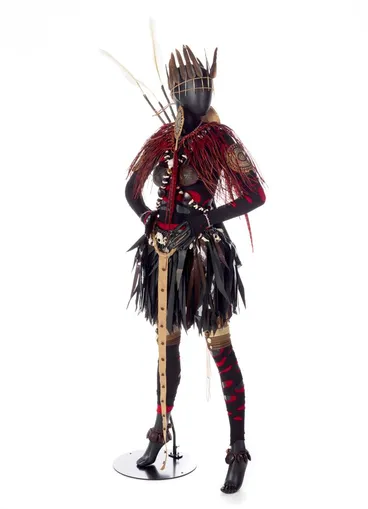
21st Sentry Cyber Sister
Museum of New Zealand Te Papa Tongarewa
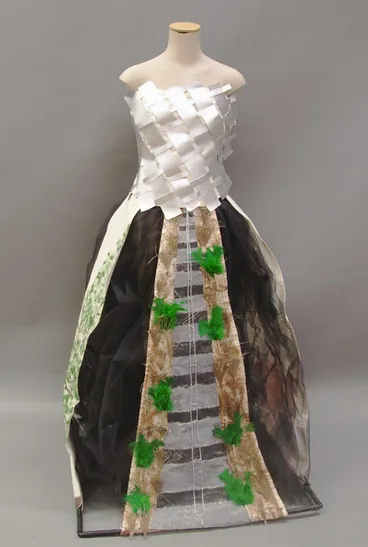
'Our Puke Ariki'
Puke Ariki
GLOSSARY
Definitions below taken from the Te Aka and the Oxford Learner's Dictionary.
TE REO MĀORI
tāniko - to finger weave, embroider
taonga - treasure, anything prized - applied to anything considered to be of value including socially or culturally valuable objects, resources, phenomenon, ideas and techniques
tukanga - process, method, procedure, course of action
whakapapa - genealogy, genealogical table, lineage, descent
TE REO PĀKEHĀ
abundance - a large quantity that is more than enough
adorn - to make something/somebody look more attractive by decorating it or them with something
botanically - connected with the science of botany
braiding - to twist three or more long pieces of hair, rope, etc. together to make one long piece
compelled - to force somebody to do something; to make something necessary
cylindrical - having a shape like a cylinder
convey - to make ideas, feelings, etc. known to somebody
distinguished - very successful and admired by other people
drape - drape something around/over/across, etc. something to hang clothes, materials, etc. loosely on somebody/something
evolved - to develop gradually, especially from a simple to a more complicated form; to develop something in this way
flamboyance - the fact of being different, confident and exciting in a way that attracts attention
flourish - to develop quickly and become successful or common
garments - a piece of clothing
girdles - a piece of women’s underwear that fits closely around the lower part of the body down to the top of the legs
hygiene - the practice of keeping yourself and your living and working areas clean in order to prevent illness and disease
initiation - the act of somebody becoming a member of a group, often with a special ceremony; the act of introducing somebody to an activity or skill
innovation - the introduction of new things, ideas or ways of doing something
integrity - famous and respected
lattice - a structure that is made of thin, narrow pieces of wood or metal that cross over each other with spaces that are like diamonds in shape between them, used, for example, as a fence; any structure or pattern like this
loom - to appear as a large shape that is not clear, especially in a frightening way
novice - a person who is new and has little experience in a skill, job or situation
nurtured - to care for and protect somebody/something while they are growing and developing
ornamental - used as decoration rather than for a practical purpose
plaiting - to twist three or more long pieces of hair, rope, etc. together to make one long piece
pliant - soft and bending easily
prestigious - respected and admired as very important or of very high quality
protocols - a system of fixed rules and formal behaviour used at official meetings, usually between governments
pursued - to do something or try to achieve something over a period of time
renowned - famous and respected
retentive - able to store facts and remember things easily
sustained - continuing for a period of time without becoming less
textile - any type of cloth made by weaving or knitting
weft - the threads that are twisted under and over the threads that are held on a loom (= a frame or machine for making cloth)
unyielding - if a person is unyielding, they are not easily influenced and they are unlikely to change their mind
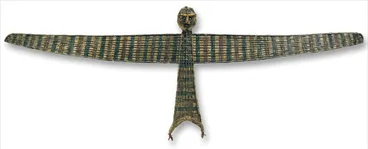
Birdman kite
Manatū Taonga, the Ministry for Culture and Heritage
This story was curated and compiled by Te Puna Mātauranga o Aotearoa | National Library of New Zealand, Services to Schools staff, August 2021.