Radio Hauraki pirate ship
A DigitalNZ Story by Zokoroa
Radio Hauraki broadcast offshore from 4 Dec 1966 until it obtained a radio licence in 1970
Radio, Broadcasting, Media, Hauraki, Ships, Pirate, Music, Rock music, Pop music

Pirate station Radio Hauraki broadcast beyond NZ's 3-mile territorial limit during 4 Dec 1966 - 1 June 1970
Opening & closing transmissions included ‘Born Free’ sung by Matt Monro. Began transmitting on land from 26 Sept 1970.
Manatū Taonga, the Ministry for Culture and Heritage
1. Early planning by David Gapes, 1965
Interview (2015) with former journalist David Gapes on why he decided to start a private commercial radio station
He was inspired by Britain's Radio Caroline & Denmark's Radio Mecur, & wanted to break NZBC's monopoly on radio licences
National Library of New Zealand

In 1965, Gapes discussed his idea with fellow journalist Bruce Baskett to broadcast beyond NZ’s 3-mile territorial limit
Location chosen was the waters of Colville Channel in Hauraki Gulf between Great Barrier Island & Coromandel Peninsula
Auckland Libraries

For technical expertise, Gapes contacted Dennis 'Doc' O'Callahan who was overseas & later returned to NZ in March 1966
O'Callahan was an amateur radio enthusiast whom Gapes had met previously in Auckland
Palmerston North City Library

Gapes & Baskett initially arranged to use the 'Hokianga' from a shipping company owned by Jim Frankham
On finding out in Feb 1966, the ship would not be available for 6 months, Baskett withdrew from the project
NZ On Screen
2. Radio Hauraki team formed April 1966
In a bid to obtain financial backing, David Gapes publicised his Radio Hauraki venture, which made front page news in the New Zealand Herald on 9 April 1966. The publicity led to two former NZBC staff, Derek Lowe and Chris Parkinson, who'd been working on their own radio project, to join Gapes and Dennis O'Callaghan as co-directors.
On 9 April 1966, NZHerald reported Gapes was publicising the venture which led to Derek Lowe & Chris Parkinson joining
Gapes was seeking funding. Front page NZ Herald article led to former NZBC staff Lowe & Parkinson becoming co-directors.
Radio New Zealand
Derek Lowe & Chris Parkinson had been planning an off-shore radio station & had come up with the name Radio Hauraki
After joining up with Gapes & O'Callagan the name 'Radio Hauraki' continued to be used
Radio New Zealand
3. Private radio licence denied, April 1966
Gapes and his Radio Hauraki partners applied for a private commercial radio licence but were declined by the New Zealand Broadcasting Corporation (NZBC). Undeterred, they intended to proceed with transmitting from a ship beyond NZ's three-mile territorial limit in the Hauraki Gulf.
In a newspaper interview (9 April 1966), Gapes stated, "Our lawyer has assured us that there is nothing illegal about what we plan to do. Short of extending the limit of territorial waters or blacklisting companies which advertise with us, I cannot see anything they can do. Since the Broadcasting Corporation refuses to issue licences to any competitors for radio stations, the only way to break its monopoly is to work from outside the three mile limit.”
Gapes also said, “We will have quite sufficient power to give Auckland, Hamilton and Whangarei a good coverage and we expect to reach other areas as well...We have selected our wavelength carefully to ensure that we do not interfere with the Broadcasting Corporation, the ambulance services or any other broadcaster." He commented that initially, Radio Hauraki would broadcast two sessions a day. The first session would be the breakfast session which would commence a quarter of an hour before IZB and end about 10am. The second would be an afternoon - evening session ending about 7.30pm. Ultimately, the intention was that the radio station would transmit 24 hours a day. Furthermore, the programme would consist entirely of pop music.
Source: Papers Past: "Auckland businessmen plan pirate radio ship", Press (Vol CV, Issue 31030, 9 April 1966, p.1)

Gapes & partners applied unsuccessfully to NZBC for private radio licence whilst waiting for their ship to be available
The application for Radio Hauraki was denied by the New Zealand Broadcasting Corporation (NZBC)
Alexander Turnbull Library
4. Studios set up in Anzac Avenue

Undeterred at not being granted a radio licence, Hauraki team carried on with their planning & pursued funding avenues
Funding was received from Europa Oil. Conditions included transmission to be started by 15 Nov or funding to be repaid.
Auckland Libraries
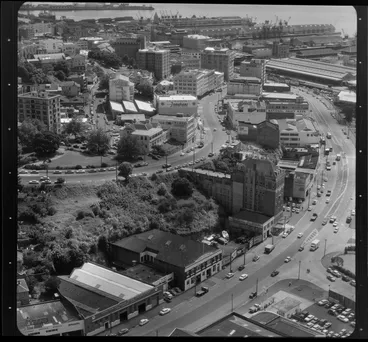
A station with 2 studios, admin & advertising sales offices was set up at Colebrook's Building in Anzac Avenue, Auckland
A former US Navy wartime transmitter was acquired & a pre-fabricated aerial mast built in sections for reassembly
Alexander Turnbull Library

In May 1996, Ian Magan became one of the DJs & Gapes & Lowe began visiting advertising agencies in July
During their visits, Gapes & Lowe played a demo tape to help secure advertising revenue
NZ On Screen
5. News of rival pirate stations during July 1966
In mid-July 1966, an advertisement appeared in the Auckland Star for a proposed offshore commercial station – Radio Maverick – and its onshore non-commercial base called Radio Ventura. Another group in Wellington also planned to anchor a ship in the Cook Strait, to transmit to the North and South Islands. Later on 25 July, The Sunday News headline announced "PIRATE RADIO BATTLE: TWO NEW STATIONS IN FIGHT FOR AIRWAVE FORTUNE" - A former Radio Hauraki team member Keith Ashton, who’d left over policy differences, planned to start Radio Southern Cross on 24 October 1966, with 24 hours a day programming. Another radio station, Radio International, (Radio i) was preparing to start broadcasts in September 1966. Furthermore, plans for an offshore television station were also announced.
These developments led to the Prime Minister, Keith Holyoake, announcing that his Government was studying the then draft British legislation, the "Marine etc. Broadcasting (Offences) Bill", with the intent of introducing similar legislation.
Meanwhile, the Radio Hauraki team resolved to continue with its own plans to come on air by 1st October 1966 or earlier if possible.
Source:
Papers Past: The Press, "More pirate radios" (Vol. CVI, Issue 31121, 26 July 1966, p.15)
Offshore Radio Museum: Radio Hauraki - History, http://www.offshoreradiomuseum.co.uk/page204.html
6. 'Tiri' ship outfitted as 'Radio Hauraki', Aug 1966
-
In August 1966, the Radio Hauraki team were notified the Hokianga was to be further delayed by four months. The team accepted Jim Frankham's alternative offer of the coaster vessel Tiri. The refitting of the Tiri was carried out in readiness for it to receive a Marine Department certificate.
Find out more about the outfitting of Radio Hauraki's technical equipment from the following interview: "Denis O’Callahan’s personal history of Radio Hauraki", New Zealand Radio DX League, 26 April 2018, https://www.radiodx.com/denis-ocallahans-address-to-nzrdxl-convention-2018/
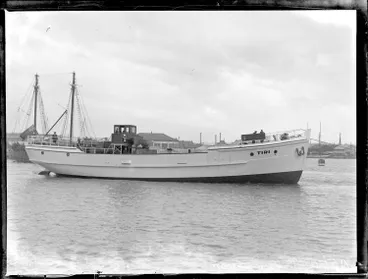
Aug 1966: With the 'Hokianga' delayed a further 4 months, the ship 'CV Tiri' was readied instead for transmission
Tiri was a 90ft (27.4m) & 169 ton wooden hulled coaster built in 1931 by GT Nicol in Auckland & owned by Frankham
Auckland Libraries
7. Broadcasting planned for 1 Oct delayed due to certificate requirements from Marine Dept

On 16 Sept 1966, Marine Dept informed Gapes the Tiri to be surveyed as a ship, not a barge, which would take longer
In anticipation of Marine Dept issuing a certificate, plans had been made to tow Tiri on 17 Sept & broadcast on 1 Oct
Alexander Turnbull Library

On 17 Sept 1966, Radio Hauraki directors met with Jack Scott (Minister of Broadcasting & Marine) to discuss situation
Scott indicated if National Party was re-elected independent radio stations would be set up but this would mean waiting
Alexander Turnbull Library

Scott offered a compromise - he'd ask NZBC Board to grant a contract to provide programmes for NZBC's station 1YD
In return Radio Hauraki team agreed to keep their ship in port until the NZBC Board's decision was known
Whangarei Libraries
8. Radio Hauraki directors & staff arrested, 23 Oct 1966

At a staff meeting on 15 Oct, Radio Hauraki team decided to start making preparations on 22 Oct to sail
The staff agreed not to wait any longer for the Marine Dept's certificate & NZBC Board's decision
Auckland War Memorial Museum Tāmaki Paenga Hira

On 22 Oct, Auckland Star story mentioned the activities observed with 'pirate' Tiri & police arrived on Deodar launch
On 23 Oct, work on the Tiri was completed & decision was made to set sail after 8pm, despite warnings from the police
Archives New Zealand Te Rua Mahara o te Kāwanatanga

On 23 Oct 1966, the Tiri set sail but its mast struck the road bridge being lowered by authorities
Police arrested 11 directors & staff on the charges of obstructing Marine Dept inspector & defying the detention order
Alexander Turnbull Library

After a court hearing on 26 Oct, Hauraki team was given bail & arranged a public meeting at the Auckland Town Hall
They protested at Government's handling of the whole issue of private broadcasting. (See photo of supporters on Te Ara)
Manatū Taonga, the Ministry for Culture and Heritage

On 2 Nov 1966, the Radio Hauraki court case was held & the charges were reported on NZBC Network News
NZ On Screen
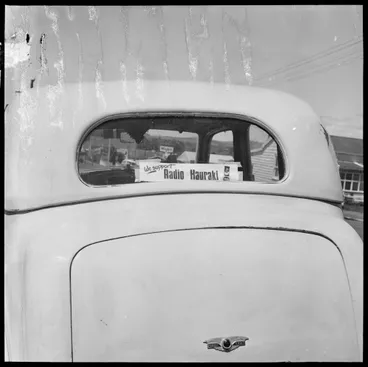
On 7 Nov, Magistrate acquitted them, stating Minister Scott misused his powers relating to marine surveys to delay them
(Image: Nov 1966: Motorist supports Radio Hauraki with banner in rear window at Waihi)
Tauranga City Libraries
9. Broadcasts at sea from Radio Hauraki 'pirate' ship
Test transmissions failure with temporary aerial mast on 12, 13 & 21 Nov 1966:
Radio Hauraki team planned to transmit their first broadcast at sea on 12 November 1996. On 10 November 1966 at 10pm, the Tiri set sail and arrived the next morning at 6.30am in the triangle of international waters within the Hauraki Gulf. They then experienced a delay in their preparations due to stormy weather.
To meet the planned transmission time, it was decided to save time by erecting a temporary aerial rather than installing the pre-fabricated aerial mast that lay in sections aboard the deck. When power was fed to the transmitter an output valve blew halting the transmission. Another attempt the next day also encountered transmitter problems.
On the afternoon of 21 Nov 1966, Radio Hauraki broadcast its first test signal using the temporary aerial, which was too weak to reach Auckland.
Test transmissions succeed with permanent aerial mast on 1 Dec 1966:
On 24 November, when the Tiri was berthed at Port Tryphena on Great Barrier Island, the crew erected the permanent aerial mast - 100 feet long with a 30 foot telescopic aerial.
During the evening of 1 December 1966, the Tiri sailed back to her anchorage in the Colville Channel and began test transmissions at 8pm with the permanent aerial mast. "This time the signal was loud and clear throughout Auckland and the surrounding area."
First broadcast on 4 Dec 1966 & first breakfast session on 5 Dec with repaired mast:
"Success was short-lived, however. The next day another storm blew through the Coleville Channel and it was decided to sail the Tiri back into Port Tryphena for shelter. Before the ship reached port disaster struck when the newly erected aerial mast collapsed over the side and had to be cut away and abandoned. Once in port the crew set about erecting a replacement mast, using a spare 50' section of the original structure with a 20' whip aerial mounted at the top. With this new arrangement in place the Tiri once again took up her position in international waters and test broadcasts resumed at 9.00am on 4th December 1966, although the signal was not as clear as the transmissions a few days earlier with the original, taller mast. Two hours later, at 11.00am, Radio Hauraki started regular broadcasts."
Source: Offshore Radio Museum: Radio Hauraki - History, http://www.offshoreradiomuseum.co.uk/page207.html
1 Dec 1966, 8pm: 1st successful test transmissions held, followed by 1st live transmission broadcast on 4 Dec at 11am
DJs (disk jockeys) called themselves the 'Good guys' (Photo: Radio Hauraki 'Good guy' Peter 'T' with Larry's Rebels)
AudioCulture
5 Dec 1966: First breakfast broadcast from on board the ship 'Tiri' is introduced by Bob Leahy
The station broadcast on 1480 kHz ("Top of the dial") outside the range of frequencies used by NZBC
Ngā Taonga Sound & Vision
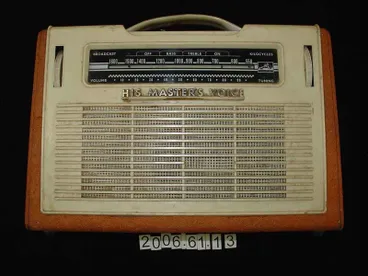
The broadcast was on 1480 kHz on the AM band, which inspired the jingle "Radio Hauraki, Top of the Dial"
The broadcast band was outside the range of frequencies used by NZBC
Canterbury Museum
Broadcasts (including interviews, current top tunes etc) were pre-recorded on reel-to-reel tape in 30 min segments
Disc jockeys in two studios on Anzac Avenue recorded next week’s broadcasts to tape or voiced adverts, contests etc
Alexander Turnbull Library
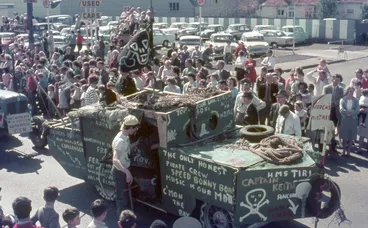
16 Sept 1967: Float titled HMS Tiri depicting the pirate radio ship Hauraki in Hastings Blossom Parade
Awarded second place in the Humorous category
Hastings District Libraries
10. Broadcasting legislation, Nov 1967
"In November 1967 anti-offshore broadcasting legislation, based on the British Marine etc. Broadcasting (Offences) Act, was finally introduced into the New Zealand Parliament and referred to a Select Committee for detailed consideration. Subsequently a Broadcasting Authority Bill was also introduced which provided for the establishment of a new independent body to consider and grant licences for private radio and television stations. It was estimated that it would take nearly a year before either piece of legislation could pass onto the statute books, so Radio Hauraki seemed would be secure at sea for another year at least."
Source: Offshore Radio Museum: Radio Hauraki - History, http://www.offshoreradiomuseum.co.uk/page207.html

Nov 1967: Broadcasting Bill to establish new independent body to grant licences for private radio & television stations
Alexander Turnbull Library
11. 'Tiri' ran aground on rocks, 27 Jan 1968
On 27th January 1968, the crew on the Tiri helped search for a seaman who had fallen overboard from a launch in the area between Great Barrier Island and Little Barrier Island. On returning during darkness to find its mooring buoy, the Tiri's engines began to fail and the ship was driven onto the rocks by a south-westerly wind. The Radio Hauraki disc jockey Paul Lineham kept listeners informed. His final broadcast was "Hauraki News: Hauraki crew is abandoning ship. This is Paul Lineham aboard the 'Tiri'. Good Night." followed by a station jingle “Radio Hauraki - Number 1”. The Tiri’s crew and radio staff abandoned ship and swam ashore to spend the night on the beach.
Source: Audio (4.10min): Radio Hauraki: The final broadcast from the Tiri on January 28th 1968

On 27 Jan 1968, 'Tiri' ran onto rocks at midnight at Whangaparapara on Gt Barrier Island & the seven aboard swam ashore
After patching the hull, the tug 'Sea Toiler' towed 'Tiri' to Auckland on 29 Jan where greeted by c.300 people
Alexander Turnbull Library
12. 'Tiri' replaced with 'Tiri II'

'Tiri' was replaced by 'Tiri II'. The broadcasting equipment had been salvaged and a 160 ft aerial mast installed.
(Photo: Tiri II was former coastal vessel Kapuni built in 1909). Turi II was repainted in the Turi's original yellow.
Auckland Libraries

On 27 Feb 1968, test transmissions on Tiri II began at 5pm, followed by regular programmes on 28 Feb starting at 7.30am
Turi II was beached & refloated thrice during 1968 (10 April & 15 May: Whangaparapara Harbour, & 13 June: Uretiti Beach)
MOTAT

Radio Hauraki was caught on several occasions by Post Office radio inspectors in NZ waters
During stormy weather, the Tiri II stayed closer to land but the announcers still chose to broadcast adverts for income
Tairāwhiti Museum Te Whare Taonga o Tairāwhiti
13. Radio Hauraki received licence to broadcast on land, March 1970
25 Nov 1968: The Broadcasting Authority Act was assented after the Bill's third reading in Sept
New Broadcasting Authority to regulate standards & license public & private land-based commercial radio stations
National Library of New Zealand
25 Nov 1968: The Post Office Amendment Act 1968 was also assented after the Bill's third reading in Sept
The Act was designed to outlaw offshore radio stations
National Library of New Zealand

By Christmas 1968, Radio Hauraki started 24 hr broadcasting (1st NZ station to do so) from the ship Tiri II
Radio Hauraki also sold merchandise & promoted tours
New Zealand Fashion Museum
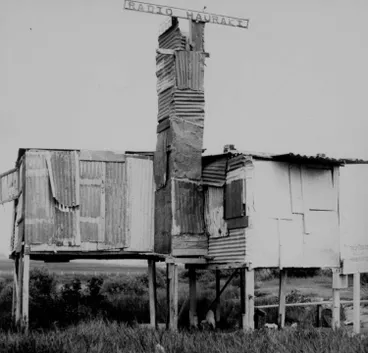
In March 1969, article stated 'Favona Pirates' beaten Radio Hauraki by establishing own 'broadcasting station' on land
They built a hut as a mock radio station in Māngere. (See: South Auckland Courier Central Edition, 26 March 1969, p. 14)
Auckland Libraries
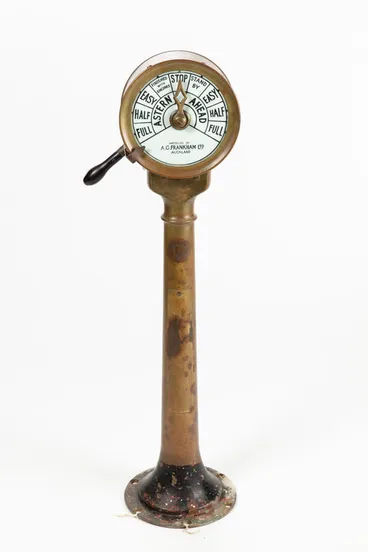
On 24 March 1970, new Broadcasting Authority awarded a licence to Radio Hauraki to broadcast on land in Auckland area
Radio Hauraki had established a separate public company, Radio Hauraki (NZ) Ltd., & applied for the land-based licence
New Zealand Maritime Museum
14. Last broadcast held aboard 'Tiri II', 1 June 1970
After being granted its private radio licence for a land-based station in Auckland, the Radio Hauraki team made plans to cease transmitting from the ship Tiri II. The Broadcasting Authority had also granted a private radio station licence in the Auckland area to Radio International (Radio i). Radio Hauraki wanted to get started as soon as practical before the 'competition' was fully underway.
"A decision was made to close the offshore operation at 10.00 pm on 1st June 1970, 1111 days after Radio Hauraki had started its broadcasts from the original Tiri. During the last three days of broadcasting from sea all programmes were presented live from the ship. Commercial airtime was sold at premium rates for those three days and 'thank you' messages were recorded by major artists, including The Beatles, Elvis Presley and The Rolling Stones for inclusion in the final programmes. After the station's final hour, which was an up-dated documentary about the history of Radio Hauraki, arrangements were made for the Tiri II to sail triumphantly into Auckland Harbour where a reception party was planned."
However, DJ Rick Grant was lost overboard during the return voyage to Auckland that evening. After being involved in the search, which was called off at midday due to rough weather, the Tiri II berthed in Auckland at 5pm on 2 June.
Source: Offshore Radio Museum: Radio Hauraki - History, http://www.offshoreradiomuseum.co.uk/page210.html

1 June 1970: Audio of DJ Ian Magan saying farewell during Radio Hauraki's last broadcast as a pirate station at 10pm
Article: Photo of DJs Ian Magan, John Monks, Peter Telling, Lorraine McArthur, & Rick Grant (who became lost overboard)
Manatū Taonga, the Ministry for Culture and Heritage
15. New era begins, 26 Sept 1970 -
Broadcasting on land at Caltex House in Auckland:
On 26 September 1970, Radio Hauraki began broadcasting on land from studios on the 4th floor of the Caltex House in Auckland. Its first land broadcast with Ian Magan opened with the song 'Born free' sung by Matt Monro: Radio Hauraki: 1970 Radio Hauraki first ever land broadcast (4.36 min)
26 Sept 1970 at 6am, Radio Hauraki began broadcasting from studios on 4th floor of Caltex House in Auckland
Wikipedia
Changes in frequency from AM to FM, & created networked broadcast system:
Until 23 November 1978, Radio Hauraki had continued using the 1480 kHz/AM frequency; then shifted to 1476 kHz/AM due to an international AM band spacing change.
Later in 1990, Radio Hauraki began FM transmission on 99.0 FM.
During the late 1990s and early 2000s, Radio Hauraki began to expand its reach by creating a networked broadcast system across the North Island and South Island, linking multiple local regional frequencies using FM to share a centralised feed. See: https://www.hauraki.co.nz/listen/listen-live-frequencies/
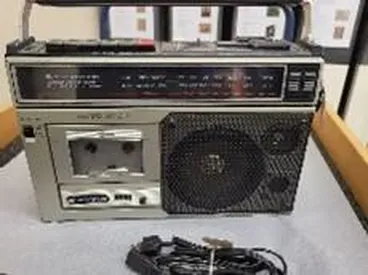
Frequencies changed: On 23 Nov 1978, Radio Hauraki switched from 1480 AM to 1476 AM; then switched to 99.0 FM in 1990
Since late 1990s/early 2000s, networked FM broadcast system across North & South Islands used to share centralised feed
Waikato Museum Te Whare Taonga o Waikato
Changes in ownership:
In 1996, Radio Hauraki was acquired by The Radio Network (TRN) which was jointly owned by APN News & Media and Clear Channel Communications. In early 2014, APN bought out Clear Channel Communications.
Later in September 2014, APN New Zealand, TRN, and GrabOne merged to form New Zealand Media and Entertainment (NZME).
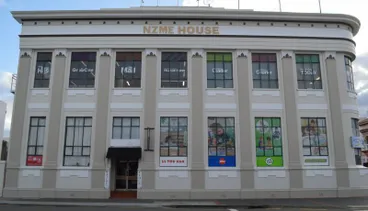
Since 1996, Radio Hauraki has undergone ownership changes & has been owned by NZME since Sept 2014
(Image: New Zealand Media and Entertainment (NZME) House occupying former Dalgety's Building in Napier)
Hawke's Bay Knowledge Bank
Radio Hauraki has continued to support music shows & community events:
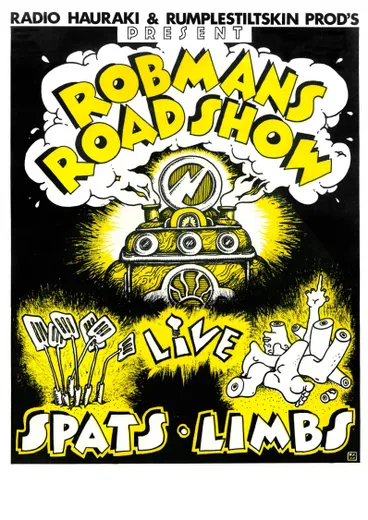
Sept 1978: Music poster: "Robman's Roadshow Live" presented by Radio Hauraki & others
Auckland Libraries
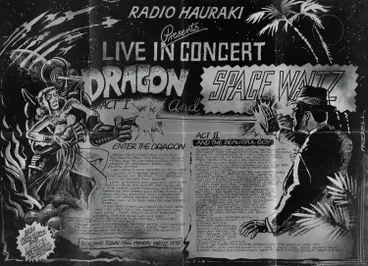
May 1979: Music poster: "Radio Hauraki presents Live in Concert - Dragon with Space Waltz" held Auckland Town Hall
Auckland Libraries
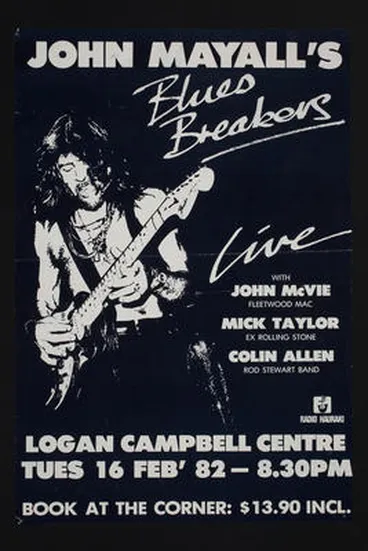
16 Feb 1982: Radio Hauraki logo appears right hand side of music poster for John Mayall's Blues Breakers
Auckland War Memorial Museum Tāmaki Paenga Hira
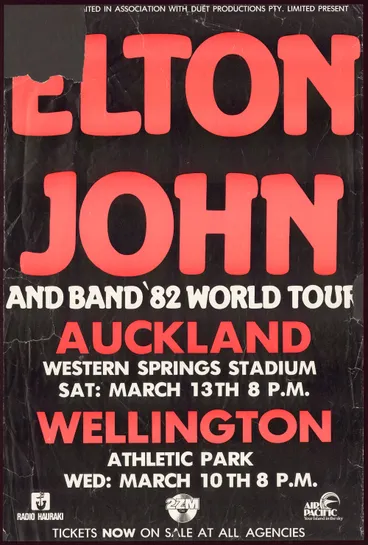
March 1982: Music poster: Elton John tour includes logo of Radio Hauraki & others
Victoria University of Wellington
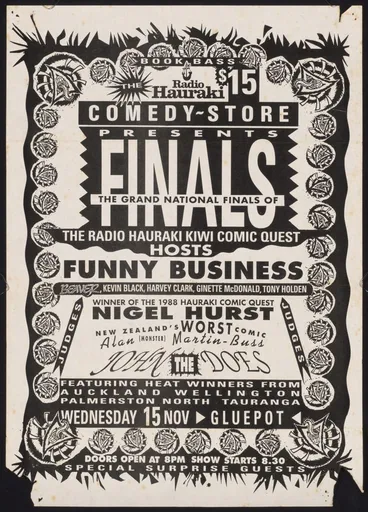
15 Nov 1989: Poster: "Grand National Finals of the Radio Hauraki Kiwi Comic Quest" held at Gluepot Tavern
Auckland Libraries
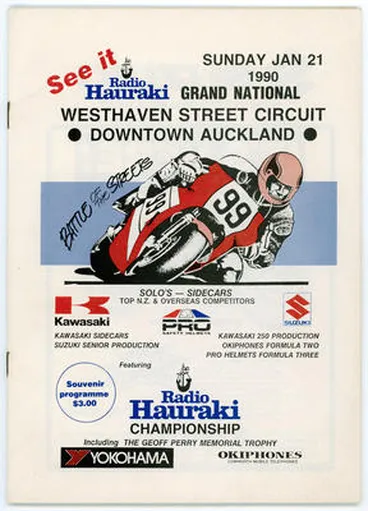
21 Jan 1990: Souvenir programme for "Radio Hauraki Grand National Westhaven Street Circuit" held in Auckland
Auckland War Memorial Museum Tāmaki Paenga Hira
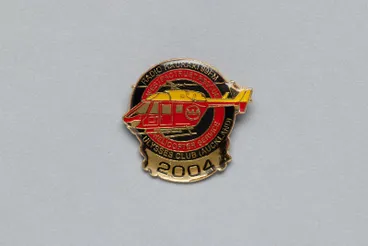
2004: Westpac Trust Rescue Helicopter Service badge includes Radio Hauraki 99FM & other organisations on the rim
MOTAT
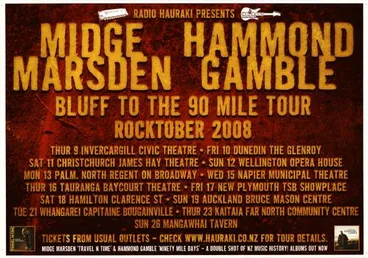
Rocktober 2008: Music poster: "Radio Hauraki presents Midge Marsden [and] Hammond Gamble, Bluff to the 90 Mile Tour"
Wellington City Council Archives
16. Commemorations
For names and photographs of some of the DJs / "Good Guys" on Radio Hauraki, see: Murray Cammick, "Radio Hauraki: The Pirate Days – The Good Guys", Audioculture, https://www.audioculture.co.nz/articles/radio-hauraki-the-pirate-days-the-good-guys
1974: Adrian Blackburn wrote the book "The shoestring pirates"
The 4th ed was retitled "Radio Pirates: How Hauraki rocked the boat"
National Library of New Zealand
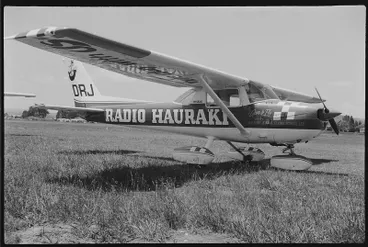
Jan 1977: 'DRJ' & Radio Hauraki written on side of ZK-DRJ Cessna A150M
Dr J (also known as Doctor Rock) was Barry Jenkins who joined Radio Hauraki in 1974
MOTAT
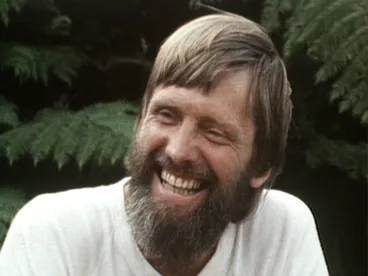
1986: NZOn Screen: Then Again - Interview with Colin Broadley whose career included working with Radio Hauraki
NZ On Screen
1996: Spectrum 831: "Eleven hundred and eleven days at sea": Interviews by Alistair MacAlpine (36:08 mins)
Ngā Taonga Sound & Vision
6 Aug 2009: Obituary article on Paddy O'Donnell
Radio New Zealand

2014: Film '3 Mile Limit' released by director Craig Newland
Film is a fictionalised story based on Radio Hauraki
NZ On Screen
25 Feb 2014: RNZ interview with David Gapes about the film '3 Mile Limit'
Radio New Zealand
4 March 2014: Article "Radio Hauraki: The Pirate Days – The Good Guys" by Murray Cammick
AudioCulture
2014: '3 Mile Limit ' won Best International Feature Film award at the Washington DC film festival
Also won awards at the Fargo, North Hollywood & Charleston International Film Festivals
Radio New Zealand

Video (2014): Pirates of the airwaves
This docudrama recreates the story of Radio Hauraki
NZ On Screen
5 Dec 2015: Joel Maxwell talks to David Gapes about the establishment of the pirate radio station & the legal hurdles
National Library of New Zealand
2 June 2019: Interviews with David Gapes as a journalist, commercial radio pioneer, band manager & music lover
(Updated 8 March 2024)
AudioCulture
9 Aug 2019: Obituary article on Ian Magan
Radio New Zealand
5 Dec 2019: RNZ & Robert Kelly recap the story of Radio Hauraki
Radio New Zealand
17 May 2023: Obituary article on Barry Jenkin
Radio New Zealand
9 March 2024: Obituary article on David Gapes
Radio New Zealand
18 Sept 2024: Article on Matt Heath leaving Radio Hauraki after 13 years
Radio New Zealand
Find out more:
Brian Pauling, 'Radio', Te Ara - the Encyclopedia of New Zealand, http://www.TeAra.govt.nz/en/radio/print
Murray Cammick, "Radio Hauraki: The Pirate Days – The Good Guys", Audioculture, https://www.audioculture.co.nz/articles/radio-hauraki-the-pirate-days-the-good-guys
New Zealand Radio DX league: "Denis O’Callahan’s personal history of Radio Hauraki", https://www.radiodx.com/denis-ocallahans-address-to-nzrdxl-convention-2018/
Offshore Radio Museum: "Radio Hauraki - History", http://www.offshoreradiomuseum.co.uk/page199.html
Offshore Radio Museum: "Tiri", http://www.offshoreradiomuseum.co.uk/page824.html
Pirate Radio Hauraki - 40 years on, http://www.radioheritage.net/hauraki/PirateRadioHaurakiImages.asp
Radio Hauraki, https://www.hauraki.co.nz/
Radio Hauraki: Hauraki 50th, https://www.hauraki.co.nz/hauraki-50th/
Wikipedia: "Radio Hauraki", https://en.wikipedia.org/wiki/Radio_Hauraki