Kaipūpū - Creation of the Sanctuary
A DigitalNZ Story by Anna Polson
Kaipūpū Point is a headland separating Picton harbour from Shakespeare Bay that has been transformed into a wildlife sanctuary
Background
The idea of creating a ‘mainland island’ was proposed by Port Marlborough with support from Department of Conservation and after discussion with some passionate locals, the Kaipūpū Point Mainland Island Society was established in 2005.
As the community started to hear about this project people started to put their hands up to be directly involved and this wonderful support by volunteers continues to this day. With the help and support of these volunteers, businesses in the community, and the passionate and hardworking management committee, a plan was put together as a “roadmap” to create a 'mainland island' wildlife sanctuary.
The Work Starts
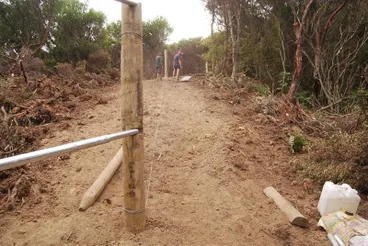
In 2008 the Kaipūpū Point Mainland Island Society built a predator proof fence to prevent introduced predators from re-establishing in the sanctuary after significant pest eradication work had been completed. The fence is 2 metres tall, 600 metres long, stretching across the isthmus from Picton Harbour to Shakespeare Bay to create a ‘mainland island’ wildlife sanctuary. This was achieved with a grant of $160,000 from Canterbury Community Trust.
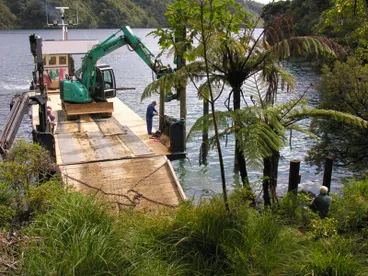
As public access is only possible via boat, in 2012 a floating jetty and kayak ramp were built on the west side of Kaipūpū Point at Dolphin Bay and in 2013 a pontoon and linkspan were connected to the jetty to complete the work required to provide visitor access to the sanctuary walking tracks. Funding for this work was provided by the Lotteries Commission with much of the work being completed by volunteers.
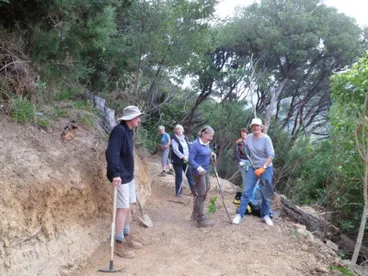
Basic tracks, commonly described as 'nothing more than goat tracks' were initially developed but in November 2012, to improve public access, a 2.7km circular walking track was completed. With support from Department of Conservation these tracks were surveyed by volunteers with much of the work being carried out by Alan Izard, Vince Cowie, Ross McGerty and Gerald Harper.

Bird Counts
One method of measuring the success of conservation projects is to monitor birdlife so in 2006 volunteer Dianne John and Brian Bell, a local ornithological expert, met to discuss how this could be established, it was agreed that October would be a good time to undertake the count as this is when birds are 'singing' prior to nesting.
In October 2007 Dianne John, Heather Smithers and Brenda Oldfield were guided by Vince Cowie to find 6 suitable locations spread across the peninsula, this was before any track cutting had taken place so involved a great deal of scrambling up and down slopes.
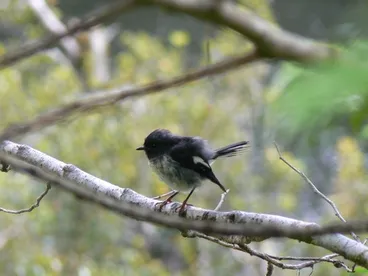
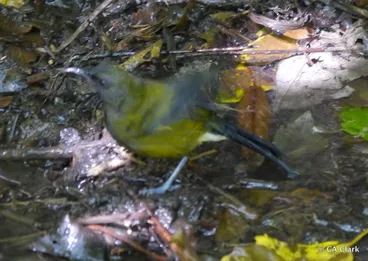
Although all birds are counted, the core focus of the count is recording bellbird numbers as these are a good indicator species for the general health of the bird population.
The counts have been repeated every year until 2015 at which point, following advice from the data analyst Nikki McArthur, the counts were extended to three counts over three consecutive weeks. This increase in counts required the need for more volunteers to become involved, and they were led by Dianne and Heather. Results of these bird counts are consistent with similar studies conducted in similar habitats around New Zealand.
Bird numbers continue to rise on Kaipūpū proving the success of the pest eradication and weed control work with some species now reaching saturation point and starting to migrate to other areas in the wider Picton area.
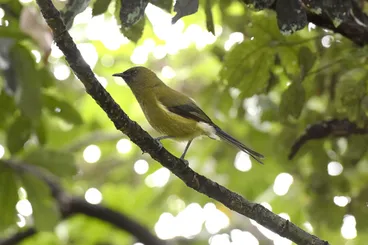
Mainland New Zealand Bellbird
iNaturalist NZ — Mātaki Taiao
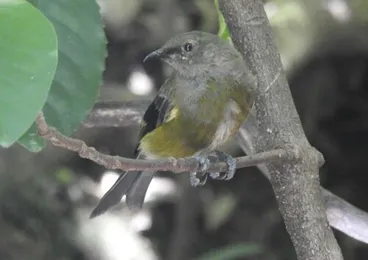
Mainland New Zealand Bellbird
iNaturalist NZ — Mātaki Taiao
Pest Eradication
The key to encouraging the recovery of native flora and fauna was the removal of animal and plant pests thereby improving the habitat for native flora and fauna.
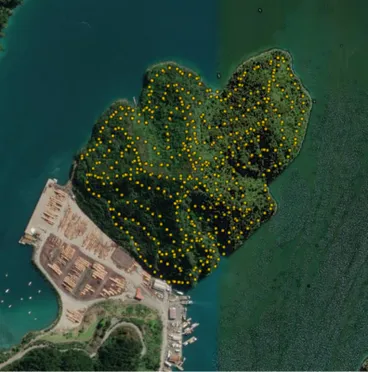
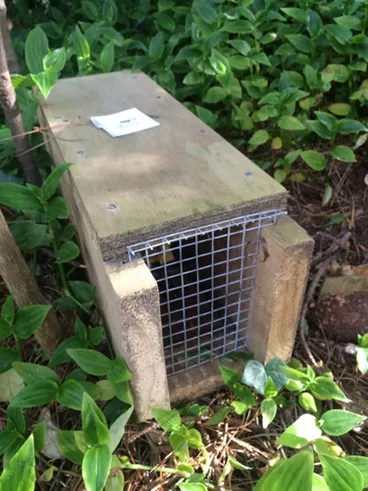
In September 2010 Paul Leeds started a roster to maintain the 30 rat traps which were initially installed on the island, these traps were maintained every two weeks by three different teams. This trapping continued until April 2012 when planning for a poison drop was underway.
In October 2012 an initial poison drop of Brodifacoum was completed with a second and final drop happening November 8th. Volunteers Paul Mann, Alan Izard and Dianne John went out following the drops to remove any baits from the shore-line. Prior to the drop the team removed weka from the drop area to prevent accidental poisoning if they ate the rodent carcasses.
A number of different rat and mice traps were used along the established tracks and it was soon discovered that the greatest success rate was achieved by using peanut butter diluted with oil!
The occasional stoat swims out to the sanctuary and is swiftly caught, possums are also sometimes trapped but feral cats, goats and pigs have not been a problem to date.
In 2021 the sanctuary reached the milestone of being rat free and while the occasional rat swims out to Kaipūpū, tracking tunnel results shows that any rat that arrives on Kaipūpū is quickly caught before it has an opportunity to establish a colony.
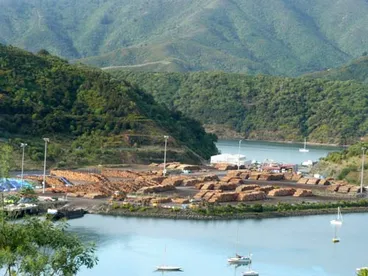
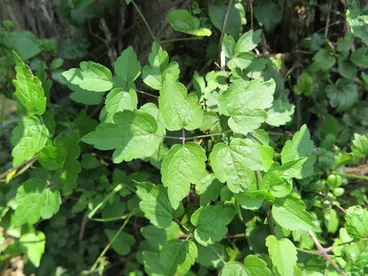
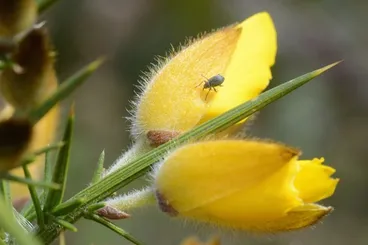
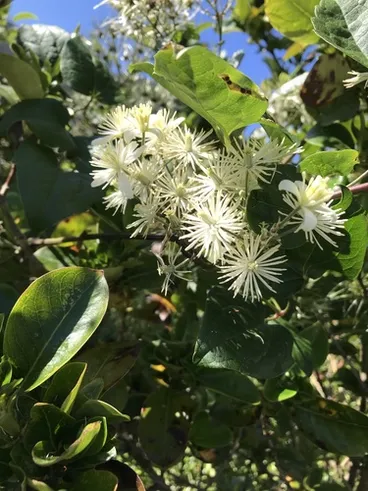
As large parts of Kaipūpū were cleared to provide grazing for stock prior to going to the freezing works, there were significant areas of introduced weeds and invasive plant species. Volunteer teams were formed and carried out regular weeding and spraying of the these areas and while weed control will be ongoing it is noticeable that this work is making a difference, for example, apart from the occasional rogue it is less and less common for mature Old Man's Beard vines to be found inside the fence.
To provide a constant supply of natives seedlings the Kaipūpū nursery was set up in 2021 with seeds being collected from Kaipūpū and closer surrounding areas. They are then propagated and either grown on for planting out at Kaipūpū or for sale to the public for planting around Picton.
Old man's beard
iNaturalist NZ — Mātaki Taiao
Pest Eradication, Monitoring and Control
Kaipūpū Sanctuary
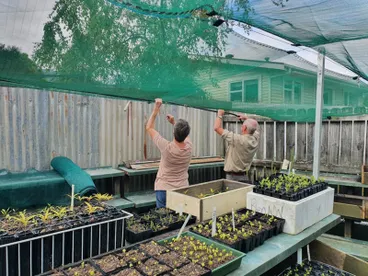
Restoration and Re Planting
Kaipūpū Sanctuary
Human
iNaturalist NZ — Mātaki Taiao
Gorse
iNaturalist NZ — Mātaki Taiao
Old man's beard
iNaturalist NZ — Mātaki Taiao
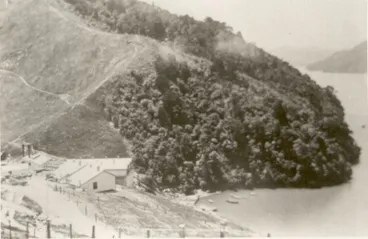
Picton Freezing Works Grazing Land - Kaipūpū Point
Kaipūpū Sanctuary
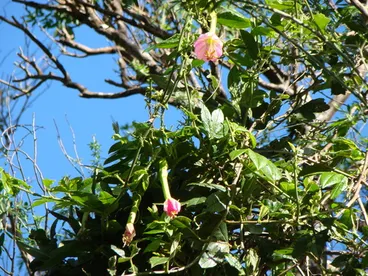
Banana passionfruit
iNaturalist NZ — Mātaki Taiao
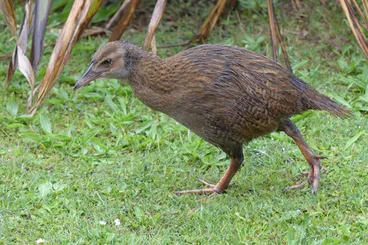
Western Weka
iNaturalist NZ — Mātaki Taiao
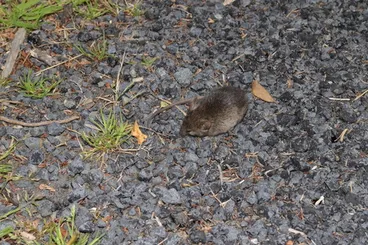
House Mouse
iNaturalist NZ — Mātaki Taiao
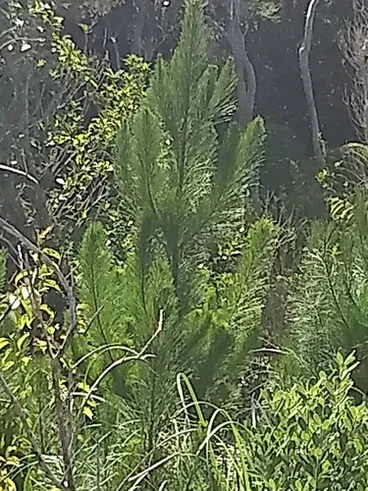
Monterey pine
iNaturalist NZ — Mātaki Taiao
The Sanctuary Opens
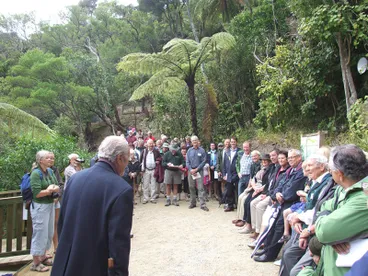
After the completion of the initial works, Kaipūpū Sanctuary was opened to the public on 17 March 2013 by then Minister of Conservation, Rt Hon Dr Nick Smith.
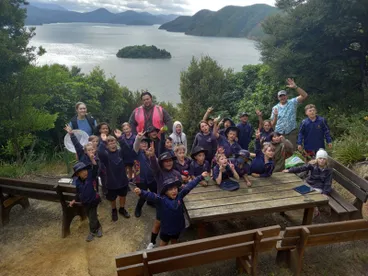
Kaipūpū Sanctuary now receives over 2000 visitors a year and runs an extensive education programme for schools, local groups and cruise ship visitors.