Life at Pahiatua
A DigitalNZ Story by Olivia E Kielczewski, National Library Intern
The camp located in Pahiatua, Lower Hutt, became the new temporary home for the Polish refugee children and their caregivers. The collections from various museums and cultural organizations give viewers a glimpse of everyday moments.
"Dwie ojczyzny" or two homelands- Pahiatua was a foundation for the refugee children. After years of turmoil, Pahiatua offered a more structured sense of life.
Preparation for life in New Zealand was guaranteed for the children. Education was provided about New Zealand culture and language to prepare the Polish children for life in New Zealand.
Polish and New Zealander children intermingled, creating friendships that would last for generations. Children of New Zealand descent were excited to meet children of a new culture, it was an exhilarating experience.
New Zealand public's reaction
New Zealanders were divided in their attitude toward the arrival of the Polish children. Many welcomed them unreservedly but some felt that the Government's first duty was to their own citizens and the British people in general, and resented the help extended to foreigners by the Government.
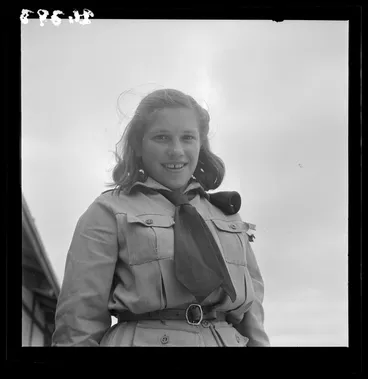
Bronisława Dziama in a scout uniform at a Polish refugee camp in Pahiatua
Alexander Turnbull Library

Polish and kiwi children playing
Manatū Taonga, the Ministry for Culture and Heritage
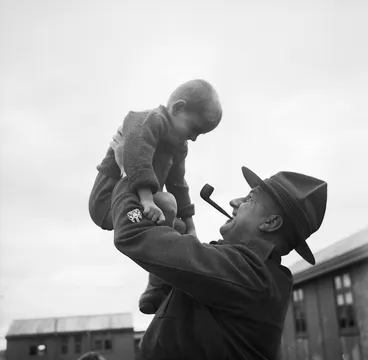
Soldier holding up a young child in a Polish camp, Pahiatua
Alexander Turnbull Library
Play was an important part of life at Pahiatua. Games, socializing, and having time to discover gave the children time time to develop themselves and feel childhood freedom.
It was paradise
Józef Jagiełło
Films were shown regularly in the camp's hall, and we were fed a diet of cowboys and Indians, and pirates, as well as lots of cartoons. I remember Popeye the Sailor Man with his spinach. Sometimes we were also shown war documentaries. After seeing the films, we boys began making our own weapons – guns made from bits of wood, and swords out of tree branches, and we'd take turns at being "goodies" and "baddies".
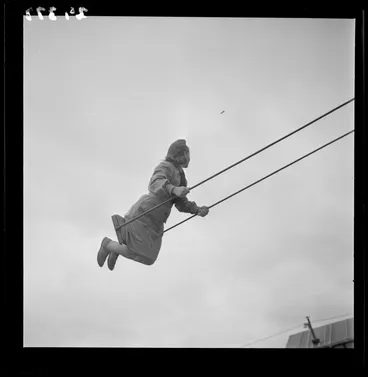
Girl playing on a swing at a Polish refugee camp in Pahiatua
Alexander Turnbull Library
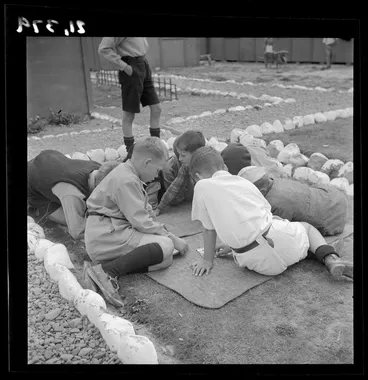
Boys playing a game at a Polish refugee camp, Pahiatua
Alexander Turnbull Library
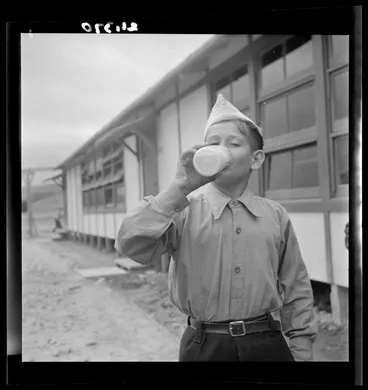
Stanisław Krejcisz drinks a bottle of milk at a Polish refugee camp, Pahiatua
Alexander Turnbull Library
Chores were just as important for developing a schedule and self sufficiency. This also alleviated financial costs of the camp which depended on the amount of employees running it:
The children performed their duties and chores outside of school hours by cleaning the campgrounds, working in the vegetable gardens, cutting the grass, washing dishes, and also tidying their dormitories, classrooms and washrooms.
The limited financial assistance from the Polish Government-in-Exile in London soon came to an end and the New Zealand Government took over the entire financing of the camp. The Polish authorities were aware of the huge costs of running the camp, and it was decided to try to lower them by cultivating a vegetable garden, and taking over the running of the laundry and kitchens.
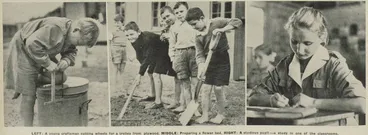
Polish children in their camp at Pahiatua
Auckland Libraries
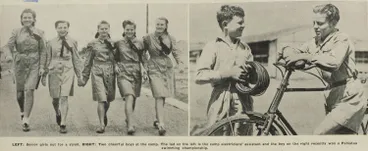
Polish children in their camp at Pahiatua
Auckland Libraries
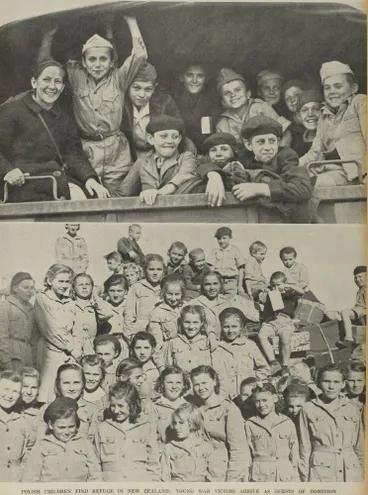
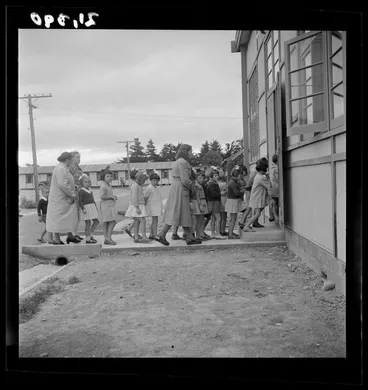
Pani Petrus and a group of young girls enter a dining room at a Polish refugee camp, Pahiatua
Alexander Turnbull Library
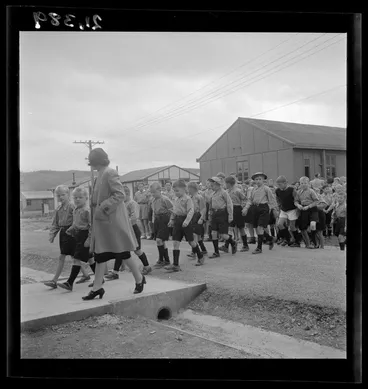
Mrs Krystyna Skwarko leads a group of children to a dining room at a Polish refugee camp, Pahiatua
Alexander Turnbull Library
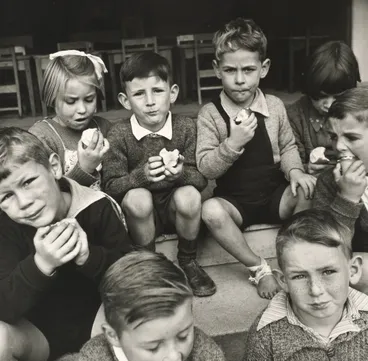
Free apples to school children, May 1944. From the portfolio: PhotoForum - John Pascoe
Museum of New Zealand Te Papa Tongarewa
Language lessons and education continued, a sense of routine was welcomed.
A teacher's prideMary McAllister
Because we lived in the camp, we were available and actively involved in most aspects of its life. To begin with, we taught English classes only and to all ages – children through to adults. Our resources were minimal – our tools of trade were imagination, improvisation, a sense of humour, endless patience and the ability to cope with the unexpected.
One day, there was a knock on the classroom door and in came Prime Minister Peter Fraser with camp officials and retinue – he was very proud of "his Polish children" and always anxious for their welfare. On other days, it could be the Apostolic Delegate, bishops, archbishops or other dignitaries who loved to visit.
Soon, physical education and sports became part of our brief, which were the highlights for many. From the very basic siatkówka (volleyball) with a couple of poles and a rope or net set up on any small patch, we graduated to baseball, basketball, soccer and rugby. Lack of knowledge or language was made up for by enthusiastic participation and the teams competed very well against the local ones. Girls will remember the "elegant bloomers" of the first basketball teams.
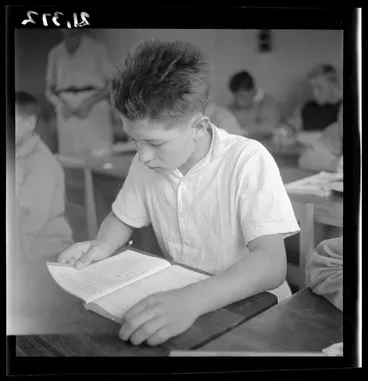
A boy reads a book in a Polish refugee camp's classroom, Pahiatua
Alexander Turnbull Library
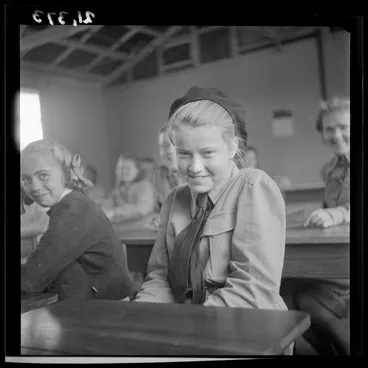
Female pupil in a classroom at a Polish refugee camp, Pahiatua
Alexander Turnbull Library
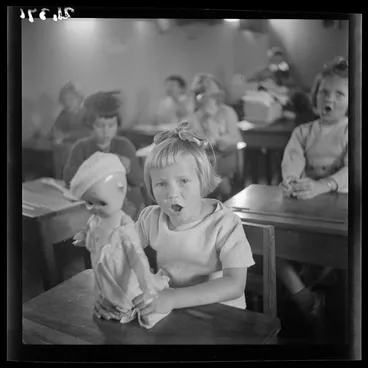
Zofia Portas holds a doll in a classroom at a Polish refugee camp, Pahiatua
Alexander Turnbull Library
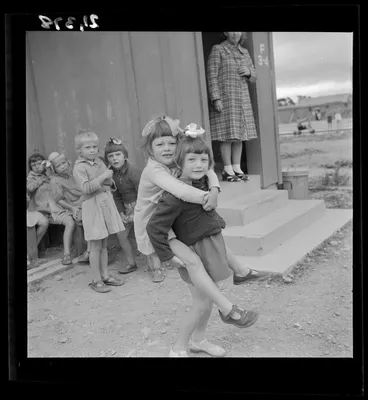
Kindergarten children playing outside their dormitory at a Polish refugee camp, Pahiatua
Alexander Turnbull Library
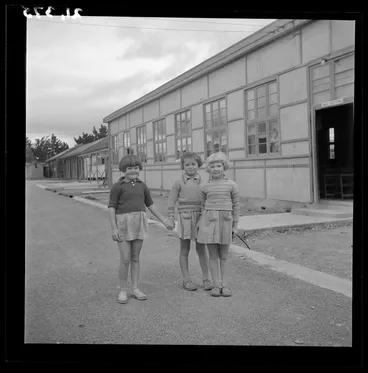
Three young girls pose outside the auditorium (sala odczytowa) at a Polish refugee camp, Pahiatua
Alexander Turnbull Library
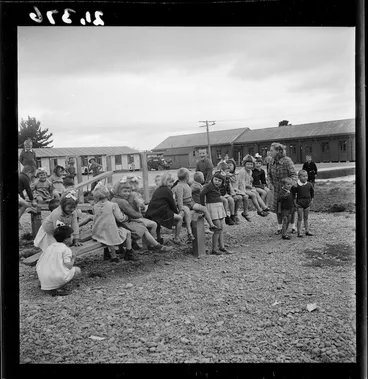
Children in play area of a Polish refugee camp in Pahiatua
Alexander Turnbull Library
Ladies from Pahiatua's Polish Children's Hospitality Committee prepared the beds, put flowers on tables and tidied up the camp for their arrival. The camp was administered by the New Zealand army.
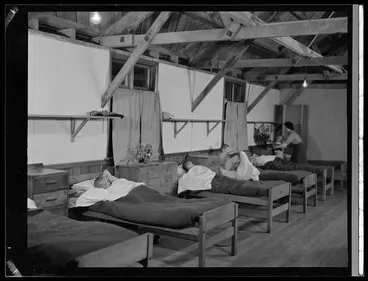
Boys' dormitory at Polish children's refugee camp, Pahiatua
Alexander Turnbull Library
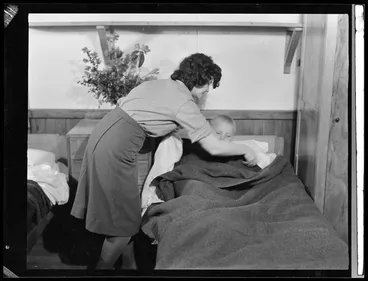
Bedtime at Polish children's refugee camp, Pahiatua
Alexander Turnbull Library
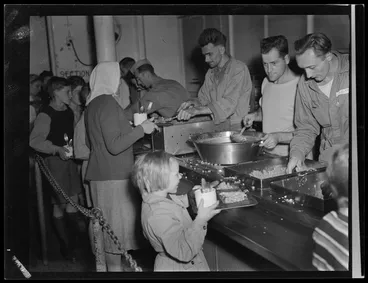
Polish refugees being served a meal, at children's refugee camp, Pahiatua
Alexander Turnbull Library
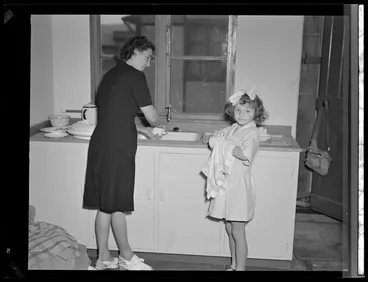
A woman and small girl washing dishes in cottage kitchen, at Polish children's refugee camp, Pahiatua
Alexander Turnbull Library
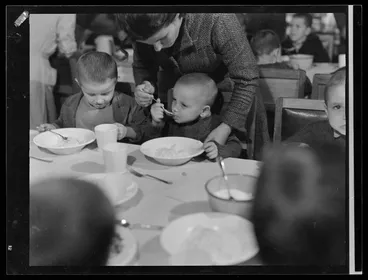
Small boys eating a meal at Polish children's refugee camp, Pahiatua
Alexander Turnbull Library
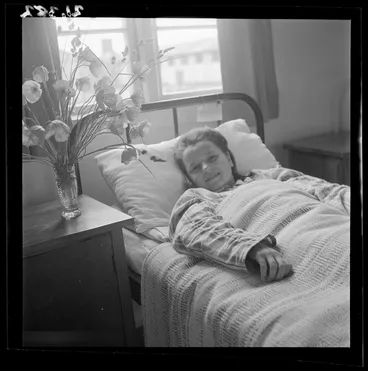
Genia Sajewicz lies in bed in a hospital ward at a Polish refugee camp, Pahiatua
Alexander Turnbull Library
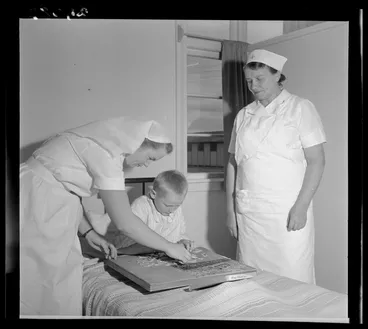
Ryszard Nowacki works on a jigsaw puzzle in a Polish refugee camp's hospital, Pahiatua
Alexander Turnbull Library
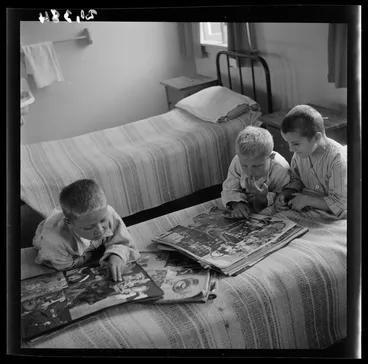
Patients of a Polish refugee camp's hospital, Pahiatua
Alexander Turnbull Library
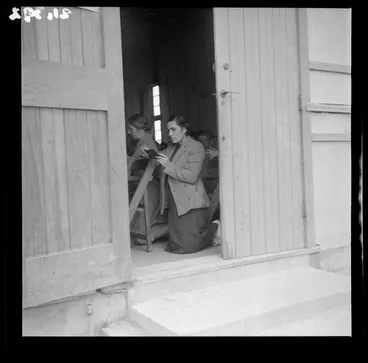
Mass in the auditorium (sala odczytowa) at a Polish refugee camp in Pahiatua
Alexander Turnbull Library
Getting by
Henryka Blackler (Aulich)
My dearest memories of the Polish Children's Camp in Pahiatua were, and still are, the songs – the beautiful morning and evening hymns at the grotto, and Sunday Mass in the camp's hall. I especially loved the musical films, which I later tried to enact and sing for the girls in the dormitory. It was so much fun that it was worth the punishment we received for breaking the curfew rules. It all brought us closer together as a family.
I took part in all the concerts held in the hall and I still remember the poem I recited. We performed the Irish jig and Scottish whirl in front of Prime Minister Peter Fraser and important guests.
Keeping the values
Ed Juchnowicz son of Wacław and Felicja Juchnowicz (Nadolska)
Church life was an important part of our family life when I was a child. Though we were members of our own local parish, we attended Polish Mass at St Mary of the Angels in Wellington or the Berhampore church St Joachim's (across the road from where the Polish priest resided) on major feast days, such as Easter and Christmas. This gave us an opportunity to catch-up with our extended family, which was often followed by a meal at a relative's or family friends' house for a leisurely afternoon.
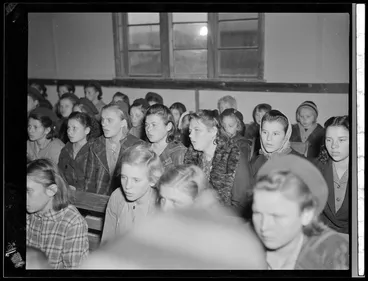
Girls sitting in auditorium (sala odczytowa) at Polish refugee camp, Pahiatua
Alexander Turnbull Library
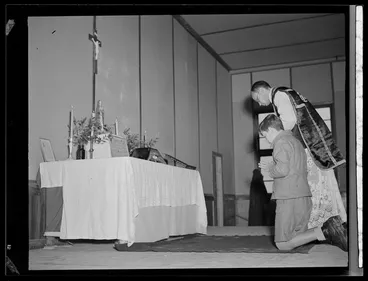
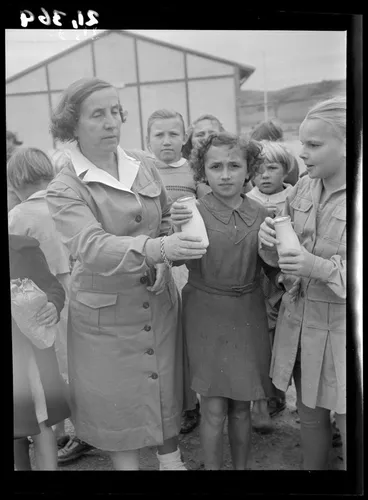
Teacher Julia Rolińska passes a bottle of milk to Stefania Serdyńska at a Polish refugee camp, Pahiatua
Alexander Turnbull Library
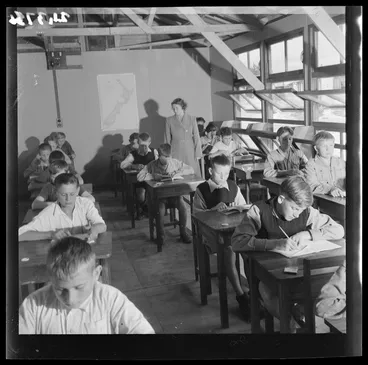
Mrs Krystyna Skwarko watches her pupils study in the boys' classroom at a Polish refugee camp, Pahiatua
Alexander Turnbull Library
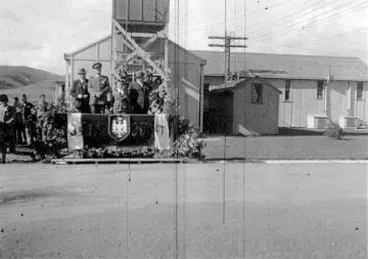
Ceremony at Polish Children's Camp, Pahiatua
Wairarapa Archive
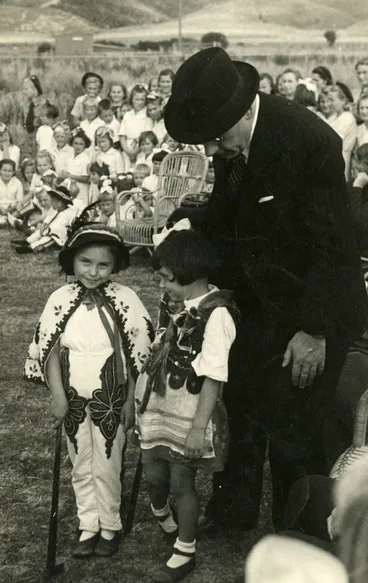
Prime Minister, Peter Fraser, with children of Polish Children's Camp
Palmerston North City Library
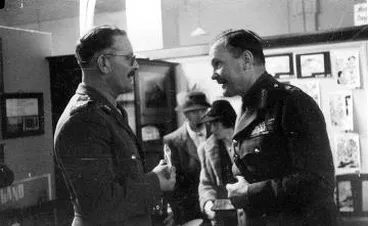
Governor General Freyberg at Polish Children's Camp, Pahiatua
Wairarapa Archive
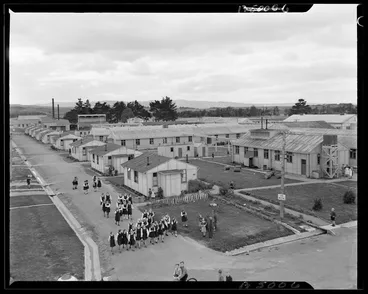
View of Polish children's camp, Paihiatua
Alexander Turnbull Library
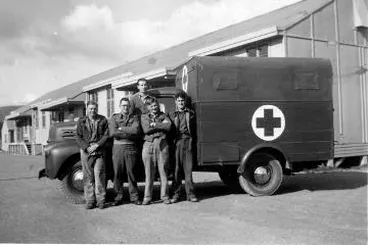
Red Cross van at Polish Children's Camp
Wairarapa Archive
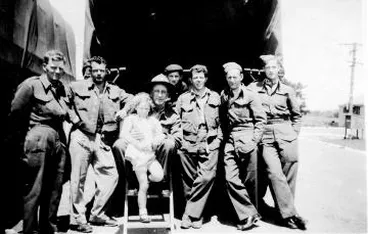
Staff members at Polish Children's Camp, Pahiatua
Wairarapa Archive
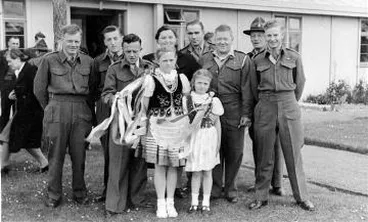
Soldiers and children at Polish Children's Camp, Pahiatua
Wairarapa Archive
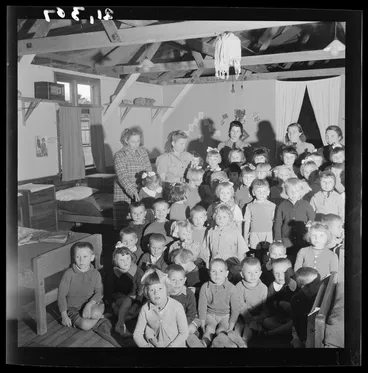
Group of kindergarten children at a Polish refugee camp, Pahiatua
Alexander Turnbull Library