Honey bees
A DigitalNZ Story by Zokoroa
Arrival of honey bees to NZ; their life cycle; and commercial bee farming
Bees, Honey bees, honey, beekeeping, beekeepers, bee hives, hives, apiaries
Honey bees can be seen flitting around in gardens carrying pollen grains from one flower to another, pollinating fruit-bearing plants, and gathering nectar to make honey. There are three types of honey bees: the queen bees (female) who lay the eggs, the drone bees (male) whose role is to mate with the queen bees, and the worker bees (female) who are the multi-taskers inside and outside the bee hives!
The first honey bees were thought to have been brought to NZ by Mary Bumby on 19 March 1839. She had sailed from England via Hobart with her brother Reverend John Bumby and arrived with two baskets of hives for their new home at the Māngungu Mission Station at Hokianga. Gradually, more honey bees were imported by missionaries and settlers. Bee hives were set up on farms to help pollinate the white clover being sown in pastures for feeding farm animals. By the 1900s, commercial bee farms began to be established in various parts of NZ. Nowadays, there are over 9000 registered beekeepers and over 580,000 registered bee hives.
September is celebrated as Bee Aware Month in NZ. The annual campaign, which is run by Apiculture New Zealand, aims to raise awareness about how bees contribute to our environment, food chain and economy. Gardening practices that aid the health of bees are also encouraged, such as planting bee-friendly plants, providing clean water for bee rehydration, choosing bee-friendly pesticides and spraying safely. (Find out more: Apiculture New Zealand: Bee Aware Month: https://apinz.org.nz/bee-aware-month/)
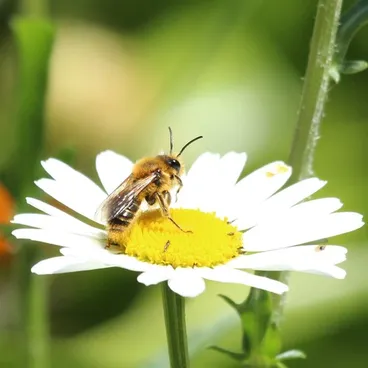
Honey bees carry pollen grains from one flower to another, pollinate fruit-bearing plants, & gather nectar to make honey
iNaturalist NZ — Mātaki Taiao
Fun facts!
NZ's first honey bees were thought to have been brought from England to the Hokianga in 1839.
Honey bees use their antennae to smell and can detect nectar up to two kilometres away.
They fly at a speed of around 24km per hour and beat their wings 11,400 times per minute - hence their buzzing sound.
During one flight, a worker bee will visit 50-100 flowers to gather nectar and pollen for food, and to pollinate flowers.
Bees do a 'waggle' dance to tell other bees the distance and direction of food. See Youtube: Bee dance (Waggle dance).
One beehive of honey bees can produce up to 150kg of honey per year.
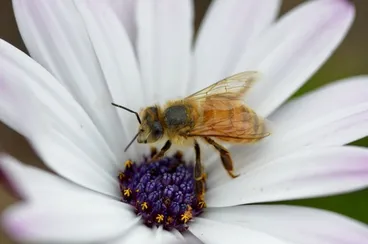
The Western honey bee (also known as European honey bee (Apis mellifera), is the most common of 7 species worldwide
The genus name Apis is Latin for 'bee', and mellifera is the Latin for 'honey-bearing' or 'honey-carrying'
iNaturalist NZ — Mātaki Taiao
We'll explore:
1. Honey bees arrive in NZ 2. Three types of honey bees: Queen, Drone & Worker 3. Life cycle of honey bees 4. Anatomy of honey bees 5. What and where do honey bees eat 6. Swarms of bees 7. Honey bees at work 8. Honey products 9. Backstory: Commercial beekeeping 10. Celebrating honey bees: Bee Aware Month held September
1. Honey bees arrive in NZ
New Zealand has native species of bees which pollinate flowers but do not produce honey or live in hives. Honey bees were introduced by missionaries and settlers to pollinate their garden flowers and fruit trees, and to produce honey for the household. Gradually, more bees were imported to NZ and bee hives established on farms to help pollinate the white clover being sown in pastures for feeding farm animals and to produce honey for sale.
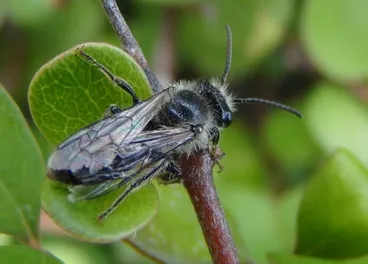
NZ has native species of bees which pollinate flowers but do not produce honey or live in hives
They are mainly black; live in small holes in the ground; & feed larvae with pollen & nectar from surrounding flowers
iNaturalist NZ — Mātaki Taiao
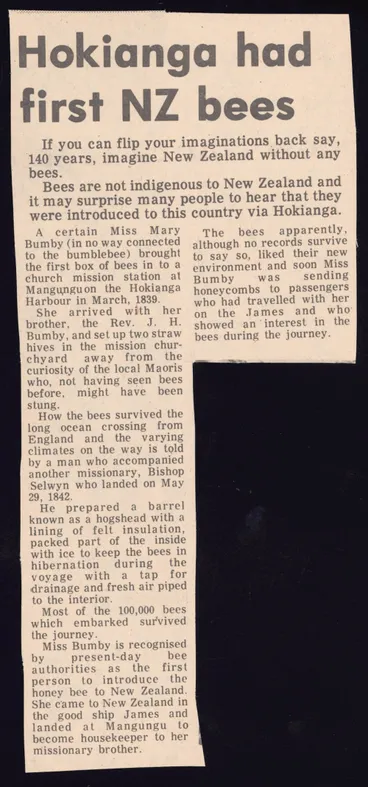
NZ's first honey bees were thought to have arrived on 19 March 1839 at Māngungu Mission, Hokianga with Mary Bumby
With her brother Rev. John Bumby, Mary sailed from England via Hobart & had 2 straw baskets of bees for their garden
Far North District Libraries
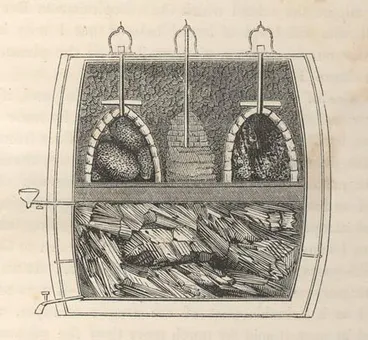
During 1840s & 1850s, more honey bees were brought to NZ by colonists, including Governor Hobson & James Busby
(Image: Proposed shipping container in 'My bee book' (1839) by Rev Cotton who later arrived with Bishop Selwyn in 1842)
Manatū Taonga, the Ministry for Culture and Heritage
![Image: [Roma Hamilton]](https://images.digitalnz.org/R48_Q8pFu4yiuU8P4oJVA9si0s4=/368x0/https%3A%2F%2Fs3.amazonaws.com%2Fpastperfectonline%2Fimages%2Fmuseum_58%2F107%2F2011028566.jpg "[Roma Hamilton]")
Bees were kept in skeps (straw baskets) & wooden boxes with frames fixed inside to replicate the honey comb's wax cells
The fixed frames meant bees couldn't be readily inspected for American foulbrood disease which began to arrive in NZ
South Canterbury Museum
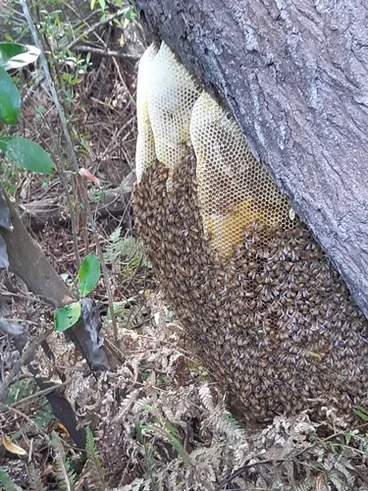
Wild colonies of bee nests began to spread in bush areas by 1860s & the honey began to be gathered & sold by Māori
The selling of increasingly larger quantities by Māori led to them being considered our first commercial beekeepers
iNaturalist NZ — Mātaki Taiao
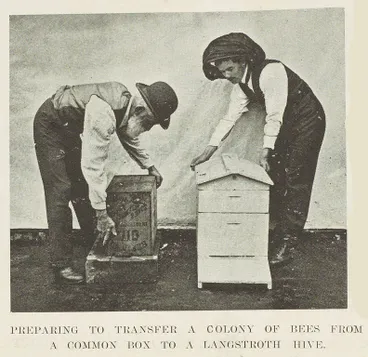
From 1870s, commercial production of honey increased when Langstroth hive with vertical removable frames became popular
(Image: Transferring bees from the old design of hive to the new Langstroth hive on the right)
Auckland Libraries
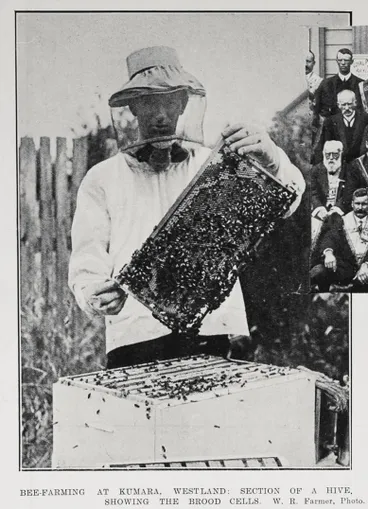
The removable frames, which enabled easier inspection of bees, was patented by American Rev. Lorenzo Langstroth in 1852
Langstroth had also found that bees wouldn't build a honeycomb in a space less than 6.3 mm or greater than 9.5 mm
Auckland Libraries
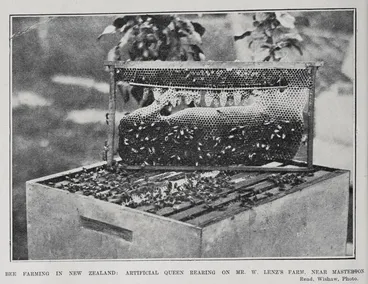
By the mid-1880s, bees were being imported from Australia, Italy & USA to improve NZ's stock
The value of honeybees was recognised for pollinating the white clover being sown in pastures with seed from England
Auckland Libraries
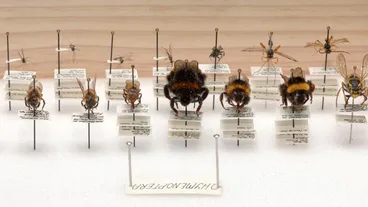
Initially, the Northern European black strain of bees arrived in NZ, followed by the yellow Italian strain around 1880
Nowadays, NZ has 3 subspecies of the Western honey bee: Italian, Carniolan (southern Central Europe), & British
Manatū Taonga, the Ministry for Culture and Heritage
2. Three types of honey bees: Queen, Drone & Worker
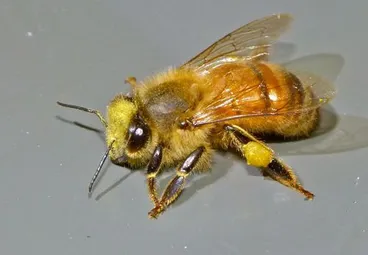
There are 3 types of honey bees: Queen bees, Drone bees & Worker bees
iNaturalist NZ — Mātaki Taiao
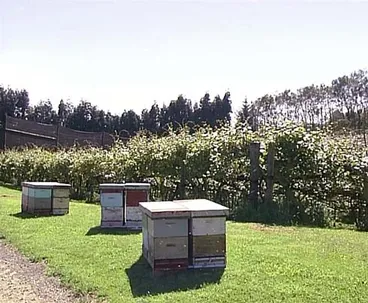
In summer, a beehive will have one queen bee (female), c.250 drones (male), & 60,000 worker bees (female)
On average there are also 7,000 eggs, 10,000 larvae & 20,000 pupae
Manatū Taonga, the Ministry for Culture and Heritage
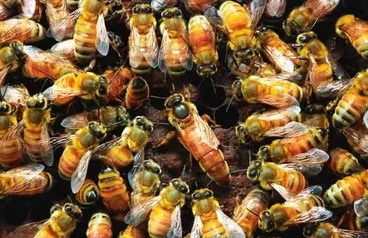
Queen bee's role is to lay eggs
Manatū Taonga, the Ministry for Culture and Heritage
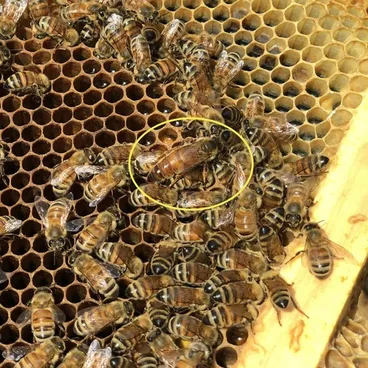
Drone bee's role is to mate with the queen bee (yellow ring) who then lays eggs
In summer, the queen bee can lay as many as 1,500 eggs daily
iNaturalist NZ — Mātaki Taiao
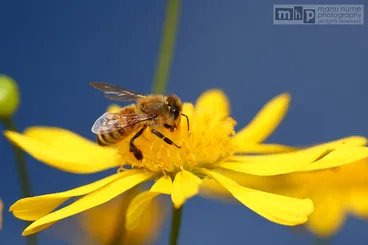
Worker bees have several roles
Role includes to feed, clean, and make food for the larvae & drones, as well as for the queen bee
iNaturalist NZ — Mātaki Taiao
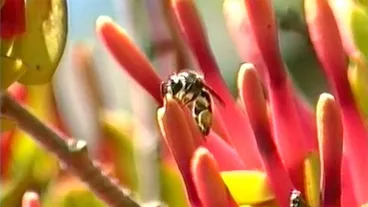
Pollinate flowers by transferring pollen grains from the male anther of a flower to female stigma on another flower
Pollinating mistletoe
Manatū Taonga, the Ministry for Culture and Heritage
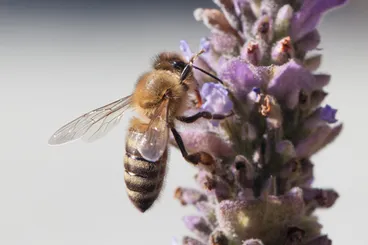
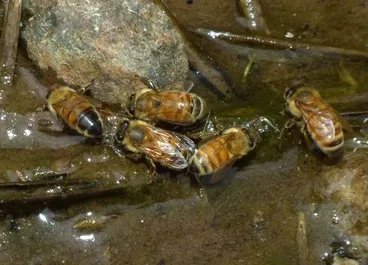
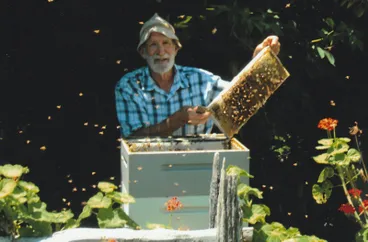
Build a comb inside the frames of a beehive to hold the nectar, pollen & water; & the eggs to be laid by the queen
Paul Brown, the Howick Historical Village Beekeeper, with one of his hives.
Howick Historical Village
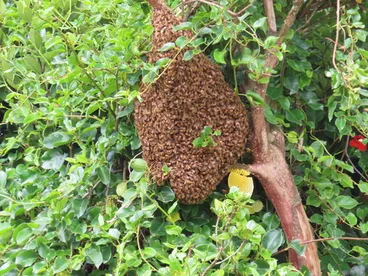
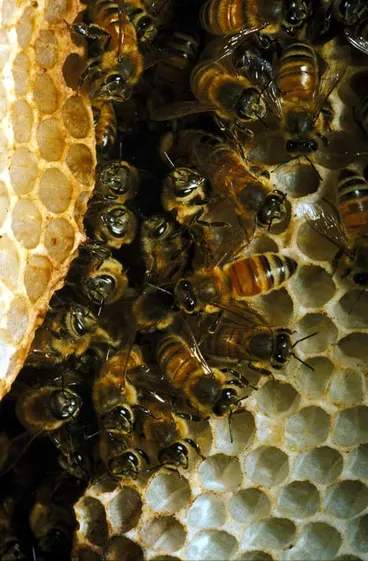
Build the comb's cells by secreting wax from its abdomen
Wild honeybees inside a hive
Manatū Taonga, the Ministry for Culture and Heritage
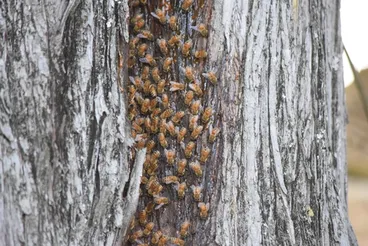
Take care of larvae which then develop into pupae before merging as bees
Western Honey Bee
iNaturalist NZ — Mātaki Taiao
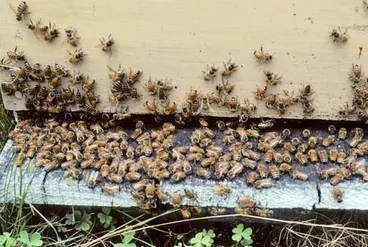
Guard the entrance to check each new arrival is a member of the hive & can sting with the stinger on their abdomen
Beehive entrance
Manatū Taonga, the Ministry for Culture and Heritage
3. Life cycle of honey bees
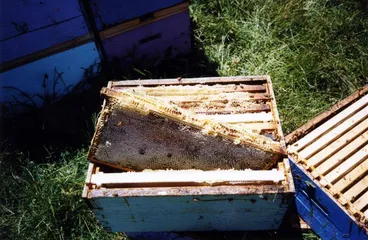
Egg: The queen bee will lay one egg in each cell throughout the brood nest, with drones laid in the larger cells
(Image: A single frame of the beehive box showing the shape of the brood nest)
Hawke's Bay Knowledge Bank
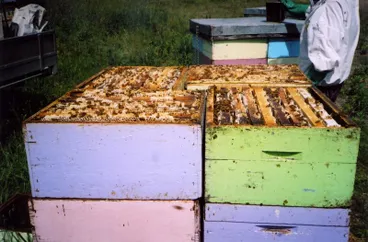
Brood nest: Each beehive's box has 10 frames inserted which are used for a brood nest & the storage of pollen & honey
The brood nest is a three-dimensional shape spread throughout the frames in the middle of the box
Hawke's Bay Knowledge Bank
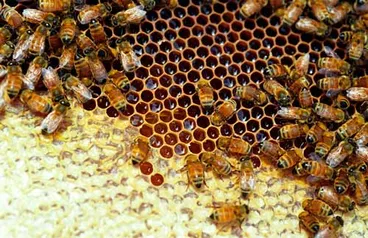
Larva: After 3 days, the eggs, which are small & look like rice, hatch into larvae (also known as brood)
Manatū Taonga, the Ministry for Culture and Heritage
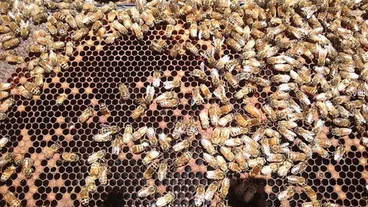
Worker bees tend to the larvae as they grow; then cover each lava's cell with a wax covering
Drone cells are capped with a larger, dome-shaped cap than worker cells, & the queen cells are a peanut-like shape
iNaturalist NZ — Mātaki Taiao
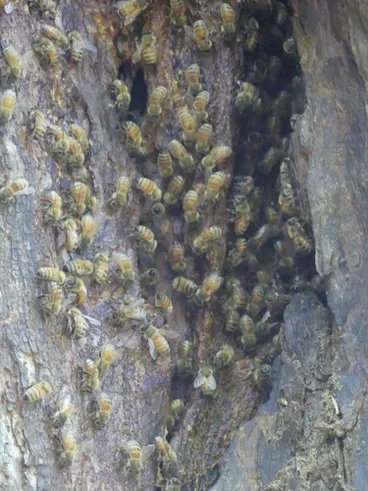
Pupa: The larva spins a cocoon around itself & develops into a pupa where it develops eyes, wings & other body parts
Image: Wild nest in a kanuka tree
iNaturalist NZ — Mātaki Taiao
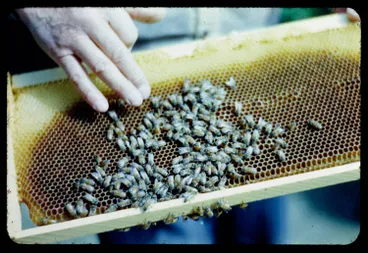
Young adult: When grown, the bee will begin to chew through the cocoon & wax capping of its cell & emerge into the hive
Auckland Libraries
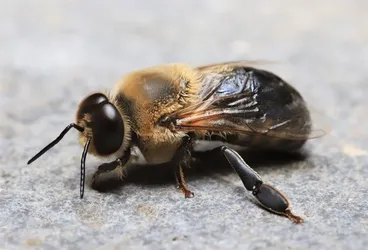
Adult: Worker bees live for 4-8 weeks, drones can live up to 4 months, & queen bees for 2-3 years & some live longer
Image: Drone bee
iNaturalist NZ — Mātaki Taiao
4. Anatomy of honey bees
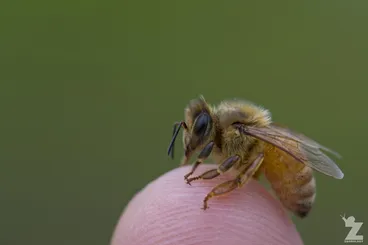
The queen bee is 15–20 millimetres long, & the drones & worker bees are 11–15 millimetres long
iNaturalist NZ — Mātaki Taiao
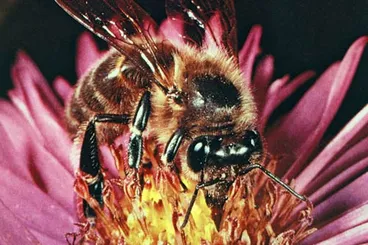
On its head, the honey bee has 5 eyes
Manatū Taonga, the Ministry for Culture and Heritage
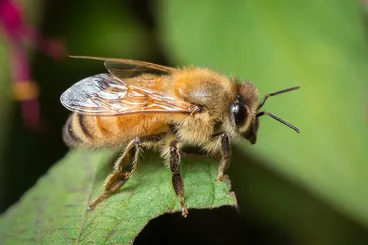
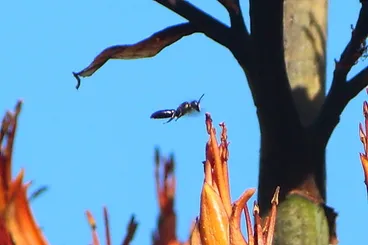
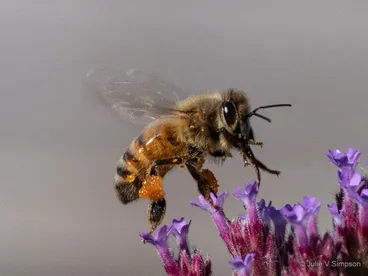
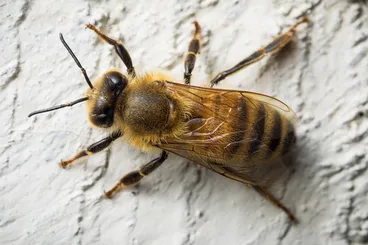
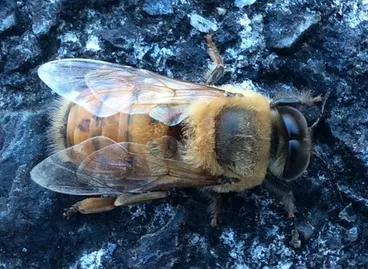
They have two pairs of wings - the fore wings are larger than the hind wings
iNaturalist NZ — Mātaki Taiao
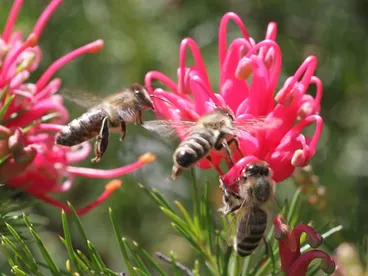
They beat their wings 11,400 times per minute, which makes their buzzing sound
Manatū Taonga, the Ministry for Culture and Heritage
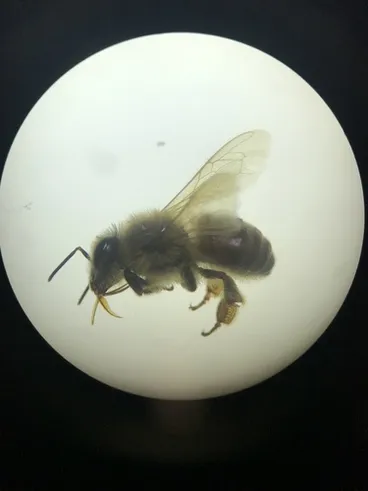
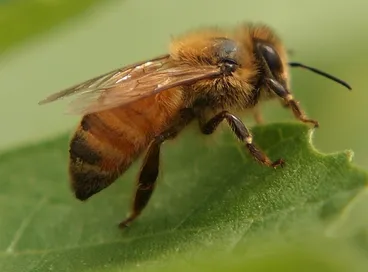
Honey bees have 2 stomachs: one is an ordinary stomach & the other is called a honey sac which stores the nectar
Nectar from flowers sucked up by honey bees passes into an expandable pouch called 'honey sac' which can store c.40mg
iNaturalist NZ — Mātaki Taiao
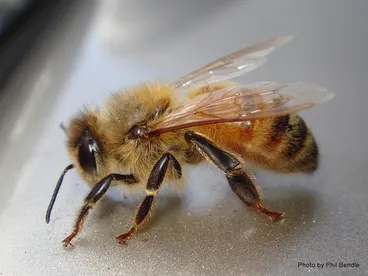
It's abdomen produces beeswax from the nectar which is secreted by 8 glands & deposited as flakes at or near the hive
The flakes are collected by worker bees to form the walls & cells in a comb for the storage of honey, eggs & larvae
iNaturalist NZ — Mātaki Taiao
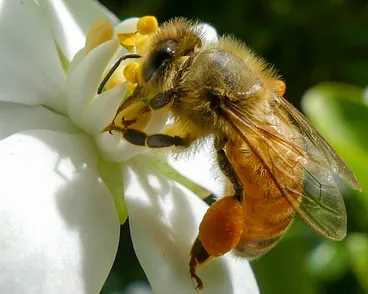
At the end of its abdomen, the honey bee has a short, barbed stinger which is only protracted when it needs to use it
Most honey bees die after using their stinger as the barb gets lodged causing bowel disrupture when the bee pulls away
iNaturalist NZ — Mātaki Taiao
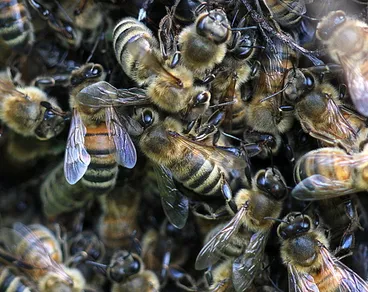
When bees sense danger, they release an alarm pheromone called isopentyl acetate from a gland near their stingers
This chemical wafts through the air and alerts other bees to be ready to attack
iNaturalist NZ — Mātaki Taiao
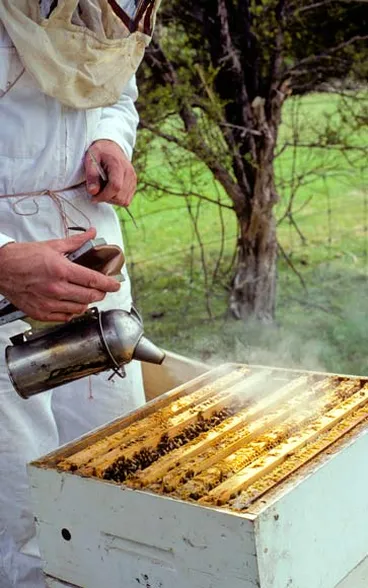
Smoking a beehive masks this pheromone, allowing the beekeeper to safely perform a hive inspection
Manatū Taonga, the Ministry for Culture and Heritage
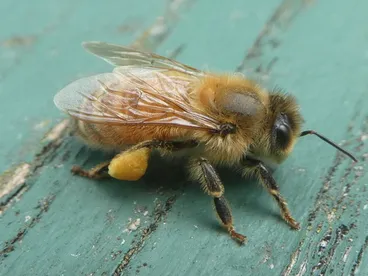
Corbiculae (pollen baskets) are located on the bee's back legs for carrying pollen back to the hive
The corbiculae are made of tightly-woven leg hairs. The colour of the pollen varies from flower to flower.
iNaturalist NZ — Mātaki Taiao
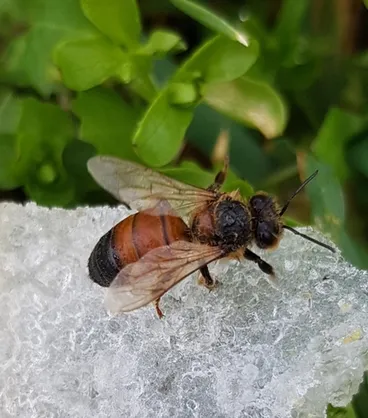
Honey bees have an extoskeleton (on the outside) whereas humans have the skeleton on the inside
iNaturalist NZ — Mātaki Taiao
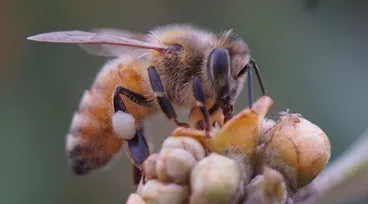
A worker bee’s brain is a cubic millimetre in size but has the densest neuropile tissue of all animals
Hence, worker bees are very intelligent & can make complex calculations on travel distance & foraging
iNaturalist NZ — Mātaki Taiao
5. What and where do honey bees eat
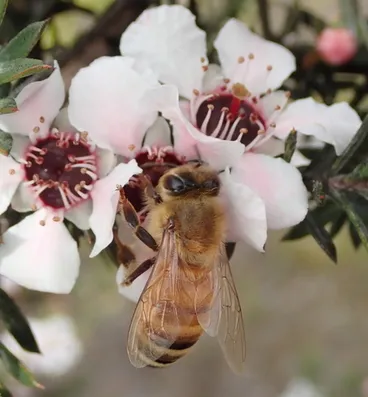
Honey is the main food source for the bee & they collect nectar from flowers to make the honey
iNaturalist NZ — Mātaki Taiao
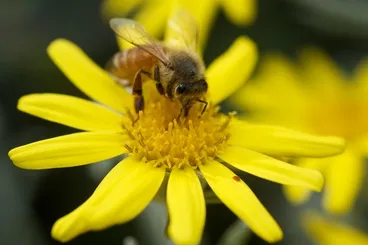
The nectar is collected during the warmer months to make enough food stores for the winter when it is too cold to forage
iNaturalist NZ — Mātaki Taiao
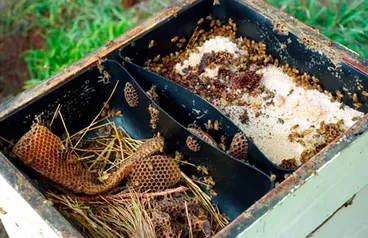
In winter, wet & cold weather, beekeepers supply sugar to hives to keep the bees fed and healthy
Manatū Taonga, the Ministry for Culture and Heritage
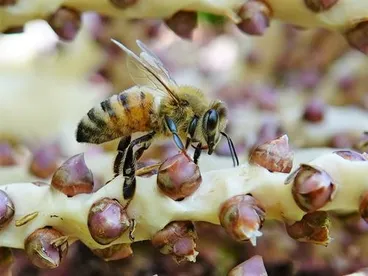
A worker bee will visit 50-100 flowers during one flight to gather nectar
iNaturalist NZ — Mātaki Taiao
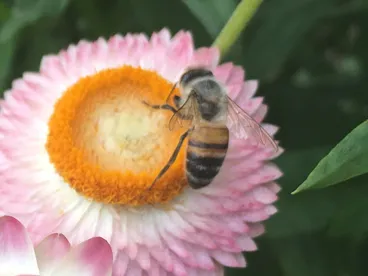
The nectar is stored in the bee’s honey sac, where it mixes with enzymes & proteins which turn the nectar into honey
iNaturalist NZ — Mātaki Taiao
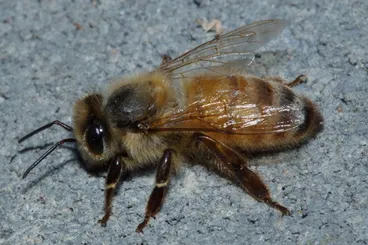
Back at the beehive, the honey is secreted & other bees digest it for 30 mins to add a special enzyme called invertase
Invertase converts the sucrose in honey into 2 simpler sugars: glucose (blood sugar) & fructose (fruit sugar)
iNaturalist NZ — Mātaki Taiao
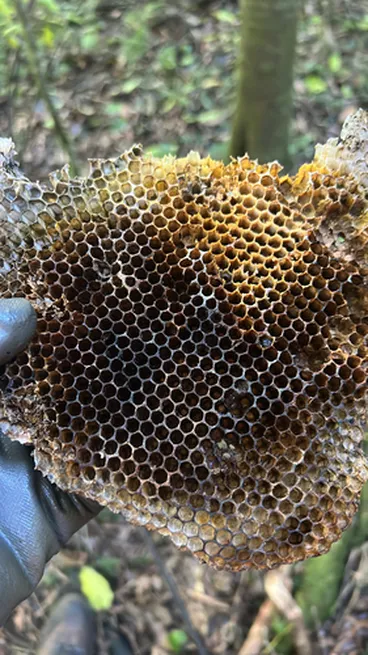
The honey is passed from one bee to another until its moisture is reduced from c.70-20%; & placed in a honeycomb cell
After the bees flap their wings to dry & ripen the honey, the cell is capped
iNaturalist NZ — Mātaki Taiao
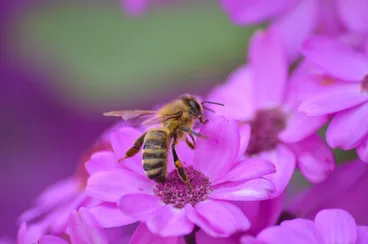
They produce about 1/12th of a teaspoon of honey in their lifetime of 4-8 weeks
iNaturalist NZ — Mātaki Taiao
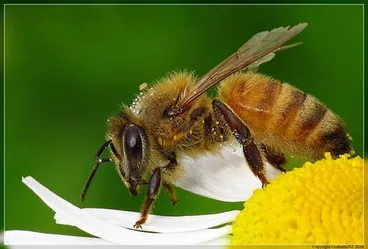
Pollen is also gathered to provide minerals & vitamins, & is used as food for larvae. It's also stored in the honeycomb.
iNaturalist NZ — Mātaki Taiao
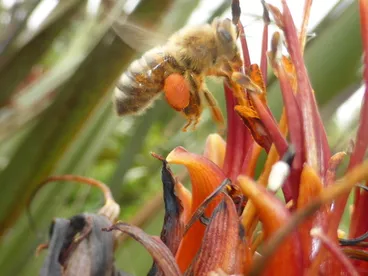
The pollen is carried in corbiculae, or pollen baskets, located on their back legs
iNaturalist NZ — Mātaki Taiao
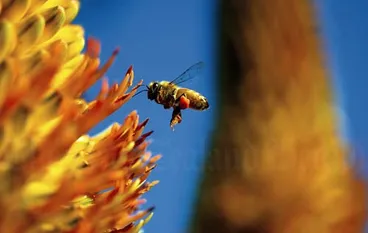
When the bee visits the next flower, some of the pollen rubs off onto that new flower, which will fertilize the seed
Manatū Taonga, the Ministry for Culture and Heritage
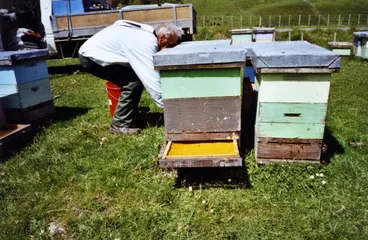
As the bees go into the hive, pollen scrapes off the back of their legs into trays – which is collected by the beekeeper
Hawke's Bay Knowledge Bank
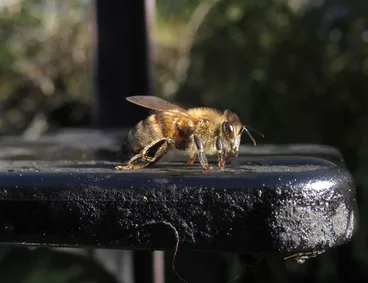
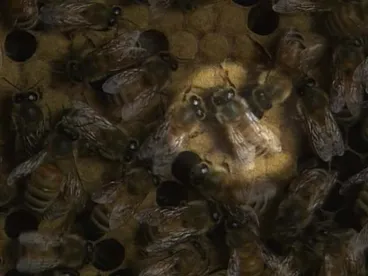
When back at the hive, they communicate the distance & direction of food by doing a waggle dance - figure of 8 pattern
The dance time gives the distance (every 75 millisecs = 33 feet) & the straight walk between loops gives the direction
Manatū Taonga, the Ministry for Culture and Heritage
6. Swarms of bees
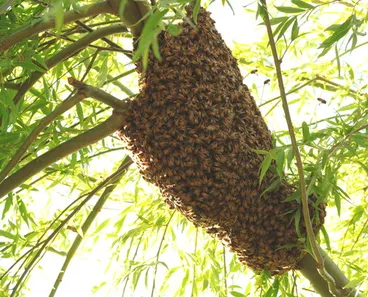
Bee swarms occur when they outgrow their hive space, or set up a new colony for a new queen bee, or need more food
Swarming season across NZ can begin as early as August and runs through until January
iNaturalist NZ — Mātaki Taiao
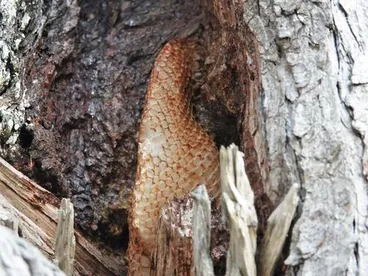
New colonies can be tree or rock cavities, and hollow walls or ceilings of buildings
iNaturalist NZ — Mātaki Taiao
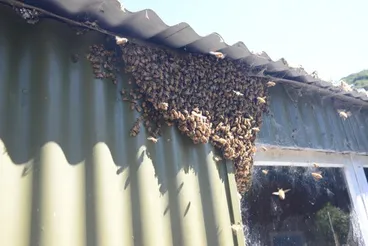
Western Honey Bee
iNaturalist NZ — Mātaki Taiao
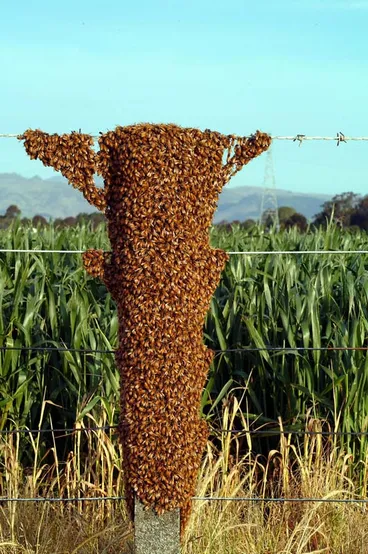
Swarm of honeybees
Manatū Taonga, the Ministry for Culture and Heritage
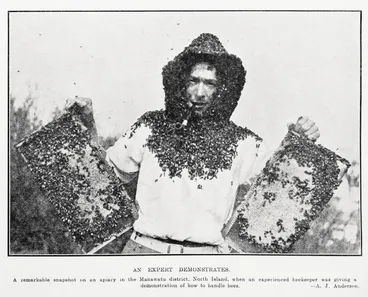
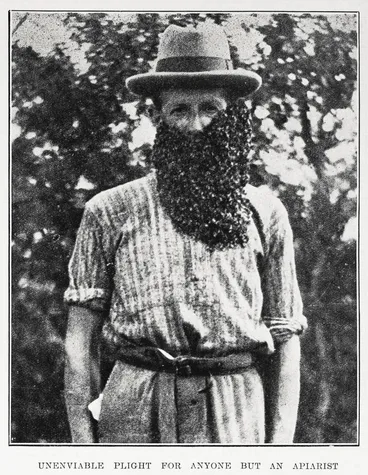
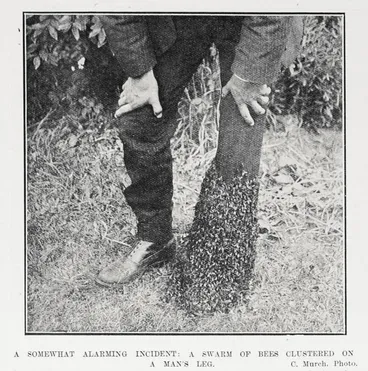
A swarm of bees on apiarist at New Plymouth apiary, 1935
Unenviable plight for anyone but an apiarist
Auckland Libraries
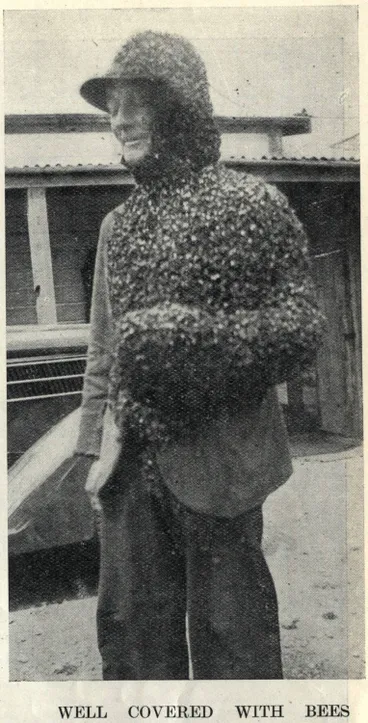
After collecting and removing a swarm of bees from a neighbour's wheat field at Grovetown, Marlborough, 1937
Well covered with bees
Auckland Libraries
7. Honey bees at work
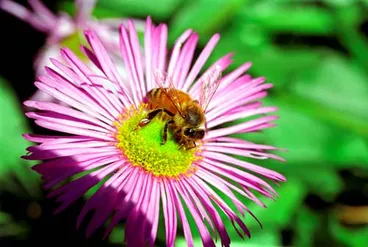
Honey bee
Manatū Taonga, the Ministry for Culture and Heritage
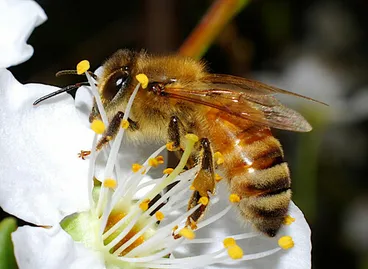
Western Honey Bee
iNaturalist NZ — Mātaki Taiao
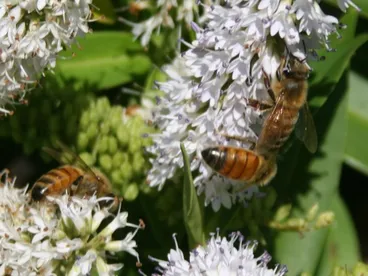
Honey Bee
iNaturalist NZ — Mātaki Taiao
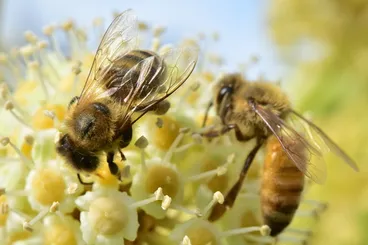
Western Honey Bee
iNaturalist NZ — Mātaki Taiao
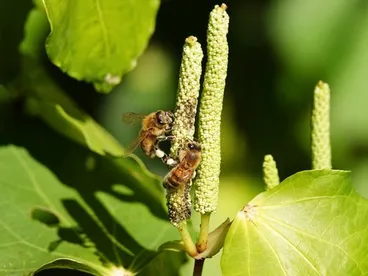
Western Honey Bee
iNaturalist NZ — Mātaki Taiao
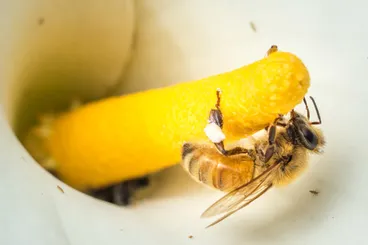
Honey Bee
iNaturalist NZ — Mātaki Taiao
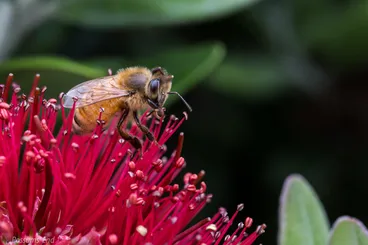
Western Honey Bee
iNaturalist NZ — Mātaki Taiao
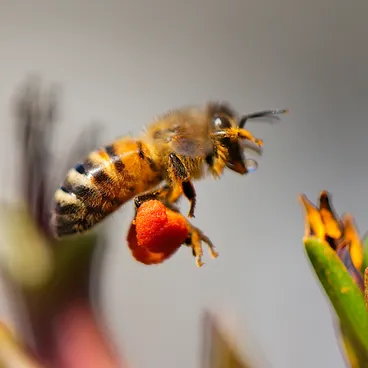
Western Honey Bee
iNaturalist NZ — Mātaki Taiao
8. Honey products
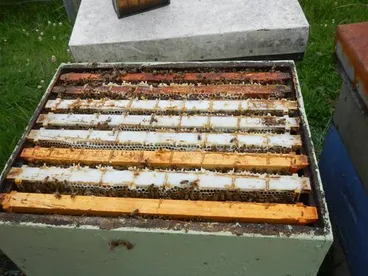
One beehive of honey bees can produce up to 150kg of honey per year
(Image: Hive with its honey-bearing frames (‘honey supers’))
iNaturalist NZ — Mātaki Taiao
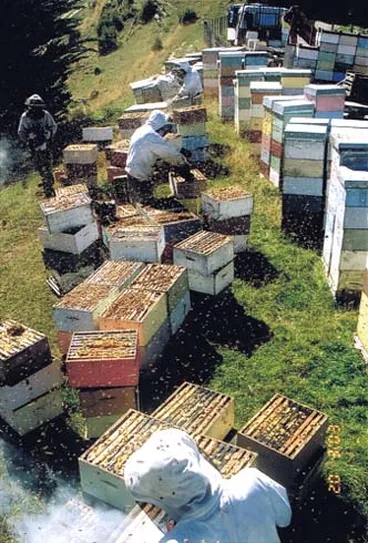
Honey is harvested from hives in late spring or summer, & the hives are relocated to new sites
(Image: Beekeepers have uncapped hives to remove the boxes at Mossops Honey near Tauranga & used smoke to calm bees)
Manatū Taonga, the Ministry for Culture and Heritage
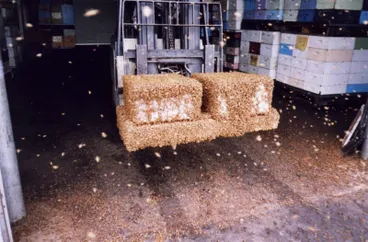
A forklift carrying beehives is covered in bees when the honey comes into the shed
Above is a window & its light attracts the bees to fly to it & they are recaptured
Hawke's Bay Knowledge Bank
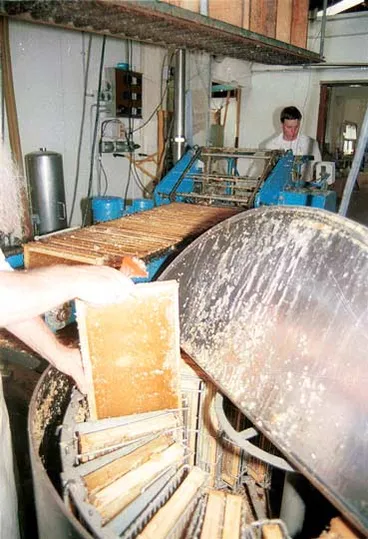
The frames are spun inside a centrifuge so that the honey is thrown out & collects at the base; then drained & filtered
Manatū Taonga, the Ministry for Culture and Heritage
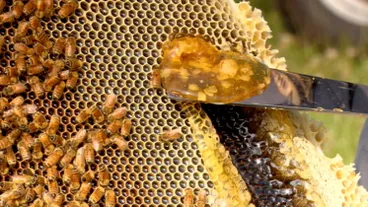
NZOnScreen (2013): Includes a look at honey production through a tour of Havelock North's Arataki Honey
NZ On Screen
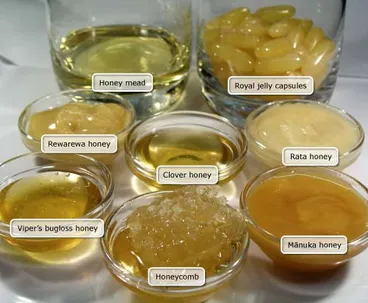
Four million flowers are required to produce 1kg of honey
Manatū Taonga, the Ministry for Culture and Heritage
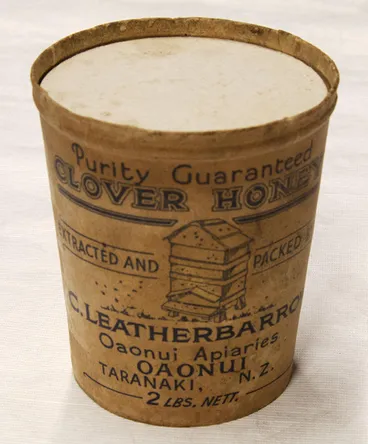
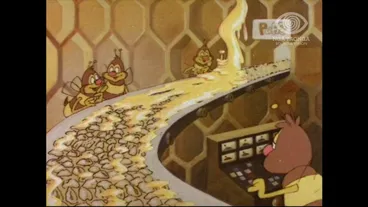
Image: A TV advert for Sanitarium Honey Puffs which features an animation of bees making Honey Puffs (1982)
SANITARIUM. HONEY PUFFS
Ngā Taonga Sound & Vision
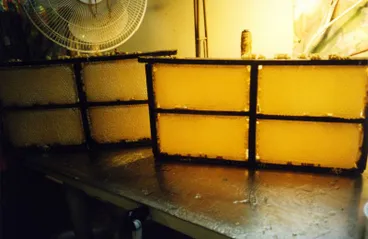
Comb honey contains about 12% less water than liquid honey that's been exposed to air, making it more concentrated
(Image: Honey combs in hive frames are about to be made into comb honey for packaging by Arataki Honey)
Hawke's Bay Knowledge Bank
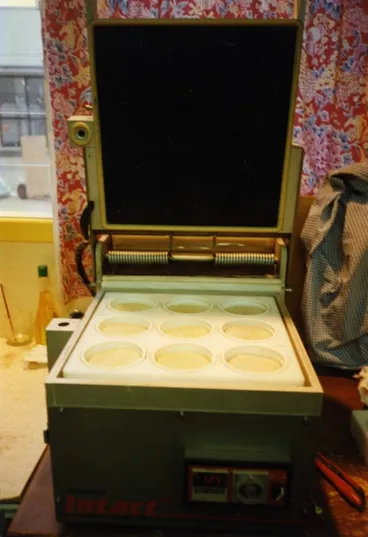
Machine used to seal “raw” honey in the wax cells of the honeycomb along with vitamins, enzymes, pollen, & antioxidants
Honey Machine
Hawke's Bay Knowledge Bank
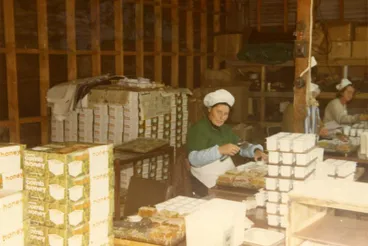
Packaging comb honey into 70 gram pots which are then packed into boxes
Honey Packaging
Hawke's Bay Knowledge Bank
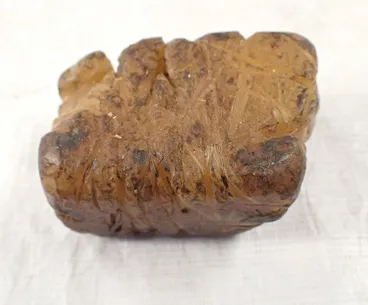
Beeswax
Can be used in candles, metal castings & modelling, cosmetics, food processing, textiles, varnishes, polishes etc
Nelson Provincial Museum
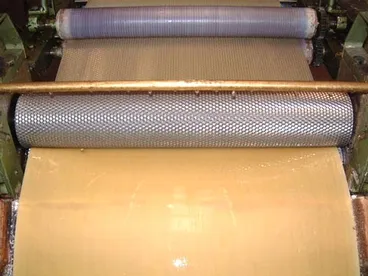
Sheet of beeswax being imprinted with honeycomb pattern, before cut into smaller sheets as a base for beehive trays
Wax comb preparation
Manatū Taonga, the Ministry for Culture and Heritage
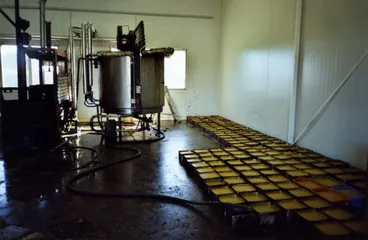

Honeywrap - a beeswax wrap made with organic cotton, beeswax, tree resin & jojoba oil (Article, 2019)
The beeswax wrap providing an alternative to single-use plastic
The Spinoff
9. Backstory: Commercial beekeeping
Early beekeeping, 1840s - 1890s
In 1845, Rev William Cotton began teaching beekeeping to settlers & Māori at Tāmaki
Cotton (b.1813) had founded Oxford Apiarian Society & written bee books; then resided in NZ from 1842-1847
National Library of New Zealand
Rev Cotton wrote "A Few Simple Rules for New Zealand Beekeepers"(1844) & a series of articles during 1847
After returning to England, published "A Manual for New Zealand Beekeepers" (1848), & "Ko Nga Pi" (1849) in te reo Māori
National Library of New Zealand
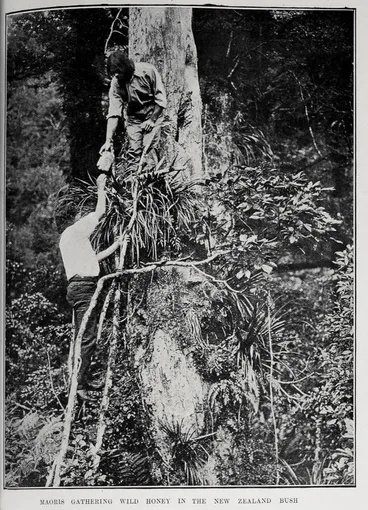
By 1860s, wild bee nests had spread in the bush & honey was being gathered & sold in increasing quantities by Māori
They called the bees “the white man's fly”
Auckland Libraries
The book "How to manage the honey bee in New Zealand" by Old Bee-keeper was published in 1867
The University of Auckland Library
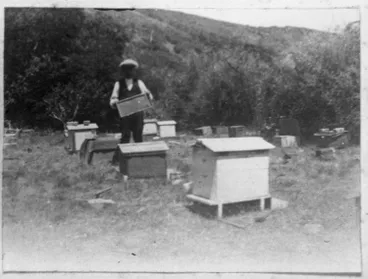
Commercial production of honey increased from the late 1870s when the Langstrom hives became popular
American Lorenzo Langstrom had patented the box-shaped hive's vertically removable frames in 1852
Auckland Libraries
An account of NZ beekeeping from 1874-1916 by Isaac Hopkins described Māori as NZ's 1st commercial beekeepers
Hopkins (1836-1925) became a beekeeper from 1874 & Govt apiarist & inspector of apiaries from 1905-1909
Digital Public Library of America
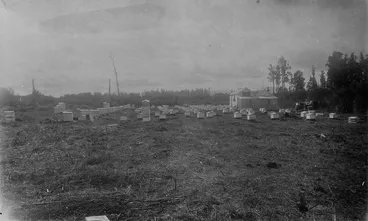
In 1882, J.C. Firth appointed Isaac Hopkins to establish a commercial apiary on the Firth Estate in Matamata
Hamilton City Libraries
Bee culture was promoted as a suitable occupation for women and girls, 1883
National Library of New Zealand
An account of the success of the Firth Estate apiary managed by Isaac Hopkins was given in the Colonist, 17 March 1886
National Library of New Zealand
Hopkins published "The illustrated bee manual and complete guide to modern bee culture in the southern hemisphere", 1886
The book was based on his experiences since undertaking beekeeping as a hobby in 1874 & his conducting of research
Digital Public Library of America
Commercial apiaries expand, 1900s -
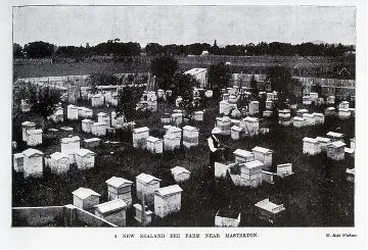
From 1900s, bee farms began to be established in various parts of NZ
(Image: Beehives at a bee farm near Masterton, 1901)
Wairarapa Archive
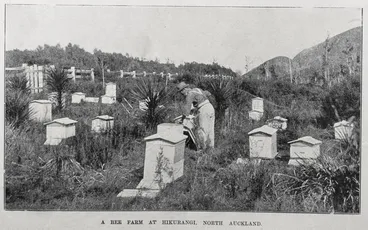
(Image: A bee farm at Hikurangi, Northland, 1902)
A bee farm at Hikurangi, Northland
Auckland Libraries
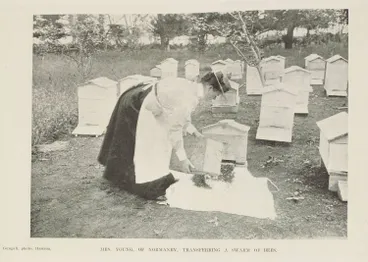
(Image: Beekeeper Mrs Young transferring swarming bees to a hive at Normanby in South Taranaki, 1903)
Mrs Young of Normanby transferring a swarm of bees
Auckland Libraries
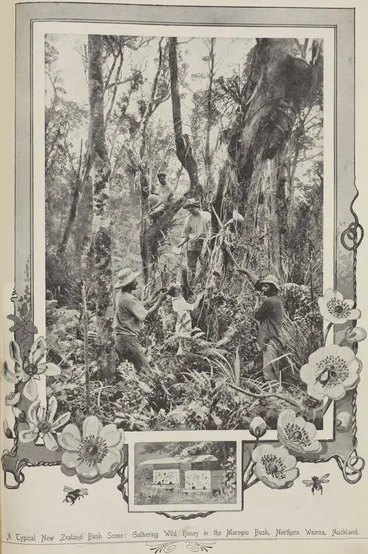
Wild honey continued to be gathered from the bush
(Article: Māori labourers gathering wild honey in the Maropiu Bush, Northern Wairoa, Auckland, 17 Dec 1903)
Auckland Libraries
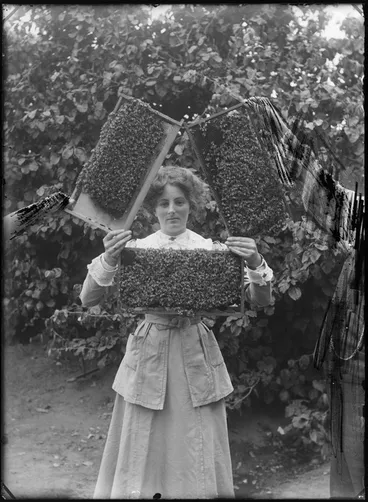
(Image: Woman holding three honeycombs covered in bees possibly in Christchurch, c.1905-1925)
Outdoors on rough ground with trees behind, an unidentified woman holding three honeycombs covered in bees, probably Christchurch region
Alexander Turnbull Library
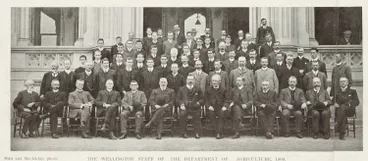
In 1905, Isaac Hopkins was appointed as the 'Bee expert' (Government Apiarist) in the Dept of Agriculture
Auckland Libraries
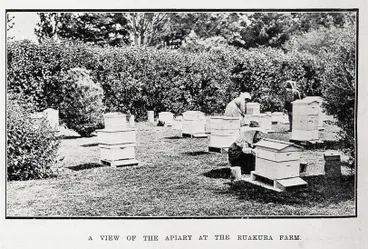
In June 1905, a model bee farm was set up at the Ruakura Farm of Instruction, near Hamilton, by Hopkins
There had been some hives at Ruakura in 1904 & 1905, but in both instances they had been destroyed by foulbrood
Auckland Libraries
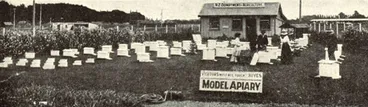
A model of the Ruakura apiary was demonstrated at the Christchurch International Exhibition, 1906-7
Manatū Taonga, the Ministry for Culture and Heritage
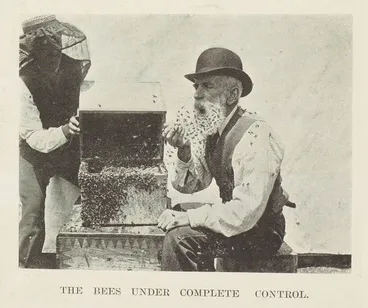
Isaac Hopkins resigned from Dpt of Agriculture as Bee expert in July 1909 but stayed on at Ruakura until 1913
Auckland Libraries
Apiaries Act 1906 made the keeping of fixed frame hives illegal & introduced measures to control American foulbrood
Colonies found to have the American foulbrood (disease caused bacterium Paenibacillus larvae) were to be destroyed
National Library of New Zealand
In 1907, Beekeepers' Association was formed at Hastings
National Library of New Zealand
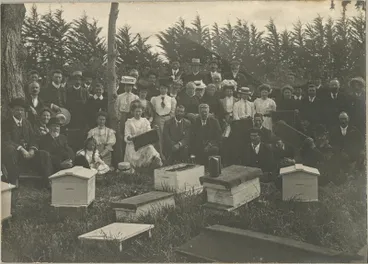
Annual Beekeepers' Association Field Day, 1908
Wyndham & Districts Historical Museum
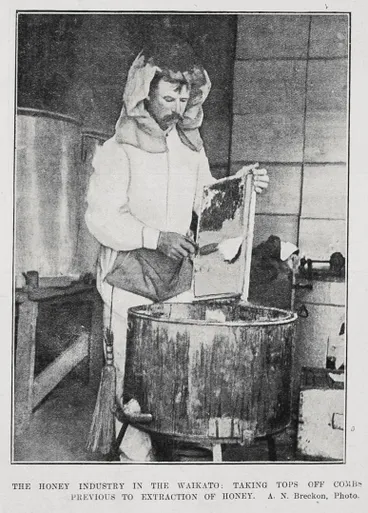
Taking off the comb prior to the extraction of honey in the Waikato, 1911
Auckland Libraries
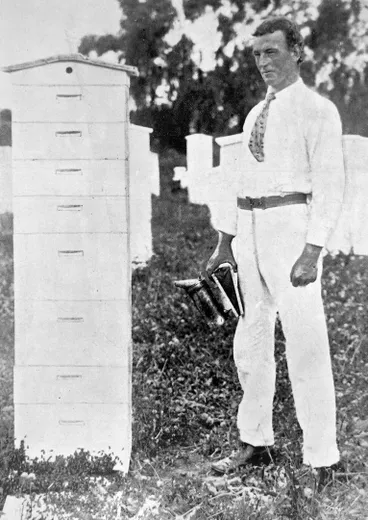
Hive containing c.270lb of honey at Hundred-Hive Apiary at Lakeside, near Doyleston, 1913
Christchurch City Libraries
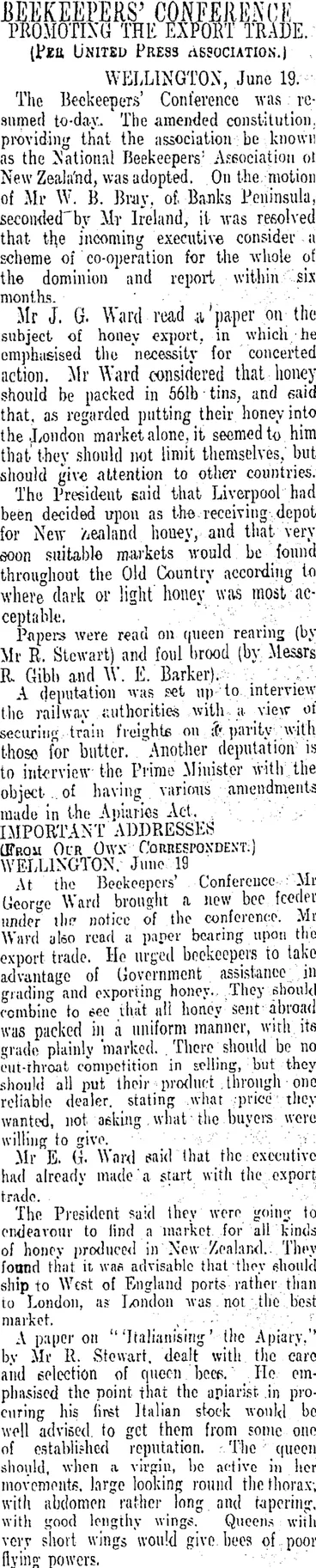
In June 1913, the National Beekeepers' Association (NBA) was formed
National Library of New Zealand
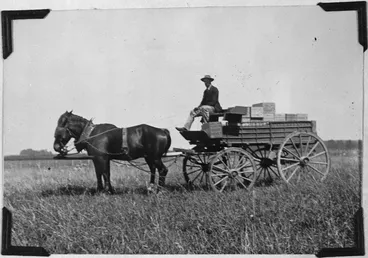
A wagon loaded with boxes of clover honey in the Kairanga district, 1914
Palmerston North City Library
![Image: Alliance Box Company Ltd :Wax extractors and presses [1914]](https://images.digitalnz.org/rp-NPP6Z7TSnXl49a5DXlpkh5tI=/368x0/https%3A%2F%2Fndhadeliver.natlib.govt.nz%2FNLNZStreamGate%2Fget%3Fdps_pid%3DIE18334762 "Alliance Box Company Ltd :Wax extractors and presses [1914]")
Beeswax extractors & presses at the Alliance Box Company Ltd, 1914
Alexander Turnbull Library
By 1918, there were c.12,000- 13,000 beekeepers producing between 1200-1500 tons of honey worth c.£100,000
The estimates were provided by Isaac Hopkins during an interview in Feb 1918
National Library of New Zealand
Following WWI, beekeeping increased rapidly as more land was developed & returned servicemen were trained as beekeepers
National Library of New Zealand
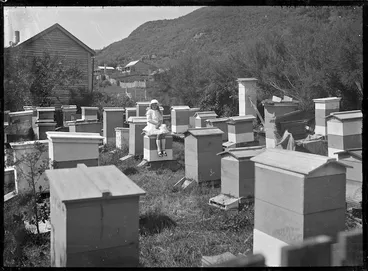
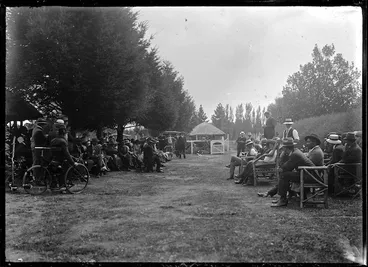
Bee-keepers' day at the state apiary at the Ruakura Agricultural Research Centre, 1921
Alexander Turnbull Library
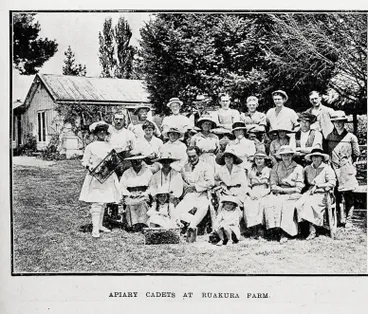
![Image: [Hillary Apiary]](https://images.digitalnz.org/GYi0O1XRpY7ADEjW4iwyz7FhWCs=/368x0/https%3A%2F%2Fcollection-api.aucklandmuseum.com%2Frecords%2Fimages%2Fmedium%2F478957%2F723a494c9429b181f355e8162307217e27ac26a9.jpg "[Hillary Apiary]")
Rows of bee boxes at the Hillary Family Aviary, 1920s
Auckland War Memorial Museum Tāmaki Paenga Hira
![Image: [Percy Hillary]](https://images.digitalnz.org/cV3egDK1WyBPefTPfpLQmUxx9M0=/368x0/https%3A%2F%2Fcollection-api.aucklandmuseum.com%2Frecords%2Fimages%2Fmedium%2F478954%2F598e09648ab4289fd310e9b05b90aed653536f98.jpg "[Percy Hillary]")
Percy Hillary (father of Edmund Hillary) holding a beehive frame over a bee box, 1920s
Auckland War Memorial Museum Tāmaki Paenga Hira
Following Isaac Hopkins death in 1925, his contributions to commercial beekeeping in NZ were heralded
National Library of New Zealand
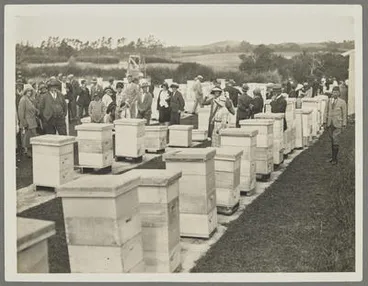
Beekeepers' Field Day at Tuakau, 1929
Auckland War Memorial Museum Tāmaki Paenga Hira
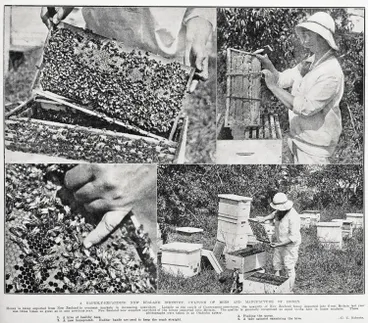
Hive numbers doubled to nearly 100,000 by the end of the 1920s
(Image: Beekeepers at work, 1929)
Auckland Libraries
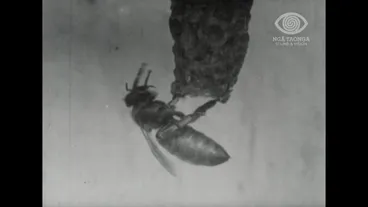
Film (1929): "The Honey Bee": Silent black & white publicity film for NZ honey (28:53 min)
Produced by the New Zealand Government Publicity Office
Ngā Taonga Sound & Vision
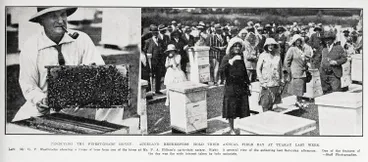
Auckland beekeepers hold their annual field day at Tuakau, 1931
Auckland Libraries
By 1938 most of the honey produced was sold to the Govt agency, the Internal Marketing Division, to stablise prices
National Library of New Zealand
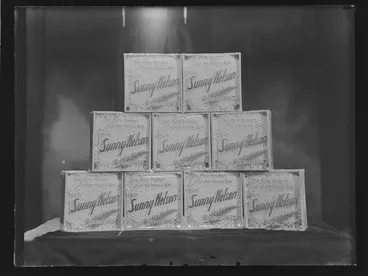
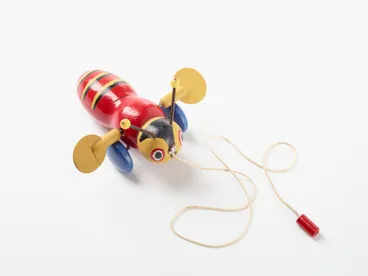
First "Buzzy Bee" toy was developed by Maurice Schlesinger's Playcraft Products in Auckland, c.1940
Museum of New Zealand Te Papa Tongarewa
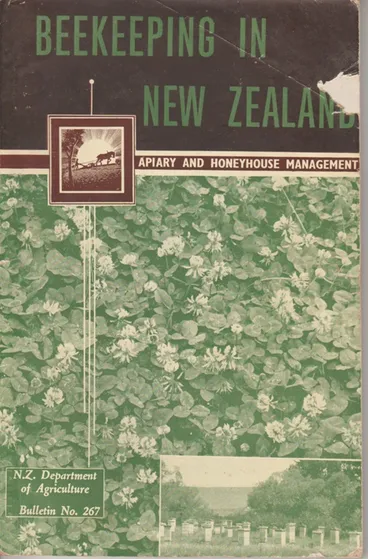
Book: "Beekeeping in New Zealand" by T.S. Winter, 1946
Howick Historical Village
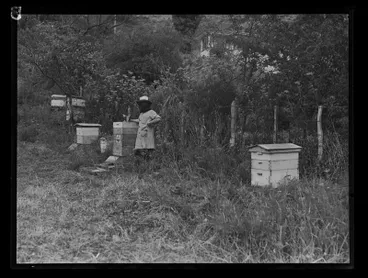
Beekeeping increased after WWII & by 1950 c.7,000 beekeepers were keeping over 150,000 hives
(Image: Beekeeper, 1947)
Nelson Provincial Museum
![Image: [Sir Edmund Hillary with a bee box and jars of honey]](https://images.digitalnz.org/X0yAf-NkKYnuR5Mn7EAbtvHUs_4=/368x0/https%3A%2F%2Fcollection-api.aucklandmuseum.com%2Frecords%2Fimages%2Fmedium%2F487560%2Fd8fb4bd75cd008739eee0ce9766af92556c94136.jpg "[Sir Edmund Hillary with a bee box and jars of honey]")
Sir Edmund Hillary with a bee box and jars of honey, 1953
Auckland War Memorial Museum Tāmaki Paenga Hira
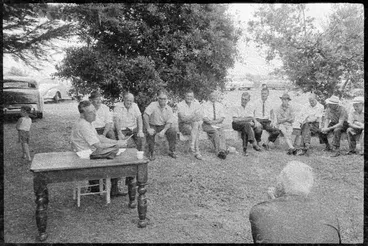
On 1 Dec 1953, the NZ Honey Marketing Authority was created under the Primary Productions Marketing Act 1953
It took over the Internal Marketing Division & became the sole exporter, & introduced a Seals Levy
Tauranga City Libraries
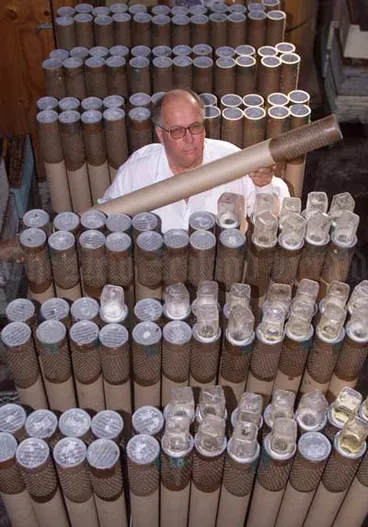
Exports of queen bees began in late 1960s to Canada, followed by queens, drones & workers around the world
(Image: Each tube contains about 9,000 ibees, including a queen)
Manatū Taonga, the Ministry for Culture and Heritage
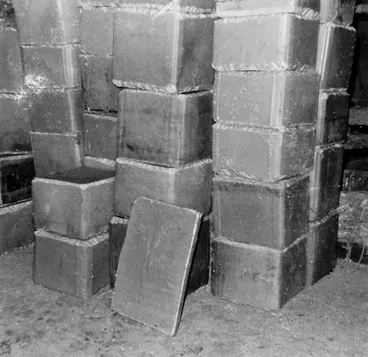
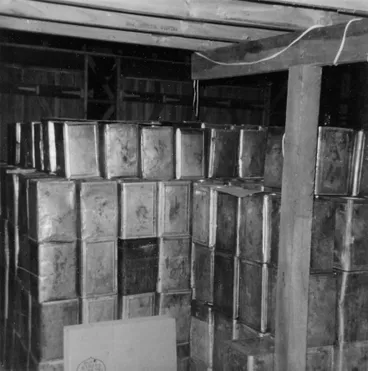
Beeswax storage area at Field's Apiaries, Norbiton Road, Foxton, 1968
Kete Horowhenua
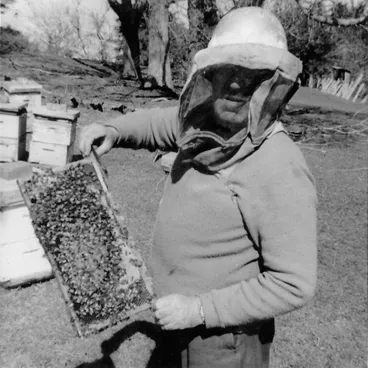
At Field's Apiaries, beekeeper is extracting frames of honey from the hive for processing, 1967-68 season
Kete Horowhenua
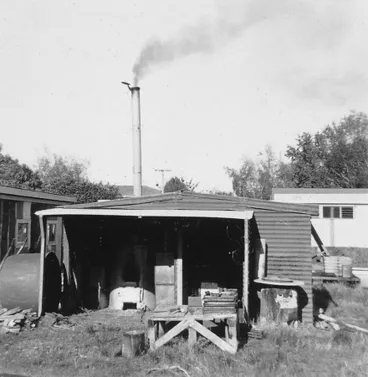
Using a wood burning steam boiler at Field's Apiaries wax shed
Kete Horowhenua
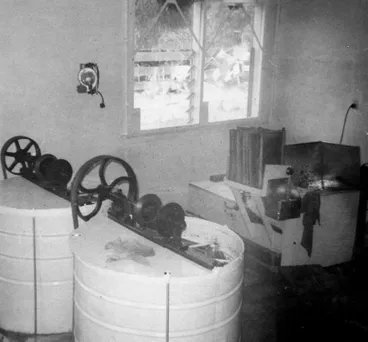
Inside Field's Apiaries new honey shed
Kete Horowhenua
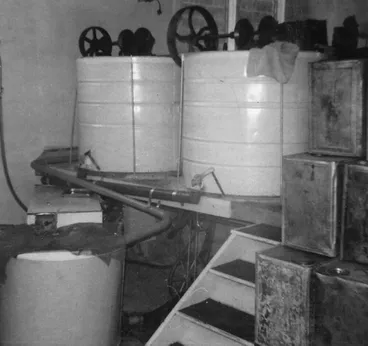
Honey passes through two 8 frame extractors & drains to a lower storage tank after passing through a mesh filter
Kete Horowhenua
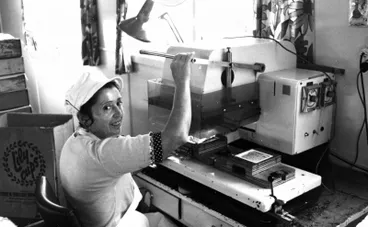
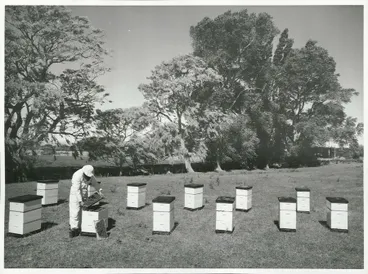
Under the Apiaries Act 1969, apiaries were required to be registered if bees kept for more than 14 days
The Act also regulated disease control, feeding of drugs, & restricted zones if honey found to contain poison
Archives New Zealand Te Rua Mahara o te Kāwanatanga
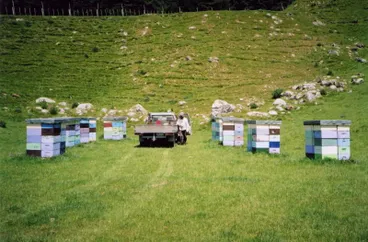
The Honey Marketing Authority Regulations 1975 led to a 'hive numbers' based levying system
Hawke's Bay Knowledge Bank
On 1 Oct 1978, the Hive Levy Act introduced a compulsory annual levy if 50 or more hives held by beekeepers
The levy was used to fund the National Bee Association (NBA) for promotion, development, & improvement of the industry
National Library of New Zealand
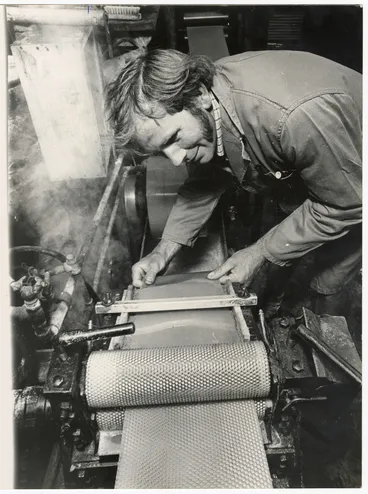
Processing beeswax at A. Ecroyd and Son Ltd, 1978
Christchurch City Libraries
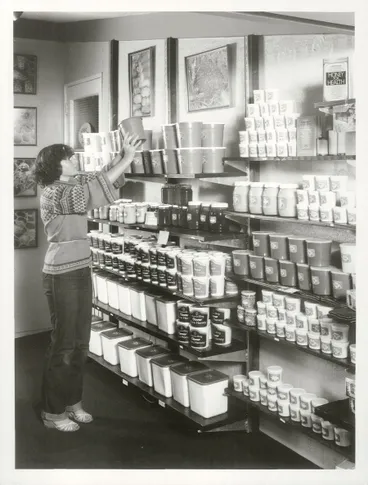
From 1980s, increasing number of private individuals & companies began exporting NZ honey products
(RNZ article (3 Nov 2009): A Dunedin honey marketer 'New Zealand Honey Co' has grown 900% since its inception in 2006)
Radio New Zealand
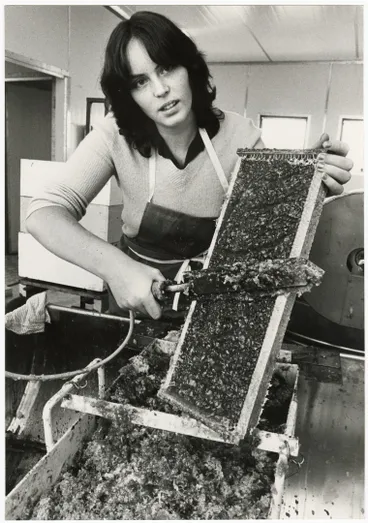
Wax sliced from a frame of honey at Greta Valley in North Canterbury, 1983
Christchurch City Libraries
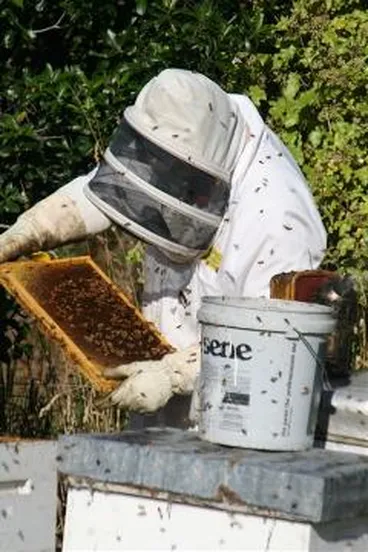
Under the Biosecurity Act 1993, all beekeepers to be registered under American Foulbrood Pest Management Plan (AFBPMP)
The intent is to help eliminate American Foulbrood in NZ
Wairarapa Archive
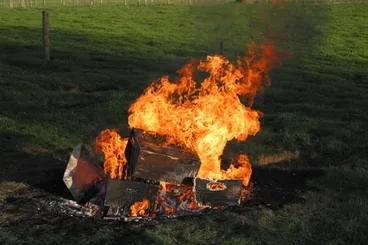
If a hive's larvae or pupa become infected with American foulbrood, it is burnt
This is a bacterial disease of honey bee brood caused by the spore forming bacterium Paenibacillus larvae
Manatū Taonga, the Ministry for Culture and Heritage
The Hive Levy was replaced by the Commodity Levies (Bee Products) Order 1996
The Order was introduced following the Commodity Levies Act 1990
National Library of New Zealand
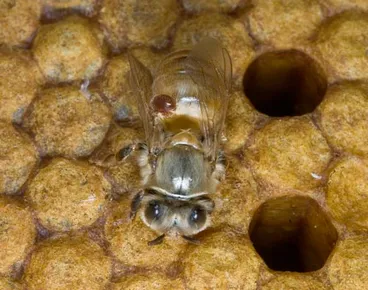
The avarroa mite which attacks & feeds on honey bees was first detected in 2000
Image: The worker bee has a small, dark, oval avarroa bee mite on its back
Manatū Taonga, the Ministry for Culture and Heritage
Apiculture New Zealand was established in April 2016 after the restructure of the National Beekeepers Association of NZ
National Library of New Zealand
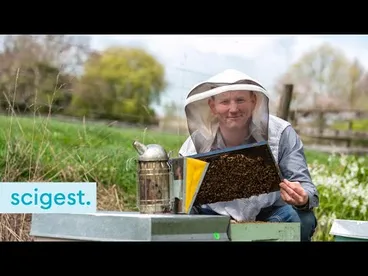
Nowadays, there are over 580,000 bee hives & over 9000 beekeepers registered with Ministry for Primary Industries
The Langstrom design is still used today as it aids the easy inspection of the bees, including for diseases
Plant & Food Research
10. Celebrating honey bees: Bee Aware Month held September
Manaaki Whenua – Landcare Research (Video: c.2013) Plants and trees to help the bees (31 secs)
Manaaki Whenua – Landcare Research
Manaaki Whenua - Landcare Research (Video: c.2013) Trees for Bees programme (5:38 mins)
Manaaki Whenua – Landcare Research
Find out more:
Allan Gillingham, 'Beekeeping', Te Ara - the Encyclopedia of New Zealand, http://www.TeAra.govt.nz/en/beekeeping
Apiculture New Zealand: https://apinz.org.nz/
Beekeeping in New Zealand: History of beekeeping in New Zealand: https://www.beekeeping.co.nz/nzbkpg/history.htm
For the Love Of Bees: Ngaro Huruhuru - Native Bees: https://www.fortheloveofbees.co.nz/native-bees
Honey bees brought to New Zealand, URL: https://nzhistory.govt.nz/mary-bumby-brings-the-first-honey-bees-in-new-zealand, (Manatū Taonga — Ministry for Culture and Heritage), updated 24-May-2024
Ministry for Primary Industries: Bee biosecurity: https://www.mpi.govt.nz/biosecurity/how-to-find-report-and-prevent-pests-and-diseases/bee-biosecurity/