Lyttelton Road Tunnel
A DigitalNZ Story by Zokoroa
Lyttelton Road Tunnel connecting Christchurch and Lyttelton which opened on 27 Feb 1964
Lyttelton Road Tunnel, Lyttelton, Tunnel, Christchurch, Port Hills, Traffic
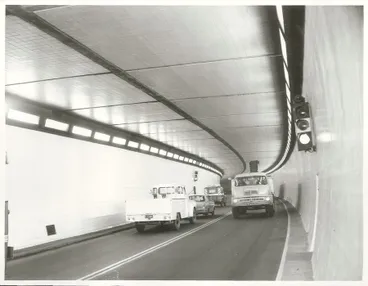
On 27 Feb 1964, the Lyttelton Road Tunnel through the Port Hills officially opened
The Tunnel connects Christchurch with its seaport, Lyttelton, reducing the former travel distance by c.8km
Archives New Zealand Te Rua Mahara o te Kāwanatanga
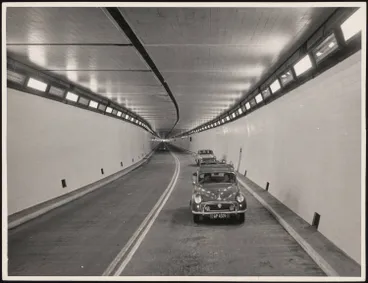
The 1,970 metres long tunnel links State Highway 74 and the Lyttelton Road
It was the longest road tunnel in NZ until the Waterview Tunnel (2400 metres) in Auckland opened on 2 July 2017
Auckland Libraries
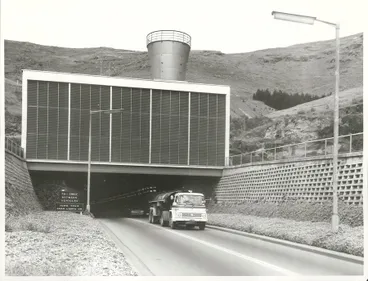
View of the Tunnel's entrance at Heathcote Valley in the south-east of Christchurch
Archives New Zealand Te Rua Mahara o te Kāwanatanga
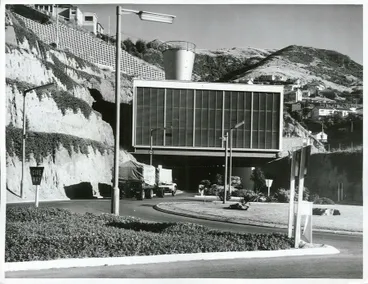
View of the Tunnel's entrance at Port Lyttleton
Archives New Zealand Te Rua Mahara o te Kāwanatanga
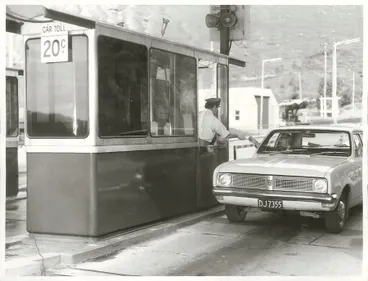
Private vehicles had to pay tolls at the toll booth until this charge was abolished on 1 April 1979
Levy was initially 2s 6d; reduced to 2 shillings (1 Oct 1966); became 20 cents (10 July 1967) & 30 cents (1 April 1978)
Archives New Zealand Te Rua Mahara o te Kāwanatanga
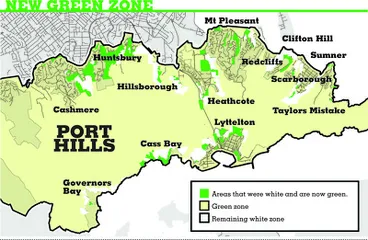
Infographic including route of Tunnel between Heathcote & Lyttelton, Dec 2011
UC QuakeStudies
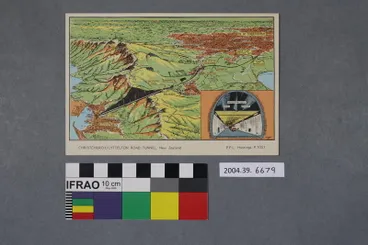
Postcard with map of route of the Tunnel between Christchurch & Lyttelton
Canterbury Museum
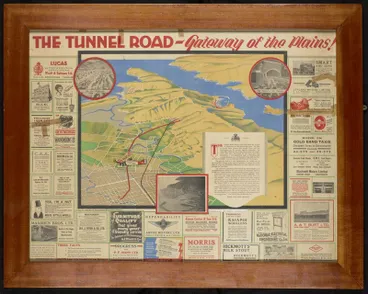
Promotional map of the Tunnel Road between Christchurch & Lyttelton
Te Ūaka The Lyttelton Museum
Backstory:
1. Arrival of Canterbury immigrants at Lyttelton to settle in Christchurch, 1850
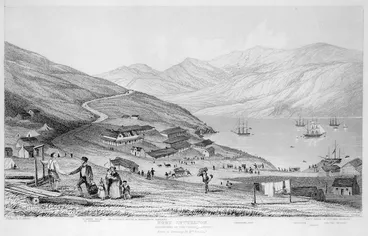
The first 792 Canterbury immigrants to settle in Christchurch arrived by 4 ships to Lyttelton Harbour, Sept 1850
Four Canterbury Association ships: Charlotte Jane (on left), Randolph, Cressy (with sails unfurled) & Sir George Seymour
Alexander Turnbull Library
Early land transport: Bridle Path (1850), Evans Pass - Sumner Road (1857) & Lyttelton Railway Tunnel (1864)
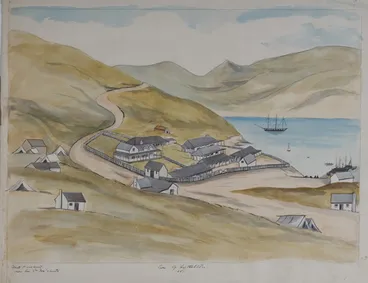
In Dec 1849, a road was commissioned over the Port Hills from Evans Pass to Sumner at the eastern end of Port Hills
The road was to be completed before the Canterbury Association's first immigrants arrived in Sept 1850
University of Otago
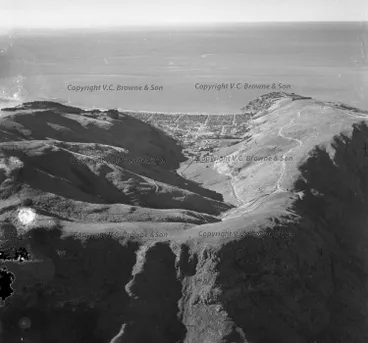
However, budget shortage led to the roadwork being suspended in April 1850
£20,000 for public works was spent by March. Where the road was stopped became known as Sticking Point or Windy Rock.
V.C. Browne & Son
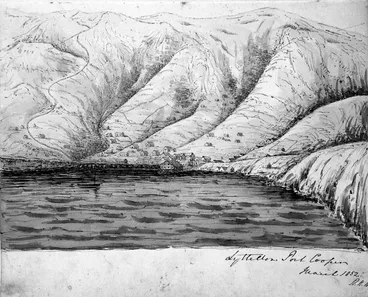
To enable the immigrants to reach Christchurch, a track was carved which became known as Bridle Path (See Map: far left)
With a budget of £300, a work gang of 70 European & Māori workmen quickly completed the track
Alexander Turnbull Library
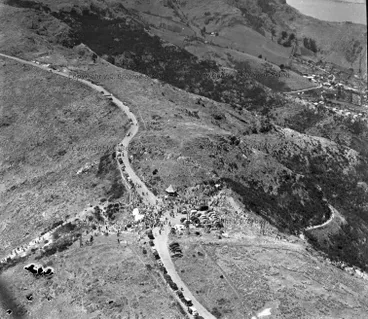
The track was wide enough for horses but its steepness meant riders would often dismount to lead horses by their bridle
V.C. Browne & Son
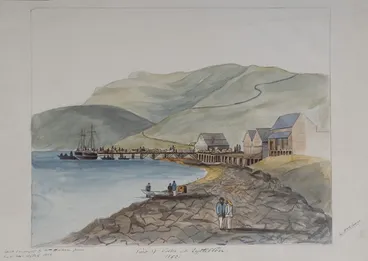
As Bridle Path (top left) was too narrow for carriages, packhorses were used & boats took heavier items to Christchurch
The immigrants using Bridle Path would also carry their luggage if unable to load onto a packhorse
University of Otago
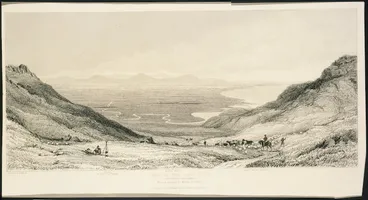
Boats had to travel over the Sumner Bar; then up either the Heathcote or Avon Rivers to Christchurch
Image: View of the Heathcote River, Forty Miles Beach (Pegasus Bay) & settlers driving stock down the Bridle Path, 1851
Alexander Turnbull Library
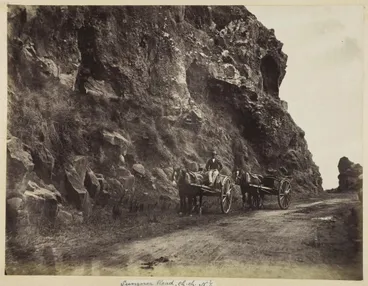
Meanwhile, work on the road over Evans Pass to Sumner had resumed & officially opened on 24 Aug 1857
The road was 4 miles long from Evans Pass to Sumner & a further 7 miles to Christchurch, & cost £30,000. (Image: c.1868)
Hocken Collections - Uare Taoka o Hākena, University of Otago
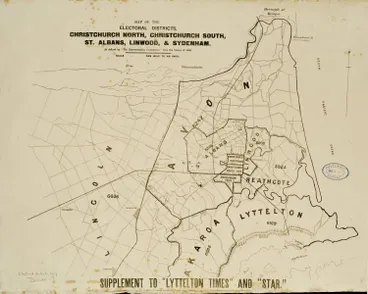
As Christchurch's population grew, Sumner Road was improved for increased use by carts, & later by motor cars
Image: An 1887 map of electoral districts around Christchurch with Lyttelton to the south-east based on 1886 Census
Auckland Libraries
2. Lyttelton Road Tunnel
The proposal for a road tunnel to connect Christchurch & Lyttelton Road was first suggested in 1854
See Report of Lyttelton and Christchurch Road Commission, Christchurch, 7 April 1854 (Lyttelton Times (22 April 1854)
National Library of New Zealand

Years of debate, funding issues & advent of WWI & WWII delayed Govt's decision to build the Lyttelton Road Tunnel
Image: Suggested map of tunnel by advocacy group, Port and City Committee (Christchurch), which formed in 1922
Christchurch City Libraries
![Image: [Mr. W. S. McGibbon, (left) Chairman Lyttelton Road Tunnel Authority. Mr. R. L. Wilks, Akld Harbour Authority General Manager]](https://images.digitalnz.org/3Sryw75PJz3F8KO5Nx7ciNvHq14=/368x0/https%3A%2F%2Fcollection-api.aucklandmuseum.com%2Frecords%2Fimages%2Fmedium%2F545197%2F823fa7f30b97d9599923050f752e5d1b048bff8d.jpg "[Mr. W. S. McGibbon, (left) Chairman Lyttelton Road Tunnel Authority. Mr. R. L. Wilks, Akld Harbour Authority General Manager]")
Following the Christchurch-Lyttelton Road Act of Oct 1956, the Lyttelton Road Tunnel Authority was formed
Image: Chairman of the Authority was William (Bill) McGibbon
Auckland War Memorial Museum Tāmaki Paenga Hira
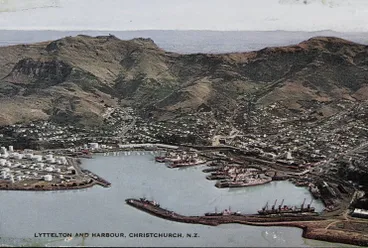
The Ministry of Works designed the tunnel & called for tenders in Oct 1960 for construction to be completed in 3 years
MOW estimated the construction of the tunnel would cost about £3.5 million
Auckland Libraries
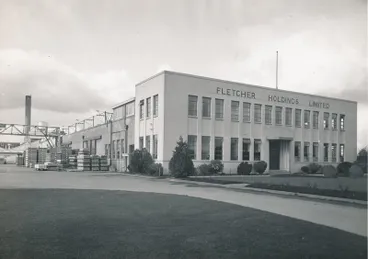
By Jan 1961, 7 bids were received & contract given to joint team of Fletcher Construction (NZ) & Kaiser Engineers (US)
Their bid was £1,947,748 which also included tiling the inside of the tunnel
The Fletcher Trust
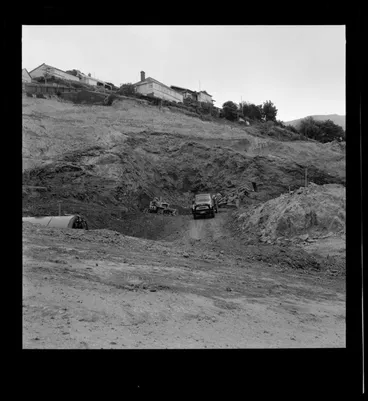
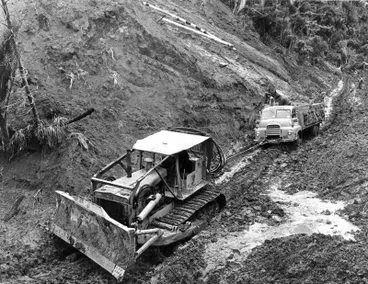
Excavation for the Christchurch - Lyttelton Road Tunnel, 4 December 1961.
Te Ūaka The Lyttelton Museum
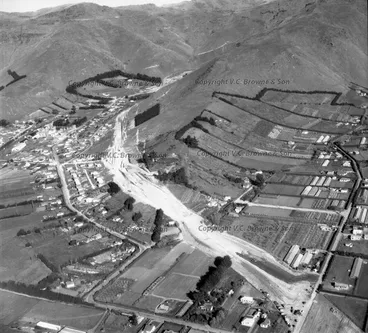
Heathcote - Lyttelton Road tunnel construction (6390/6405)
V.C. Browne & Son
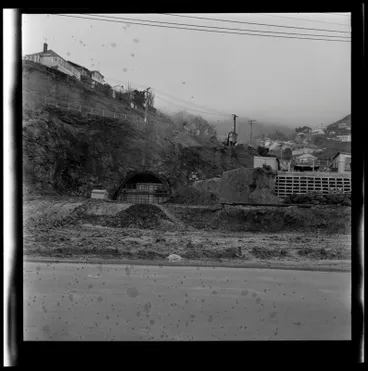
The Christchurch - Lyttelton Road tunnel portal, August 1962.
Te Ūaka The Lyttelton Museum
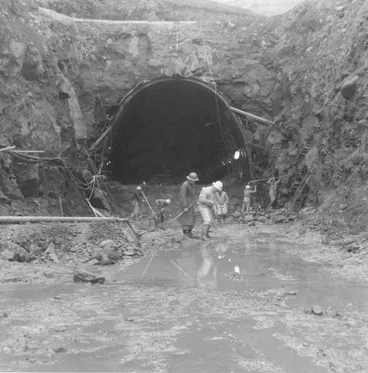
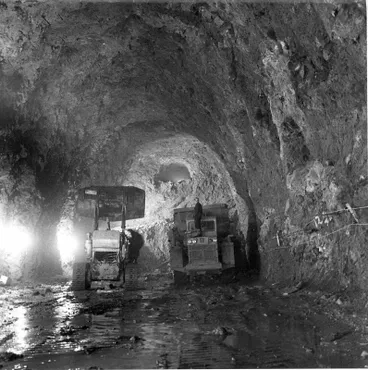
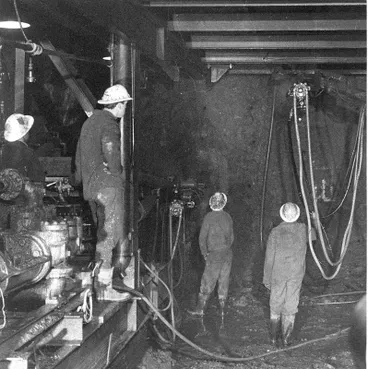
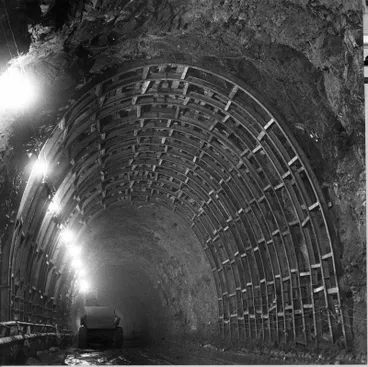
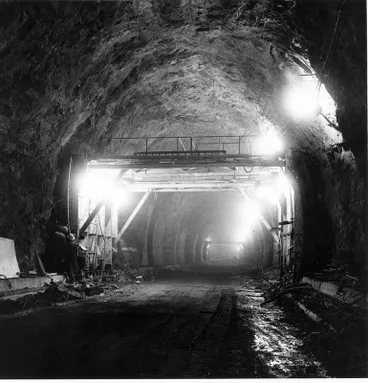
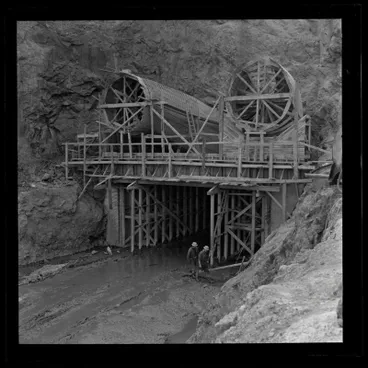
Construction of the Christchurch - Lyttelton Road tunnel,1962.The road tunnel blowers.
Te Ūaka The Lyttelton Museum
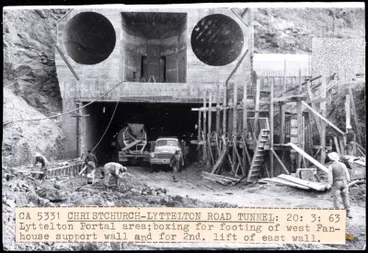
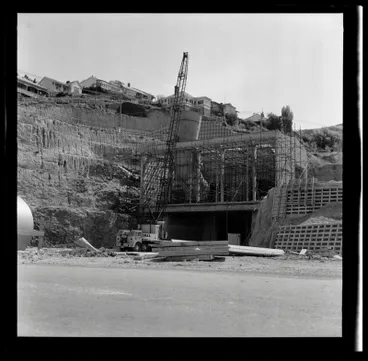
Construction of the Christchurch - Lyttelton Road tunnel,1963.
Te Ūaka The Lyttelton Museum
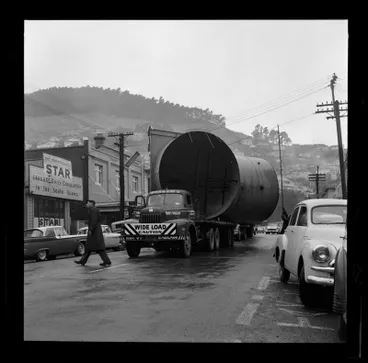
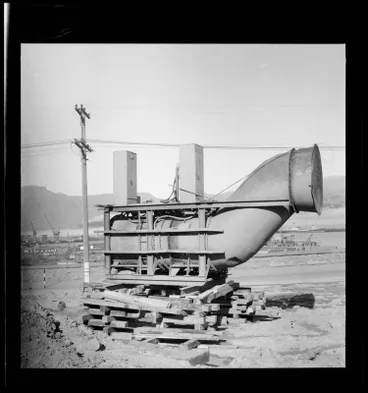
Fan to be installed in the Christchurch - Lyttelton Road Tunnel.
Te Ūaka The Lyttelton Museum
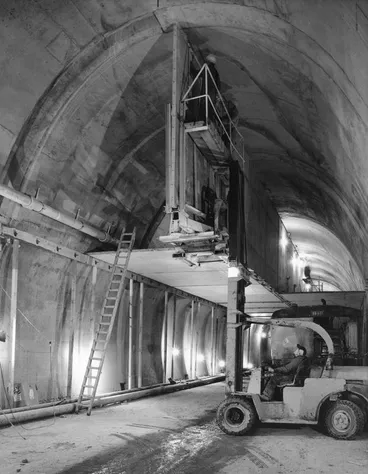
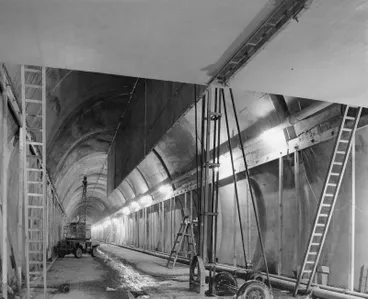

Ceiling panels being lifted into place during the construction of the Christchurch-Lyttelton Road Tunnel
Christchurch City Libraries
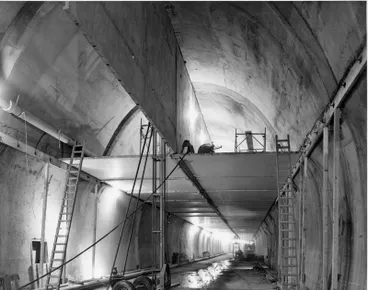
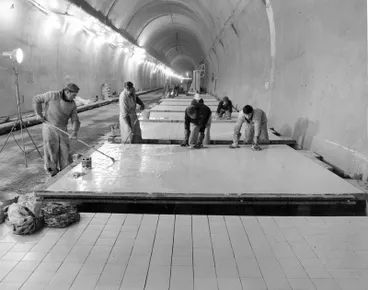
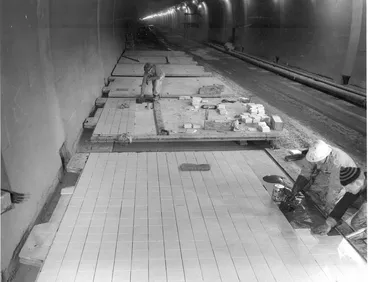
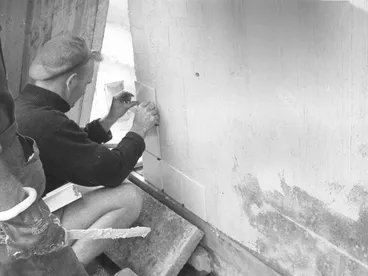
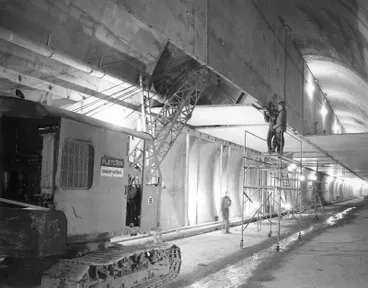
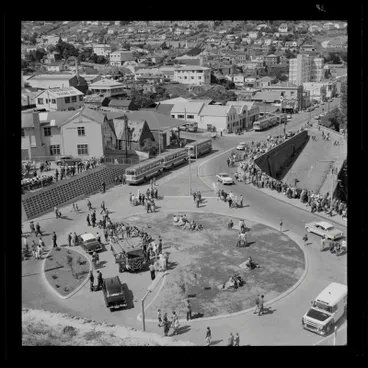
View of roundabout at the entrance to the Tunnel at Lyttelton
Te Ūaka The Lyttelton Museum
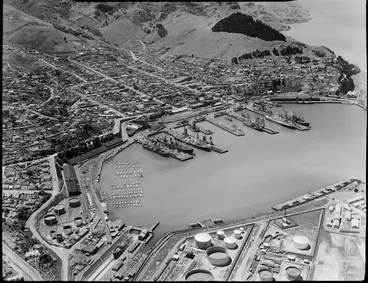
View of Lyttelton Harbour with entrance to the Tunnel by roundabout on the left behind the first docking pier
Alexander Turnbull Library
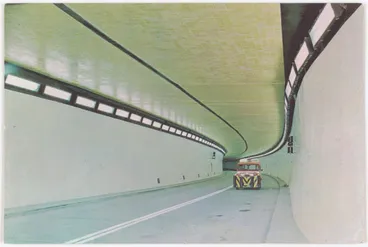
The 1,970 metres long Tunnel has one traffic lane in each direction & was designed to handle 2,400 vehicles an hour
It was the longest road tunnel in NZ until the Waterview Tunnel (2400 metres) in Auckland opened on 2 July 2017
Museum of New Zealand Te Papa Tongarewa
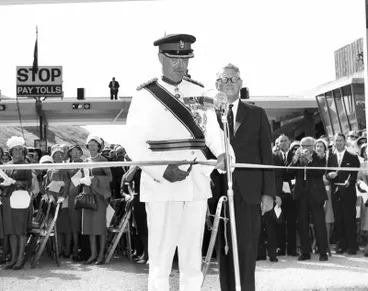
On 27 Feb 1964, the Lyttelton Road Tunnel was officially opened by Governor-General Sir Bernard Fergusson
The Fletcher Trust
![Image: Fletcher Construction Co Ltd: 1963 Sir Bernard Ferguson shakes hands with Fletcher Project [Lyttelton Road Tunnel] Manager Jack [John G] Smith](https://images.digitalnz.org/pLUbzYu1m4OyXgD-dCB5Z7POEdg=/368x0/https%3A%2F%2Fcollection.fletcherarchives.co.nz%2Frecords%2Fimages%2Flarge%2F3644%2F897d472e67a43d195c9e73cc7b68030d83c15216.jpg "Fletcher Construction Co Ltd: 1963 Sir Bernard Ferguson shakes hands with Fletcher Project [Lyttelton Road Tunnel] Manager Jack [John G] Smith")
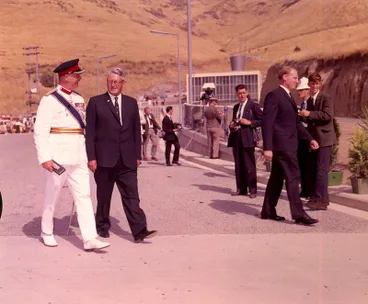
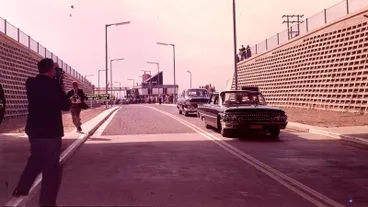
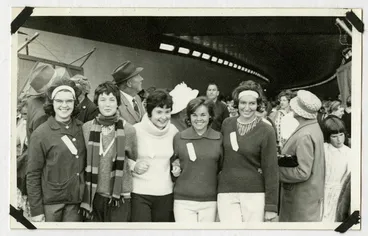
Opening of Lyttelton Road Tunnel
Christchurch City Libraries
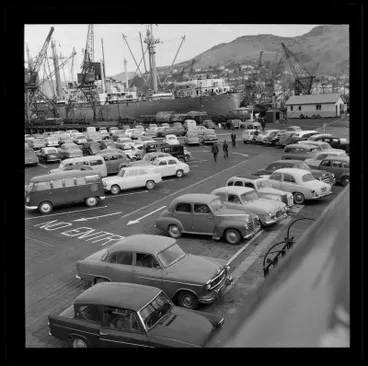
Cars parked at Lyttelton Port for opening of the Christchurch - Lyttelton Road Tunnel, 1964.
Te Ūaka The Lyttelton Museum
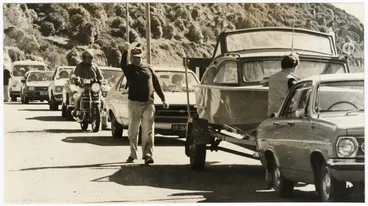
Cars queuing at Lyttelton tunnel
Christchurch City Libraries
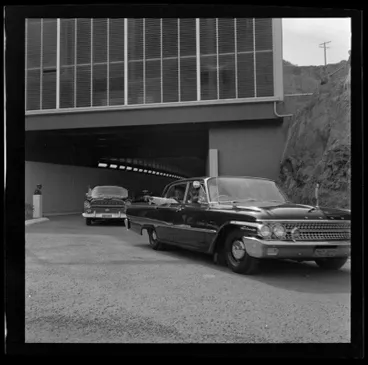
The Lyttelton entrance to the Christchurch - Lyttelton road tunnel.
Te Ūaka The Lyttelton Museum
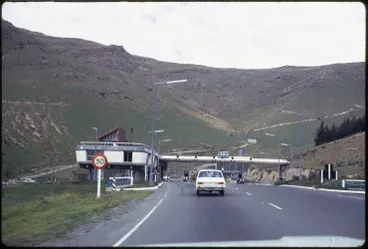
Private vehicles had to pay tolls at the toll booth until this charge was abolished on 1 April 1979
Levy was initially 2s 6d, reduced to 2 shillings (1 Oct 1966); became 30 cents (10 July 1967) & 30 cents (1 April 1978)
Auckland Libraries
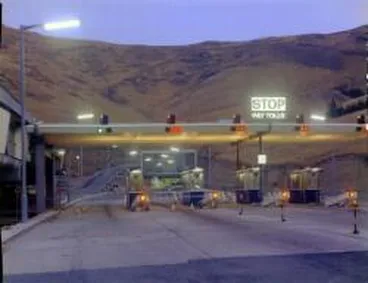
Toll booths at the Heathcote side of the Tunnel
Trove
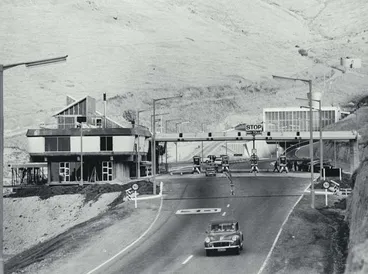
In 1965, an average of 2,805 vehicles a day used the Tunnel
Manatū Taonga, the Ministry for Culture and Heritage
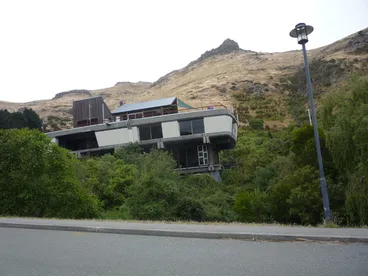
Lyttelton Road Tunnel Administration Building in Heathcote Valley was built in 1963-64
The building designed by Peter Beaven was given a New Zealand Historic Places Trust Category 1 listing in 2008
Christchurch City Libraries
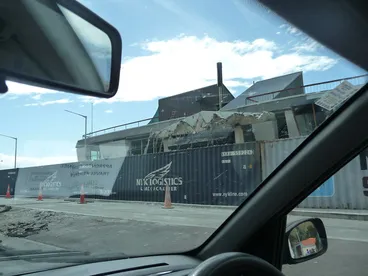
After Feb 2011 Christchurch earthquake, it was demolished in early 2013 & new building completed in June 2014 ($1.5m)
A community celebration was held on 31 Aug 2014 to open the new building & commemorate the Tunnel's 50th anniversary
eqnz.chch.2010
NZTA (Christchurch-Lyttelton Motorway Tunnel) Bylaw 2016 sets out usage by vehicles, cycles, pedestrians & animals
The Tunnel has between 12,000 – 15,000 vehicles per day & the speed limit is 50 kmh
Department of Internal Affairs
Find out more:
Kids Encyclopeda Facts: Lyttelton road tunnel facts for kids; URL: https://kids.kiddle.co/Lyttelton_road_tunnel
NZ Transport Agency: Tunnel history and facts; URL: Tunnel history and facts | NZ Transport Agency Waka Kotahi
Wikipedia: Lyttelton Rail Tunnel, URL: Lyttelton Rail Tunnel - Wikipedia
Wikipedia: Lyttelton road tunnel; URL: https://en.wikipedia.org/wiki/Lyttelton_road_tunnel
This DigitalNZ story was compiled in Feb 2026 after journeying through the Lyttelton Road Tunnel